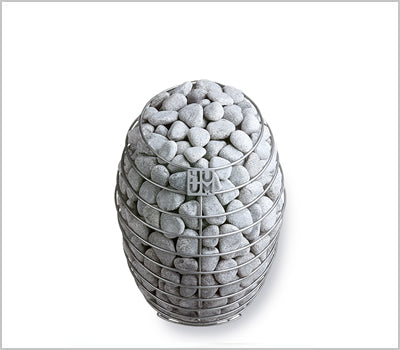
How to Season New Sauna Rocks: Getting the Best Steam
New sauna rocks need a break-in period before they perform their best. Fresh from the package, they have dust, loose particles, and residual moisture that affect steam quality and can even create unpleasant smells during your first few sessions. Seasoning your rocks properly isn't complicated, but it makes a noticeable difference.
Quick Answers
How do you season new sauna rocks?
Rinse the rocks to remove dust, load them with the largest on the bottom and gaps for airflow, then run the heater at maximum temperature for 60-90 minutes without adding water. Let them cool completely, remove any cracked rocks, and repeat this cycle 2-3 times. By the third heating, the rocks are seasoned and ready for regular use.
Why do new sauna rocks smell when heated?
New rocks often give off a slight mineral smell during the first few heating cycles as surface contaminants, manufacturing residue, and trapped moisture burn off. This is normal and fades after 2-3 sessions. A chemical or plastic smell instead means packaging material may be stuck in the heater and should be checked.
How long should you heat new sauna rocks before using water?
Run the heater at full temperature for 60-90 minutes without pouring any water during the first cycle. This drives out trapped moisture, burns off residue, and reveals weak rocks that may crack. Only after cooling, inspecting, and repeating the cycle 2-3 times should you start pouring water normally.
How should sauna rocks be stacked in the heater?
Place the largest rocks on the bottom around the heating elements, then layer smaller rocks on top where water is poured. Leave gaps throughout the pile so air can circulate, and never overfill beyond the heater manufacturer's stated capacity, since this restricts airflow and strains the elements.
How do you know when sauna rocks are properly seasoned?
Seasoned rocks produce an immediate sizzle when water hits them, release a soft and even steam rather than hot droplets, and give off no smell. If water pools instead of vaporizing, or you notice a lingering odor, the rocks likely need more seasoning cycles or inspection for contamination.

Shop sauna stones at SweatDecks
- SOAPSTONE CUP - $25
- Traditional Sauna Stones - $59
Affirm financing available. Free curbside shipping on orders over $5,000. See all sauna stones.
Why Seasoning Matters
New sauna stones go through thermal shock during their first heating cycles. The rapid temperature change from room temperature to 300°F+ at the heater element causes the stone to expand unevenly. Micro-fractures form, loose particles break off, and any trapped moisture turns to steam inside the rock.
This initial thermal cycling is actually good - it reveals weak rocks early (better to crack now than later), settles the rock pile, and creates the surface texture that produces quality steam. But you want this process to happen before you start pouring water and expecting good loyly.

Step 1: Rinse Before Loading
Before putting new rocks in your heater, rinse them under running water. This removes surface dust, manufacturing residue, and loose stone fragments that would otherwise end up in your heater and your lungs.
Don't use soap. Just a thorough rinse under a garden hose or faucet. Let them air dry for a few minutes, or at least shake off excess water.
Step 2: Load Properly
How you arrange rocks in the heater matters more than most people realize:
- Largest rocks on the bottom. Place the biggest stones directly around and between the heating elements. They need the most heat to warm through and provide the foundation for the pile.
- Smaller rocks on top. Layer progressively smaller stones above. These receive water when you pour and create the steam.
- Leave gaps. Don't pack rocks tightly. Air needs to circulate through the pile for efficient heating. Gaps between rocks allow hot air to rise naturally through the pile.
- Don't overfill. Follow your heater manufacturer's guidelines for maximum rock capacity. Overloading restricts airflow and can strain the heating elements.
Step 3: The First Heating
Run your heater at maximum temperature for 60-90 minutes without pouring any water on the rocks. This first dry heating cycle accomplishes several things:
- Drives out residual moisture trapped inside the stones
- Burns off any surface contaminants or manufacturing residue
- Initiates the first thermal expansion cycle that reveals weak rocks
- Settles the rock pile as stones shift and find their natural resting positions
During this first heating, you may notice a slight mineral smell. This is normal and will dissipate. If you smell something chemical or plastic, check that no packaging material got left in the heater. Turn off the heater and inspect if needed.
Step 4: Cool Down and Inspect
Let the rocks cool completely (at least 4-6 hours). Then inspect the pile:
- Remove any rocks that cracked or split. These had internal weaknesses and would have failed eventually. Better to catch them now.
- Clear out any fragments or dust that fell into the heater body.
- Rearrange if the pile shifted significantly during heating. Re-stack with proper gaps.
Step 5: Second and Third Heating
Run the heater for another full session (60-90 minutes at full temperature). This time, you can pour a small amount of water - one ladle - toward the end to test steam production. The steam quality won't be optimal yet, but you'll get a sense of how the rocks respond.
Cool down, inspect, remove any newly cracked rocks, and clear fragments.
By the third heating cycle, your rocks are essentially seasoned. The weak stones have been identified and removed, the pile has settled into a stable configuration, surface dust is gone, and the rocks have developed the thermal cycling tolerance they need for daily use.
What Good Steam Looks Like
After seasoning, properly heated rocks should produce:
- Immediate sizzle. Water should hiss and vaporize on contact. If water pools or runs through without sizzling, the rocks aren't hot enough or have lost their heat retention capacity.
- Soft, even steam. Quality loyly feels like a gentle wave of heat, not a blast of hot water droplets. Well-seasoned rocks vaporize water completely rather than just bouncing it off as droplets.
- No smell. Seasoned rocks should produce odorless steam. Mineral smells, musty odors, or any chemical scent indicates either the rocks need more seasoning or there's contamination to address.
Ongoing Rock Care
Seasoning isn't a one-time event. A few ongoing practices keep your rocks performing well:
- Rearrange every 2-3 months. Move bottom rocks to top and vice versa to distribute thermal wear evenly.
- Remove broken pieces promptly. Fragments restrict airflow and can damage heating elements.
- Don't pour excessive water. One or two ladles at a time. Flooding creates thermal shock that accelerates rock breakdown.
- Replace as needed. Even well-maintained rocks eventually wear out. See our guide on when to replace sauna rocks for details.
Our outdoor saunas and barrel saunas come with quality sauna stones matched to their Harvia or Huum heaters. Built from FSC-certified heat-treated Canadian hemlock, every sauna is ready for years of reliable heat and steam. We offer 0% APR financing through Affirm and free shipping over $5,000.
Try Our Free Tools
Browse our expert-tested cold plunge collection.