
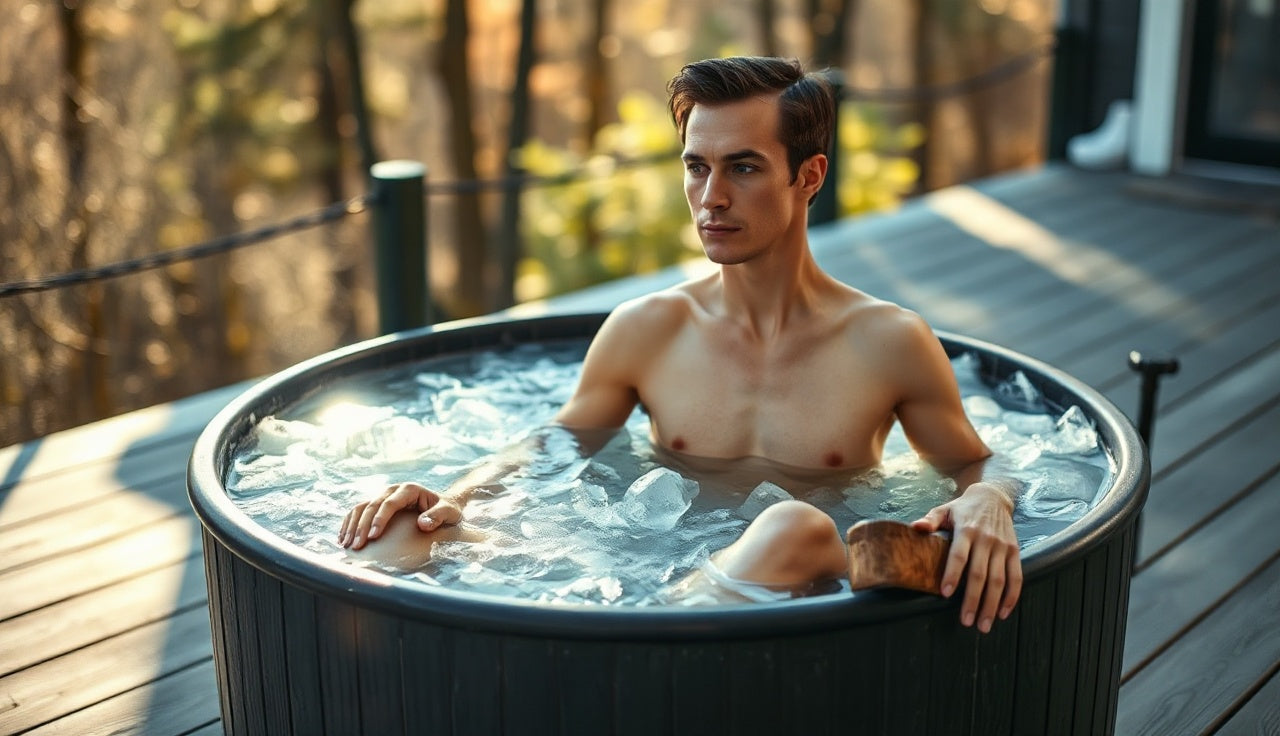
Last updated 2026-07-10
TL;DR
Cold water immersion at 50 to 59°F for 10 to 15 minutes can reduce delayed-onset muscle soreness in the 24 to 72 hours after hard exercise. The effect is real but modest: expect 20 to 40% less soreness in some trials, not a miracle. Timing, temperature, and your training goal all change whether it's worth doing.
What does an ice bath actually do to sore muscles?
Cold narrows your blood vessels, slows nerve conduction, and drops the temperature of the muscle closest to your skin. Those three effects dampen the inflammatory signals that make you feel sore 24 to 72 hours after a hard session. The mechanism is well-supported at the physiological level. The size of the payoff is where things get murky.
Delayed-onset muscle soreness (DOMS) starts with micro-tears in muscle fibers, mostly from eccentric contractions like running downhill or lowering a heavy weight. Soreness peaks between 24 and 48 hours later, driven by inflammation, fluid buildup (edema), and pain receptors in the tissue that have gotten more sensitive [1]. Cold water immersion (CWI) pushes on all three of those pathways at once. It constricts blood vessels to slow fluid leaking into tissue, cools the muscle so enzyme activity drops, and lowers the firing rate of pain-sensing nerves.
What cold does not do is fix the micro-tears. Structural repair runs on its own clock no matter how cold you get. Ice is symptom management, not healing, and that difference drives the whole question of whether you should do it every session.
A 2022 meta-analysis in the Journal of Science and Medicine in Sport pooled 32 randomized controlled trials and found cold water immersion cut DOMS ratings by roughly 20 to 40% versus passive rest, with the biggest effects in the 24 to 72 hour window after training [2].
What is the right ice bath temperature and time for muscle recovery?
Aim for 50 to 59°F (10 to 15°C) for 10 to 15 minutes. That range is cold enough to matter and warm enough to stay safe. Going below 50°F doesn't buy you better soreness outcomes and it raises the risk of skin and nerve injury. Staying above 59°F starts to feel more like a cool bath than a real cold stimulus.
Duration is where people freelance past the data. Studies have run protocols from 5 to 20 minutes. The meta-analytic sweet spot sits around 11 to 15 minutes [2]. Past 15 minutes at 50 to 59°F you're mostly adding risk, especially if you have any cardiovascular concerns, without adding soreness relief.
Depth matters too. Full-body immersion up to the waist or chest beats standing in a cold shower, because the hydrostatic pressure of water surrounding your limbs adds a compression effect that helps push inflammatory fluid out of tissue [3]. That's one reason a purpose-built cold plunge tub does this job better than a bathtub full of ice.
| Protocol Variable | Research Range | Practical Sweet Spot |
|---|---|---|
| Water temperature | 46 to 68°F (8 to 20°C) | 50 to 59°F (10 to 15°C) |
| Duration | 5 to 20 minutes | 11 to 15 minutes |
| Immersion depth | Legs only to full body | Waist to chest |
| Timing after exercise | 0 to 60 min post | Within 30 min post |
| Frequency | As needed | After intense sessions |
Here's what a lot of gym regulars get wrong: they crank the temperature as low as it goes, figuring colder equals better. The studies don't back that. 50°F is already uncomfortable enough to trigger the response you want.
Do ice baths actually help with sore muscles, or is it just placebo?
Mostly a real effect, some placebo, and the two are genuinely hard to tease apart because you can't blind anyone to the fact that they're sitting in freezing water. So take the confident claims on both sides with a grain of salt.
The mechanistic case is solid. Cold reduces local inflammation and slows nerve conduction velocity, and you can measure both in a lab as cold exposure changes them predictably [3]. The clinical case, meaning studies where real people rate soreness after real workouts, is shakier. Some trials show a clear drop in DOMS ratings. Others show barely any difference versus passive rest at 48 and 72 hours.
A 2016 Cochrane review concluded that cold water immersion reduces muscle soreness after exercise compared with passive rest, but flagged that most trials were small and leaned on self-reported pain scales, so it rated the evidence low to moderate quality [4]. That's not a knock. It means the signal is real, the effect size is uncertain, and individual response swings a lot.
Strength and power recovery is where the evidence firms up, more so than subjective soreness. A 2021 meta-analysis in Sports Medicine found CWI preserved muscle strength and power in the 24 to 96 hours after exercise compared to passive rest [5]. For an athlete who has to train or compete again inside that window, that matters more than feeling less sore.
So, not placebo. Not the miracle the plunge influencers sell either. Somewhere in between, which is exactly where most useful recovery tools live.
| Cold water immersion | 30% |
| Contrast therapy | 32% |
| Active recovery | 22% |
| Compression garments | 15% |
| Foam rolling / massage | 12% |
| Passive rest (baseline) | 0% |
Source: Journal of Science and Medicine in Sport meta-analysis, 2022; British Journal of Sports Medicine review
When is the best time to take an ice bath after a workout?
Sooner beats later. Most protocols in the literature put people in cold water within 30 minutes of finishing exercise, and the logic holds up: you want to blunt the acute inflammatory response before it fully ramps, not chase it hours down the line.
But some inflammation after training isn't just tolerable. It's the signal that tells your muscles to adapt and grow. That's where timing turns on your actual goal.
If your goal is short-term recovery (you competed yesterday, you compete again tomorrow), ice within 30 minutes of finishing is a fair call. You're trading long-term adaptation for feeling better and getting function back fast.
If your goal is building muscle or strength over months, be more selective. A 2021 study in the Journal of Physiology found that regular post-exercise cold water immersion blunted the anabolic signaling behind muscle growth, suppressing mTOR pathway activity and satellite cell proliferation in particular [6]. The researchers concluded that "cold water immersion attenuated long-term gains in muscle mass and strength" compared to active recovery.
So timing and frequency are really one question wearing two hats. Use it on your hardest competition-prep days and during tournament weekends. Skip it after every strength session if getting bigger is the point.
Should athletes use ice baths after every workout?
No. This is where I'd push back hardest against the daily-plunge habit a lot of endurance athletes have built.
The hypertrophy data is the main reason for restraint. That 2021 Journal of Physiology study [6] is one of the better-designed trials on the question, and its finding that regular cold immersion suppresses the molecular signals driving muscle growth deserves real weight from anyone doing hypertrophy training.
Pure endurance athletes may face a different calculus, since their adaptation is more about mitochondrial density and cardiovascular efficiency than contractile muscle growth. There's some evidence CWI after aerobic sessions doesn't blunt adaptation the way it does after resistance work. Even so, daily use doesn't beat selective use on outcomes.
My honest take: two or three times a week after your highest-intensity sessions works for most people. Every day is likely overkill and can work against you if strength is the goal. Save the ice for when you actually need it: hard intervals, heavy lifting days, race weekends, or stretches where you're stacking sessions faster than your body can recover on its own.
For the wider recovery-tool picture, see our ice bath overview and the cold plunge benefits guide.
How cold does the water need to be, and do you need actual ice?
You don't need ice. You need cold water. The distinction matters for both your wallet and your logistics.
Cold tap water in most North American homes runs around 50 to 60°F in winter and 60 to 70°F in summer. In winter you might hit the target range with no ice at all. In summer your tap water probably won't get cold enough to matter, and that's when ice or a refrigerated unit earns its keep.
Adding ice works, but holding temperature is harder than it sounds. A bathtub warms noticeably from body heat over a 15-minute session, so you'll likely burn 30 to 50 pounds of ice per session to start cold and stay there [7]. At $3 to $6 per 20-pound bag at most grocery stores, that's $5 to $15 per session, or $150 to $450 a month if you do it daily. It adds up faster than people expect.
A dedicated cold plunge unit with active chilling erases the temperature problem. You set it, it holds, it absorbs your body heat load on its own. The upfront cost is higher, but for a regular protocol the math often tips toward a purpose-built unit within six to twelve months versus buying ice.
For occasional use, a chest freezer conversion or a cold winter tap is perfectly reasonable. No rule says you need expensive gear to get the core benefit.
What are the risks of ice baths, and who shouldn't use them?
Cold water immersion is generally safe for healthy adults, but it carries real risks the enthusiast crowd tends to gloss over.
Hypothermia is the obvious one. Your core temperature can drop if you stay in too long, especially at very low temperatures. Stick to 10 to 15 minutes at 50 to 59°F and you're very unlikely to get there. Know the warning signs anyway: hard shivering, confusion, slurred speech, loss of coordination. If any show up, get out and rewarm actively.
Cardiovascular stress is the risk people underrate. Cold immersion triggers an immediate sympathetic nervous system response, so heart rate and blood pressure spike before settling [11]. For healthy people that's transient and manageable. For anyone with hypertension, arrhythmia, heart disease, or Raynaud's disease, that opening spike can be dangerous. Talk to your physician before starting a cold immersion practice if you have a heart condition [8].
Aftercare matters. Get out, dry off, and rewarm actively with movement or warm clothing. Skip the immediate hot shower, which can swing your blood pressure. Sitting around in wet, cold clothes is how people accidentally push their body temperature lower than they meant to.
Pregnancy, open wounds, and some medications (beta-blockers and certain blood pressure drugs) all shift the risk picture. There's no FDA guidance specific to cold immersion for recovery, but the standard sports medicine position, per the American College of Sports Medicine, is that healthy adults with no cardiovascular conditions can safely use the protocols described in the literature [8].
Kids should not follow adult ice bath protocols. Their surface-area-to-volume ratio means they shed core heat much faster than adults do.
Does contrast therapy (ice bath plus sauna) work better than ice alone?
Contrast therapy alternates hot and cold, usually 1 to 3 minutes in a sauna or hot tub then 1 to 2 minutes in cold water, repeated 3 to 5 rounds. The theory: rapidly switching between vasoconstriction (cold) and vasodilation (heat) creates a pumping effect that flushes waste out of muscle tissue faster than either one alone.
The evidence is genuinely interesting. A 2013 review in the Journal of Strength and Conditioning Research found that contrast water therapy produced similar or slightly better DOMS reduction than cold water alone in several trials, with the bonus of feeling less brutal than a straight ice bath [9]. A lot of athletes stick with contrast protocols precisely because the sauna rounds break up the cold.
Practically, you need heat and cold available at the same time or close together. A home sauna paired with a cold plunge is the ideal home setup. Plenty of athletes do a 10 to 20 minute post-workout sauna followed by a plunge, or bounce between the two.
Our sauna benefits piece covers the heat side in depth. The short version: heat has its own recovery mechanisms involving heat shock proteins and blood flow, so the combination may offer more than either modality alone, though the evidence for that specific claim is still developing.
My honest view: if you have access to both, contrast therapy is more pleasant and at least as effective. That's a real advantage, because the protocol you'll actually keep doing beats the one you quit.
How do ice baths compare to other muscle recovery methods?
The recovery-tool field is crowded: compression garments, massage guns, foam rolling, active recovery, sleep, nutrition, and every flavor of cold and heat. Ranking them honestly is hard because studies rarely test them head-to-head in the same population with the same training stimulus.
Here's the reasonable summary of the evidence:
| Recovery Method | DOMS Reduction Evidence | Effect on Adaptation | Practicality |
|---|---|---|---|
| Cold water immersion | Moderate (20 to 40% in some trials) | May blunt hypertrophy | Moderate effort |
| Active recovery (light cardio) | Moderate | Neutral | Easy |
| Compression garments | Mild to moderate | Likely neutral | Easy |
| Massage / foam rolling | Mild | Likely neutral | Easy |
| Sleep (8+ hours) | Strong (indirect) | Strongly positive | Free |
| Nutrition (protein timing) | Strong (indirect) | Strongly positive | Easy |
| Contrast therapy | Moderate, similar to CWI | Unclear | Moderate effort |
Sleep and nutrition are still the two most powerful recovery tools you have, and they cost nothing. Anyone chronically under-sleeping and under-fueling has no business prioritizing ice baths. Cold water immersion is an add-on to a solid base, never a substitute for it.
That said, for athletes who already have sleep and nutrition dialed and need to turn sessions around faster, CWI is one of the few tools with decent mechanistic and clinical backing. It earns a spot in the kit. It just doesn't deserve top billing.
What should you do immediately before and after an ice bath for sore muscles?
Cool down first. Going straight from intense exercise into ice water with no transition amplifies the cardiovascular shock response. A 5 to 10 minute walk or light movement before you get in is a sensible buffer.
Don't eat a big meal right before. Cold stress and digestion competing for blood flow is uncomfortable and slightly counterproductive.
In the water, breathe on purpose. The initial cold shock triggers a gasp reflex and fast breathing [11]. Slow, controlled exhales through the mouth engage your parasympathetic system and make the first two minutes far more manageable. Set a timer so you're not guessing at the clock.
Getting out, dry off fast and put on warm layers. Move around for 5 to 10 minutes before you sit still. Skip the immediate hot shower, since the rapid vasodilation can cause dizziness in some people. Give yourself 15 to 20 minutes at room temperature, then a warm shower if you want one.
Hydrate. Cold immersion causes some diuresis (more urine output), especially in longer full-body sessions. Drink something afterward. It's a small point, but plenty of people show up already dehydrated from a long workout, then wonder why they feel lightheaded.
For home setups, SweatDecks carries cold plunge tubs and accessories built to make temperature control easier than the bathtub-and-ice route. If you're building a regular habit, the right gear removes the friction that makes most people quit.
End each session with a quick note on water temp, duration, and how your soreness feels the next day. That builds your own dataset over time. Nobody can tell you exactly how your body responds. Track it and find out.
How much does an ice bath setup cost for home use?
The range runs from almost nothing to several thousand dollars. Here's an honest look at what you get at each tier.
DIY bathtub with bagged ice: $0 upfront, $5 to $15 per session in ice. Temperature is inconsistent, and hauling large bags from a grocery or gas station gets old fast. Fine for occasional use or for testing the protocol before you commit.
Chest freezer conversion: $150 to $400 upfront for the freezer, plus $50 to $100 in plumbing or pump parts to circulate and control the water. A popular DIY route with consistent temperatures. Needs some mechanical comfort and ongoing electricity cost.
Portable cold plunge tub (no active chilling): $100 to $400. Insulated inflatable or soft-sided tubs. You still add ice, but they hold temperature better than a bathtub and set up and drain more easily. A reasonable middle option.
Active chilling cold plunge unit (entry level): $1,000 to $2,500. These chill and circulate water, hold a set temperature, and usually filter between sessions. Temperature is precise and stable. Several brands land in this band.
Premium cold plunge units: $3,000 to $8,000+. Better insulation, faster chilling, quieter operation, larger volume, smarter controls. For dedicated home users or anyone pairing with a sauna.
If you plunge three or more times a week long term, an active chilling unit in the $1,500 to $3,000 range likely pays for itself in ice savings and convenience within 12 to 24 months versus bagged ice. Do it only occasionally and that math flips.
Frequently asked questions
How long should I stay in an ice bath for sore muscles?
10 to 15 minutes is the window most research supports. Studies cluster around 11 to 15 minutes at 50 to 59°F as the point where you get meaningful physiological benefit without extra risk. Going past 15 minutes at cold temperatures raises hypothermia risk without improving soreness outcomes. Set a timer. Don't try to tough it out past 15 minutes.
How cold does an ice bath need to be to help with sore muscles?
The research-backed target is 50 to 59°F (10 to 15°C). Below 50°F doesn't improve soreness reduction and raises the risk of tissue or nerve injury. Above 60 to 65°F, the stimulus is probably too mild to trigger the anti-inflammatory and nerve-slowing effects that drive the benefit. Cold tap water in winter often hits the target with no ice at all.
Do ice baths help with DOMS (delayed onset muscle soreness)?
Yes, with caveats. Multiple meta-analyses confirm cold water immersion reduces DOMS ratings versus passive rest, typically in the 20 to 40% range across the 24 to 72 hour window after exercise. The evidence quality is moderate, not strong, because most trials are small and rely on subjective pain scales. The direction is consistent; the magnitude varies by person and protocol.
Can ice baths slow muscle growth?
Potentially, yes. A 2021 study in the Journal of Physiology found that regular post-exercise cold water immersion suppressed mTOR pathway activity and satellite cell proliferation, both drivers of muscle hypertrophy, and attenuated long-term gains in muscle mass and strength versus active recovery. If building muscle is your main goal, save ice baths for competition weekends instead of using them after every lifting session.
Should I take an ice bath before or after a workout for sore muscles?
After. Post-exercise cold water immersion is what the research supports for reducing DOMS. Pre-workout cold immersion can actually impair muscle function by slowing nerve conduction and cutting contractile force, the opposite of what you want before training. Most studies put people in cold water within 30 minutes of finishing exercise.
Is an ice bath better than a cold shower for muscle recovery?
Ice baths win. Full-body or waist-deep immersion adds hydrostatic pressure that helps push inflammatory fluid out of tissue, something a cold shower can't do. Immersion also cools your limbs more evenly than water running over skin. Cold showers still have some benefit and are far easier logistically, but they're a step down from immersion if DOMS reduction is your goal.
How soon after a workout should I take an ice bath?
Within 30 minutes is the most common protocol in the literature and it makes physiological sense: you want to blunt the acute inflammatory response before it fully ramps. Icing hours later is much less studied, and the mechanism for late benefit is weaker. If you can't reach cold water within 30 to 60 minutes post-workout, you've probably missed the main window.
Can ice baths help with muscle soreness from running?
Yes, and this is where the evidence is strongest. Running, especially downhill, produces high volumes of eccentric contractions that drive heavy DOMS, particularly in the quads and calves. Cold water immersion after long runs or races shows consistent short-term soreness and function benefits in research and elite sport. Many marathon and trail runners use ice baths as a standard post-race step.
What temperature should the ice bath water be for beginners?
Start at the warm end of the therapeutic range: 55 to 59°F. That's still cold enough for the physiological response you want, but noticeably more tolerable than 50°F in your first sessions. Controlled breathing helps more than most beginners expect. Once 55 to 59°F feels manageable, you can drop toward 50 to 54°F for a stronger stimulus.
Do I need actual ice, or will cold water alone work?
Cold water alone works if your tap runs cold enough, meaning 50 to 59°F. In much of North America, winter tap water hits that range with no ice. In summer, most areas run warmer than 60°F, too mild to matter. Use ice to bring the temperature into range, a purpose-built plunge with active chilling, or a chest freezer conversion to hold temperature without ongoing ice costs.
Is contrast therapy (hot and cold) better than ice alone for sore muscles?
The evidence suggests contrast therapy is at least as effective as cold alone for DOMS, and many athletes find it far more tolerable. Alternating hot and cold is thought to create a vascular pumping effect. Compliance is easier because the heat rounds break up the cold. If you have access to both, a sauna-to-cold-plunge protocol is a reasonable, well-tolerated alternative to a straight ice bath.
Who should not use ice baths?
Anyone with cardiovascular disease, hypertension, arrhythmia, or Raynaud's disease should get medical clearance before using cold water immersion. Pregnant women should avoid it. People on certain medications including beta-blockers or vasodilating blood pressure drugs have altered cardiovascular responses to cold. Children should not follow adult CWI protocols. Open wounds or skin infections are also a contraindication to immersion.
How many times a week should I use an ice bath for muscle recovery?
Two to three times a week after your highest-intensity sessions works for most people. Daily use after every workout is probably overkill and may suppress hypertrophic adaptation if you're doing resistance training. The data doesn't show more frequent use producing better recovery. Reserve it for your hardest sessions, competition weekends, or stretches of unusually high training load.
Do ice baths help with inflammation, or just pain?
Both, and they're linked. Cold water immersion measurably reduces local inflammatory activity, cutting blood flow to damaged tissue and slowing the enzymes involved in the inflammatory cascade. It also directly reduces nerve conduction velocity, which lowers pain signal intensity. So the pain relief comes partly from an actual reduction in the underlying inflammatory process, not only from numbing the sensory signal.
Sources
- Journal of Science and Medicine in Sport: Cold water immersion meta-analysis (2022): Meta-analysis of 32 RCTs found cold water immersion reduced DOMS ratings by roughly 20-40% versus passive rest, with largest effects in 24-72 hour post-exercise window
- PubMed Central / Journal of Athletic Training: Physiology of cold water immersion and hydrostatic pressure: Cold water immersion produces vasoconstriction, slows nerve conduction velocity, and hydrostatic pressure assists in reducing peripheral edema in injured tissue
- Cochrane Database of Systematic Reviews: Cold water immersion for preventing and treating muscle soreness after exercise: Cold water immersion reduces muscle soreness after exercise compared with passive rest; the review noted the quality of evidence was low to moderate
- Sports Medicine (Springer): Meta-analysis of cold water immersion on muscle recovery (2021): Cold water immersion produced meaningful preservation of muscle strength and power in the 24-96 hours after exercise compared to passive rest
- The Journal of Physiology: Post-exercise cold water immersion and hypertrophy signaling: Regular post-exercise cold water immersion attenuated long-term gains in muscle mass and strength; the study found CWI suppressed mTOR pathway activity and satellite cell proliferation
- International Journal of Sports Physiology and Performance: Ice bath temperature maintenance and body heat load: Water temperature in CWI protocols rises meaningfully during 15-minute immersion sessions due to body heat transfer, making temperature maintenance important for consistent outcomes
- American College of Sports Medicine: Cold water immersion safety and contraindications: Healthy adults with no cardiovascular conditions can use CWI protocols safely; those with hypertension, arrhythmia, or heart disease should seek physician guidance before starting
- National Library of Medicine (PubMed Central): Cold shock response and cardiovascular effects: Initial cold water immersion triggers sympathetic nervous system activation including heart rate and blood pressure increases; response is transient in healthy individuals
- British Journal of Sports Medicine: Recovery methods in sport review: Sleep and nutrition remain the most effective recovery interventions; cold water immersion is a useful adjunct for athletes with compressed competition schedules

Share:
Ice bath in a bathtub: does it actually work?
Cold plunge filters explained: how to keep your water clean