
Last updated 2026-07-10
TL;DR
Soaking your feet in ice water (50 to 59°F, 10 to 20 minutes) reduces acute swelling, numbs localized pain, and speeds perceived recovery after hard workouts or long days on your feet. The evidence is real but modest. It works best for acute inflammation, plantar fasciitis flares, and post-race soreness. People with diabetes, Raynaud's, or peripheral vascular disease should skip it or check with a doctor first.
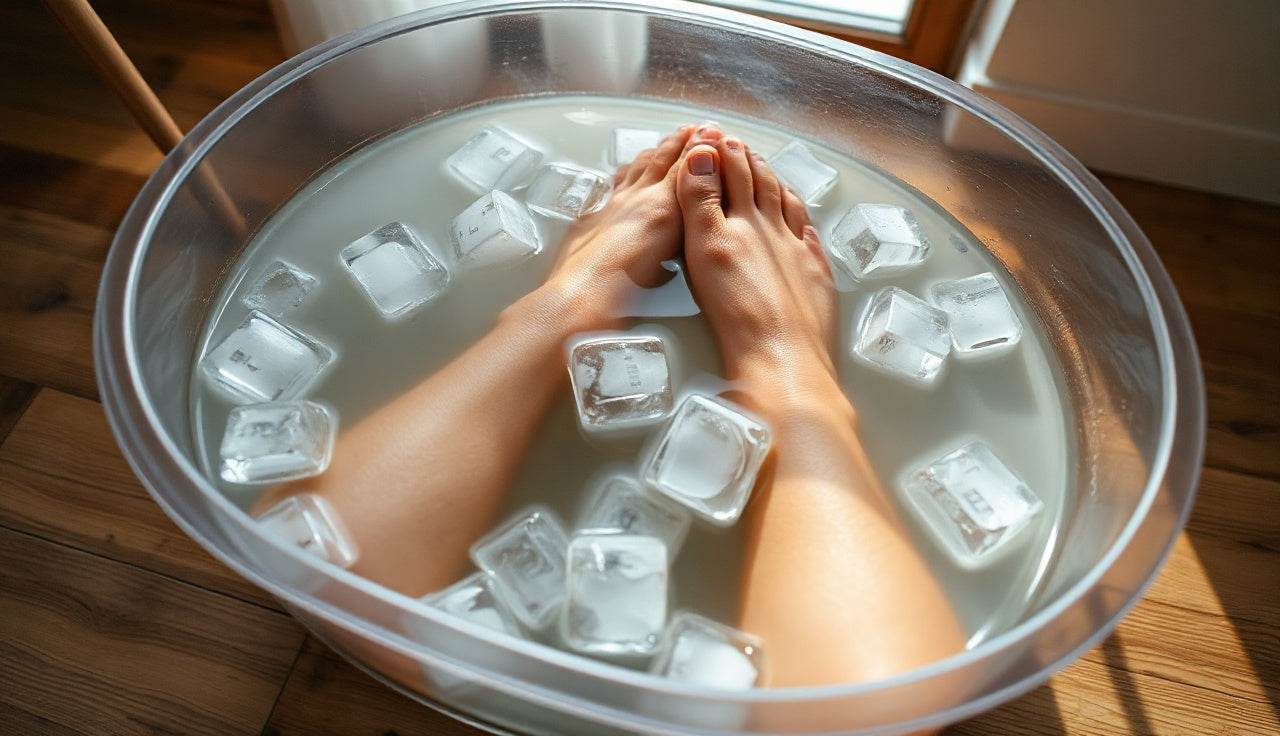
What does an ice bath for feet actually do to your body?
Cold water constricts blood vessels. That's the whole mechanism. Submerge your feet in water around 50 to 59°F (10 to 15°C) and the vessels in your feet and lower legs clamp down, which slows local blood flow and reduces the movement of fluid into surrounding tissue. Less swelling. Less pain signal reaching the brain. When you pull your feet out and they rewarm, blood rushes back, and that rebound is thought to help flush metabolic byproducts like lactate from the tissue.
A 2012 systematic review in the Journal of Athletic Training looked at cryotherapy for acute soft-tissue injury and found consistent evidence that cold application reduces pain and edema in the short term, though the authors noted optimal dosing (temperature, duration, timing) was still unclear [1]. The pain relief part is well-supported. The long-term recovery acceleration is murkier.
Swelling reduction is the most reliable effect. Roll your ankle or spend eight hours walking concrete floors, and the vasoconstriction from cold water genuinely limits how much fluid pools in the tissue. That's basic physiology, and it's why RICE (rest, ice, compression, elevation) has been a clinical staple for decades, even as sports medicine has shifted toward more nuanced protocols [2].
Temperature matters more than people think. Water at 60°F feels cold but doesn't produce the same response as water at 50°F. A review in the International Journal of Sports Physiology and Performance found cold water immersion at 50 to 59°F consistently produced greater reductions in perceived soreness compared to thermoneutral water [3]. Cold tap water usually runs 55 to 65°F depending on region and season, so you'll often need to add ice to a bucket to hit the target.
What conditions actually benefit from an ice foot soak?
There's a real gap between conditions where cold is evidence-backed and conditions where it's just tradition.
Acute ankle sprains are the clearest case. Cold applied within the first 24 to 72 hours of a sprain reduces swelling and makes movement more tolerable. The American Academy of Orthopaedic Surgeons recommends ice application for 20 minutes every few hours in the acute phase [2].
Plantar fasciitis is where most people find a foot ice bath genuinely useful for ongoing management. The plantar fascia runs along the bottom of the foot from the heel to the toes, and inflammation there produces that sharp morning pain. Cold quiets the inflammation and numbs the area enough to let you move. Some sports podiatrists prefer rolling a frozen water bottle under the arch because it adds a self-massage component, but a full foot soak is a fine alternative.
Post-run and post-workout soreness in the feet and lower legs responds reasonably well to cold immersion. Runners logging high mileage, hikers after long descents, and anyone on their feet for hours often report meaningful relief. The research on delayed-onset muscle soreness (DOMS) is mixed, though. A 2012 Cochrane review on cold water immersion found it reduced DOMS compared to passive rest, but the authors flagged that most included studies had small sample sizes and methodological limitations [4].
Overuse injuries like posterior tibial tendinopathy, Achilles tendinopathy, and metatarsalgia sometimes get cold during flare-ups, but the evidence is thinner. For chronic tendinopathies, heat and eccentric loading protocols have more support as primary treatments. Cold becomes a symptom manager, not a healer.
General tired, achy feet after a long day? Totally valid reason to soak. No randomized trial exists for it, but the mechanism (reducing minor inflammation, providing analgesic relief) is sound enough that it's a reasonable self-care tool.
How cold and how long should a foot ice bath be?
The most-cited therapeutic range in sports medicine research is 50 to 59°F (10 to 15°C) for 10 to 20 minutes [3]. That's where most published cold water immersion work lands. Colder than 50°F doesn't appear to produce better outcomes and raises frostbite risk if you stay in too long. Warmer than 60°F may not produce enough vasoconstriction to reduce swelling.
Duration is a real variable. Ten minutes suits general soreness or a first-time user. Fifteen to twenty minutes is reasonable for a significant acute injury or a high-mileage recovery session, as long as you're watching your skin. The skin should turn pink to red from cold, not white or mottled purple. White or purple means you've been in too long or the water's too cold. Get out.
Here's a practical target table:
| Goal | Target Temp | Duration |
|---|---|---|
| General soreness / tired feet | 55 to 60°F (13 to 16°C) | 10 to 15 min |
| Acute swelling (sprain, post-race) | 50 to 55°F (10 to 13°C) | 15 to 20 min |
| Plantar fasciitis flare | 50 to 59°F (10 to 15°C) | 10 to 15 min |
| Contrast therapy (alternating cold/warm) | Cold: 50 to 59°F / Warm: 100 to 104°F | 1 min cold / 3 to 4 min warm, 3 to 4 cycles |
Frequency is less studied than temperature or duration. Clinical guidance for acute injuries suggests multiple sessions per day in the first 48 to 72 hours. For maintenance or general recovery, once a day or every other day works. No strong evidence says daily foot baths for months cause harm, and none says they beat a few times a week either.
| Target temp, foot bath (°F) | 55 |
| Target temp, cold plunge (°F) | 52 |
| Session duration, foot bath (min) | 15 |
| Session duration, cold plunge (min) | 10 |
| Setup cost, foot bath (USD) | 15 |
| Setup cost, cold plunge (USD) | 2,500 |
Source: International Journal of Sports Physiology and Performance, Versey et al. 2013; Cochrane Database, Bleakley et al. 2012
How do you set up an ice foot bath at home?
You need a container big enough to fit both feet with water reaching above your ankles. A standard five-gallon bucket handles one foot at a time. A 10 to 18 quart plastic storage tote or a dedicated foot basin covers both feet. For ankle-to-mid-calf immersion, use a container at least 12 inches deep.
Fill it with cold tap water first, then add ice to bring the temperature down. A kitchen thermometer takes the guesswork out entirely and costs around $10 to 15. You'll typically need 2 to 4 pounds of ice to drop a five-gallon container from 65°F tap water to 50 to 55°F. The exact ratio depends on your tap water temperature.
Have a towel on the floor under the container, a dry towel nearby for after, and something to do for 15 minutes. Your feet will ache for the first two or three minutes. That's the cold thermoreceptors firing. Most people find it manageable once the nerves partially numb.
Don't press ice packs or ice bags directly against bare skin. That's a different mechanism (direct-contact freezing) with much higher frostbite risk. A cloth barrier or the water itself is safer because water spreads the temperature evenly.
Contrast therapy, alternating cold and warm water, is a step up from a straight cold soak. Run two containers: one at 50 to 59°F, one at about 100 to 104°F. Start cold, move to warm, alternate. The vasodilation-vasoconstriction cycling is sometimes called a "vascular pump," and some evidence suggests it reduces subjective fatigue faster than cold alone [5]. For the full-body versions, our ice bath and cold plunge benefits guides go into much more detail.
Does an ice foot bath help plantar fasciitis specifically?
Plantar fasciitis is one of the most common musculoskeletal complaints anywhere. The American Academy of Orthopaedic Surgeons estimates it affects about 2 million people per year in the United States [6]. Pain sits on the bottom of the heel, worst with the first steps in the morning and after long rest periods, driven by micro-tears and inflammation in the plantar fascia.
Cold applied to the plantar fascia reduces local inflammation and dulls the pain. That's well-established. The debate in sports medicine is whether anti-inflammatory approaches are the right long-term strategy at all, because many chronic cases show degenerative rather than purely inflammatory changes in the fascia. Current research points to cryotherapy as a symptom manager during flare-ups, not a primary healing treatment.
The American Physical Therapy Association's clinical practice guidelines for heel pain rank manual therapy, stretching, and orthotics as the strongest evidence for plantar fasciitis, with physical modalities like cryotherapy treated as adjunctive [7]. So a cold foot soak can make your day tolerable while you work the actual treatment, but it probably won't resolve plantar fasciitis on its own.
The routine many sports medicine clinicians suggest: gentle calf and plantar fascia stretches before your first step in the morning, orthotic support during the day, and a cold foot soak (or frozen water bottle roll) in the evening after activity. That sequence addresses tissue loading, mechanical support, and inflammation, in that order of priority.
Who should NOT use an ice foot bath?
This is the part most articles skip, and it genuinely matters.
Diabetes with peripheral neuropathy. Reduced sensation means you can't reliably feel when the water is too cold or when skin is being damaged. Frostbite or cold injury can develop with no pain signal reaching consciousness. The American Diabetes Association advises people with diabetes to check their feet daily for injury and to be careful with any temperature extremes [8]. If you have neuropathy, talk to your doctor before doing foot ice baths.
Peripheral arterial disease (PAD). Cold causes vasoconstriction. If blood flow to your feet is already compromised, constricting those vessels further can drop circulation to dangerous levels. PAD is common and often undiagnosed, particularly in smokers and people over 50 with cardiovascular risk factors.
Raynaud's disease or phenomenon. Cold is a classic trigger. The small arteries in the extremities spasm hard, cutting off blood flow. Feet turn white, then blue, then painfully red. An ice foot bath is a reliable way to set off a severe episode.
Open wounds, active infections, or skin conditions. Cold water and open skin don't mix. Wound, athlete's foot, any compromised skin, skip the soak until it heals.
Pregnancy. Cold water immersion guidance during pregnancy is conservative and thin on data. Foot-only soaks are probably low risk, but checking with an OB is the right call.
For everyone else, the main risk is discomfort, which is real but not dangerous. Cap sessions at 20 minutes, watch skin color and sensation, and the safety side takes care of itself.
How does an ice foot bath compare to a full ice bath?
A full ice bath or cold plunge immerses the body up to the waist or chest. The effects are much larger: greater core cooling, a more pronounced cold shock response, higher norepinephrine release, and broad systemic effects including the mood and nervous system changes that get so much attention in the wellness space. The discomfort is much greater too.
A foot ice bath is localized. You get vasoconstriction and pain relief in the feet and lower legs. You don't get the systemic hormonal response, the cardiovascular training effect, or anything close to the psychological adaptation that comes from repeated full-body cold. If your goal is injury management or foot-specific recovery, a foot soak is targeted and practical. If your goal is the full-body recovery and mental resilience benefits, a full cold plunge is a different thing entirely.
Cost and logistics split cleanly too. A foot bucket costs nothing if you already own a tote. A proper cold plunge tub runs from about $500 for a basic chest-freezer conversion to $5,000 or more for a purpose-built unit. The foot soak has a near-zero barrier to entry.
The comparison below puts it plainly:
| Factor | Foot Ice Bath | Full Ice Bath / Cold Plunge |
|---|---|---|
| Target area | Feet + lower legs | Full lower body (or more) |
| Core temperature change | Minimal | Significant (0.5 to 2°F drop typical) |
| Norepinephrine response | Small | Large (up to 300% increase reported) [9] |
| Discomfort level | Moderate | High |
| Setup cost | Near $0 | $500 to $5,000+ |
| Session time | 10 to 20 min | 2 to 15 min |
| Best for | Foot/ankle recovery, plantar fasciitis | Full-body recovery, mental training, systemic benefits |
What temperature should the water be, and how much ice do you need?
The therapeutic sweet spot is 50 to 59°F (10 to 15°C). A standard kitchen thermometer is your best friend here and removes all the guesswork.
How much ice you need depends on your starting water temperature. Tap water in most U.S. regions comes out between 55 and 75°F depending on season and location [10]. In summer, tap water might be 70°F and you'll need more ice. In winter it might already sit at 55°F, and a cup of ice gets you there.
A rough guideline: to drop a two-gallon foot basin from 65°F to 52°F, you need roughly 2 to 3 pounds of ice. Standard freezer ice bags run 7 to 10 pounds, so one bag handles several sessions. Frozen water bottles work too, and you can refreeze and reuse them.
Once you hit your target, the water holds range for roughly 15 to 25 minutes before it climbs back past 60°F, depending on container insulation and room temperature. A bare plastic tote loses heat faster than a foam cooler. For a 20-minute session you'll usually be fine. For anything longer, add more ice or drop a frozen bottle in the basin to hold temperature.
One thing catches people out: water at exactly 32°F only happens if it's mostly ice slush with very little liquid. That's colder than you want for a foot soak. Aim for a ratio that keeps the water liquid and measurable at 50 to 59°F.
Does cold foot soaking after running or standing all day actually speed recovery?
The honest answer: it speeds perceived recovery more reliably than actual tissue repair. That distinction matters.
The 2012 Cochrane review on cold water immersion and muscle recovery found it reduced perceived DOMS (soreness ratings) compared to passive rest, but the clinical significance of the effect size was debated and most studies carried a high risk of bias [4]. Practically: you'll probably feel better faster. Whether your muscles are actually repaired faster is less certain.
Running loads the feet and calves with a lot of cumulative impact. Plantar fascia, Achilles tendon, calf muscles, the small intrinsic muscles of the foot, all of it accumulates stress over a long run. A post-run cold foot soak can dampen the acute inflammatory response and make the next 24 to 48 hours more comfortable. For athletes with back-to-back training days or a racing schedule, feeling better faster has real value even if the tissue timeline is the same.
For people who stand all day (nurses, teachers, retail and construction workers), the mechanism shifts. The discomfort comes more from sustained venous pooling and soft tissue fatigue than from exercise-induced muscle damage. Cold causes vasoconstriction, which temporarily reverses some of the venous dilation from standing, and the water's pressure adds mild edema reduction. Most people in this group report meaningful relief, and the physiology holds up even though no RCTs exist on nurses doing cold foot soaks.
If you're weighing broader recovery tools, a cold plunge or a proper contrast therapy setup covers far more of the body and likely produces stronger recovery effects. But for foot-specific recovery after a long run or a long shift, a dedicated foot ice bath is a practical, low-cost option worth building into your routine.
Can ice foot baths reduce swelling after an ankle sprain?
Yes, and this is one of the clearest clinical indications for cryotherapy. The RICE protocol (Rest, Ice, Compression, Elevation) has been the standard first response to acute ankle sprains for decades, and cold immersion is an effective way to deliver the "I."
Vasoconstriction from cold directly limits how much edema fluid accumulates in the injured tissue during the first 24 to 72 hours. Less swelling means less pressure on pain receptors, faster return of range of motion, and often a shorter early recovery window.
The American Academy of Orthopaedic Surgeons recommends applying ice for 20 minutes every 2 to 3 hours in the acute phase of an ankle sprain [2]. A foot and ankle ice bath is one of the most effective ways to deliver even, wrap-around cooling to the joint and surrounding tissue, better than an ice pack in some ways because the contact is uniform.
The updated PEACE & LOVE framework, which has partly replaced RICE, is more nuanced: it calls for optimal loading and warns against excessive anti-inflammatory treatment in later healing phases, because inflammation is part of healing [11]. Translation: use cold aggressively in the first 72 hours for swelling control and pain, then taper off as the injury moves from acute to subacute. Don't ice a healing ankle for three weeks and expect faster recovery.
If the swelling is significant, pair the ice foot bath with elevation (feet above heart level) during and after, and consider compression wrapping between sessions. That combination beats cold alone.
Are there any tools or products that make foot ice baths easier?
The barrier to entry is genuinely low. A 10 to 18 quart plastic storage bin and a bag of gas-station ice covers 95% of use cases. But if you do this regularly, a few upgrades make the routine easier to sustain.
A dedicated foot bath basin with a drain is convenient, because draining and refilling a big tote without one is awkward. Several brands make foot spa basins that also work for cold water (just skip the heat setting). Anything with 10-plus quart capacity and at least 6 inches of depth works.
A foam cooler or insulated container holds temperature much longer than a thin plastic tote. If your sessions run 20 minutes and you're losing the target by minute 15, the insulation earns its keep.
A reusable thermometer (a basic instant-read kitchen model at $10 to 15) means you hit the 50 to 59°F window reliably instead of guessing.
Reusable ice packs or frozen water bottles are the smarter economic choice for daily use. A bag of store ice costs $2 to 4, which adds up at five days a week. A set of reusable gel packs runs about $15 to 25 and lasts indefinitely.
If the foot work has convinced you full-body cold is worth the investment, SweatDecks carries cold plunge options at different price points. The foot ice bath habit is a legitimate gateway to understanding how your body handles cold, and that makes choosing a full cold plunge setup a more informed decision.
How do ice foot baths fit into a broader heat and cold therapy routine?
Foot ice baths work as a standalone tool, and they also slot into a contrast therapy protocol. Alternating between a hot foot soak (around 100 to 104°F) and a cold soak (50 to 59°F) creates a vascular pumping effect that some research suggests reduces soreness and perceived fatigue faster than either temperature alone [5].
The classic contrast protocol for feet: 1 minute in cold, 3 to 4 minutes in hot, repeat 3 to 4 cycles. End in cold if the goal is reducing swelling, end in warm if the goal is relaxation. The whole thing takes about 15 to 20 minutes and needs two basins running at once.
In the bigger picture, cold foot baths sit in a sensible spot. Lower commitment than a full-body cold plunge, more targeted than a sauna session, easy to combine with other tools. A sauna session followed by a cold foot soak is a reasonable approximation of contrast therapy when you don't have a full cold plunge. The sauna benefits are well-documented for cardiovascular health and muscle recovery, and adding cold afterward turns the session into a real contrast protocol.
Feet and ankles are disproportionately hard to ice with standard ice packs because of all the contours. An immersion soak handles that better. So even if you own a full cold plunge for your lower body on heavy training days, a dedicated foot basin for targeted sessions on lighter days has practical value.
If you're building a home recovery setup with both heat and cold, the home sauna and cold plunge guides on SweatDecks walk through the equipment decisions in detail.
Frequently asked questions
How long should I keep my feet in an ice bath?
10 to 20 minutes is the evidence-based range for most goals. Ten minutes is enough for general soreness and a first-time user. Fifteen to twenty minutes suits acute swelling or significant post-exercise recovery. Don't go past 20 minutes without a good reason. Watch your skin: pink or red is fine, white or mottled purple means stop immediately.
Can I use an ice foot bath every day?
Daily use is likely fine for most healthy adults. No research shows harm from daily cold foot soaks of 10 to 20 minutes. If you're recovering from an acute injury, multiple sessions per day in the first 72 hours is clinically supported. For ongoing maintenance, once a day or every other day is a reasonable rhythm. If your feet get more sensitive or develop skin changes, cut back.
Will an ice foot bath help neuropathy pain?
Probably not, and it could be risky. Peripheral neuropathy reduces sensation in the feet, so you can't reliably detect when the water is too cold or when skin damage is happening. Frostbite or cold injury can occur without pain warning. The American Diabetes Association advises people with diabetic neuropathy to be cautious with temperature extremes. Talk to your doctor before trying cold foot soaks if you have neuropathy of any cause.
Should I ice my feet before or after exercise?
After exercise is the standard recommendation. Pre-exercise icing reduces muscle activation and proprioception temporarily, which could raise injury risk. Post-exercise cold immersion is where the recovery evidence sits: it reduces acute soreness and swelling after training. Wait until you've cooled down naturally (10 to 15 minutes post-workout) before starting the soak, so you're not stacking cold stress onto a still-elevated cardiovascular state.
What's the difference between an ice foot bath and a cold foot soak?
Temperature. A cold foot soak usually means cool tap water, maybe 60 to 70°F, which feels refreshing but doesn't produce strong vasoconstriction. An ice foot bath targets 50 to 59°F using ice added to cold water. The effects (swelling reduction, pain relief, inflammatory response) are meaningfully stronger in the lower range. If you're doing it for recovery rather than comfort, aim for the 50 to 59°F window.
Can an ice foot bath help with gout?
Cold can temporarily reduce the intense pain of a gout flare, since attacks produce severe acute inflammation in the joint. But very cold temperatures can sometimes worsen gout by promoting urate crystal precipitation in cold tissue. The Arthritis Foundation recommends cold for pain relief in gout, with caution. If gout is suspected, see a doctor for uric acid management (the primary treatment) and use cold as a short-term comfort measure only.
How do I make an ice bath colder without using too much ice?
Start with the coldest tap water you have, which in winter runs 45 to 55°F in many regions and may need no ice at all. Add ice gradually while checking a thermometer, targeting 50 to 59°F. Use an insulated container (a foam cooler works great) to hold temperature longer. Frozen water bottles are efficient because they don't dilute the water as they melt, so the cold stays more concentrated than loose ice.
Is an ice foot bath good for heel pain?
Yes, particularly for plantar fasciitis, the most common cause of heel pain. Cold reduces inflammation at the plantar fascia insertion on the heel and provides analgesic relief. Apply a 10 to 15 minute cold soak after activity, when pain is worst. This is symptom management, not a cure. Stretching, appropriate footwear, and sometimes orthotics have stronger evidence for resolving plantar fasciitis long-term.
Can children use ice foot baths?
With caution and supervision. Children's skin is more sensitive to cold, and they may not communicate discomfort reliably. Keep the temperature on the warmer end of the therapeutic range (55 to 60°F rather than 50°F) and limit duration to 5 to 10 minutes. An adult should monitor throughout. For any specific injury or medical condition in a child, consult a pediatrician before starting cold therapy.
What should I do after an ice foot bath?
Dry your feet thoroughly, especially between the toes, to prevent maceration or fungal issues. Let them rewarm naturally for 10 to 15 minutes before socks and shoes. If you're doing contrast therapy, end with a warm soak for relaxation or a cold soak if swelling reduction is the priority. Gentle range-of-motion movements during rewarming help restore circulation faster after the vasoconstriction phase.
Does an ice foot bath burn calories or have metabolic effects?
Minimally, compared to full-body cold exposure. Brown adipose tissue (brown fat) activation and the metabolic effects of cold immersion are tied mostly to cooling the torso and neck, not the feet. A foot ice bath doesn't meaningfully cool the core or trigger the systemic thermogenic response researchers study in cold-and-metabolism work. For metabolic effects, full-body cold plunges are what the research covers.
How is a foot ice bath different from using an ice pack on my ankle?
Ice packs create localized direct-contact cooling on one surface. A foot ice bath gives uniform, wrap-around cooling of the entire foot and ankle, reaching all the contours at once. That makes immersion more effective for swelling reduction across the whole joint. Ice packs also carry higher frostbite risk applied directly to skin without a cloth barrier. For ankle sprains specifically, immersion is generally the more effective delivery method.
Can I add anything to the ice water, like Epsom salt?
Epsom salt (magnesium sulfate) dissolved in warm water is a traditional soak for sore feet, but the evidence for transdermal magnesium absorption is weak. Adding it to cold water may provide minor osmotic effects that modestly help surface edema, but this isn't well-studied. It doesn't hurt to add it if you find it soothing, just don't expect it to change the core cold therapy effects. The cold temperature does the primary work.
Will an ice foot bath help with swollen feet from flying or standing?
Yes, reasonably well. Swelling from prolonged standing or flying is largely venous and lymphatic, from fluid pooling under gravity and reduced calf muscle pumping. Cold water causes vasoconstriction and the water's hydrostatic pressure provides mild external compression, both of which reduce edema. Combine the cold soak with elevating your feet above heart level during and after for the best result. Most people notice visible and felt reduction within 15 minutes.
Sources
- Journal of Athletic Training, Bleakley et al. 2012, Cryotherapy for Acute Ankle Sprains: A Randomised Controlled Study of Two Different Icing Protocols: Systematic review evidence that cryotherapy reduces pain and edema in acute soft-tissue injuries, with optimal dosing still unclear
- American Academy of Orthopaedic Surgeons, Foot & Ankle, Ankle Sprains: AAOS recommendation for ice application 20 minutes every 2-3 hours in the acute phase of an ankle sprain
- International Journal of Sports Physiology and Performance, Versey et al. 2013, Water Immersion Recovery for Athletes: Effect on Exercise Performance and Practical Recommendations: Cold water immersion at 50-59°F consistently produced greater reductions in perceived soreness compared to thermoneutral water
- Cochrane Database of Systematic Reviews, Bleakley et al. 2012, Cold-water immersion (cryotherapy) for preventing and treating muscle soreness after exercise: Cold water immersion reduced DOMS compared to passive rest, but most included studies had small sample sizes and methodological limitations
- Journal of Science and Medicine in Sport, Bieuzen et al. 2013, Contrast Water Therapy and Exercise Induced Muscle Damage: A Systematic Review and Meta-Analysis: Contrast water therapy (alternating cold and warm immersion) reduced perceived fatigue and soreness compared to passive recovery
- American Academy of Orthopaedic Surgeons, Plantar Fasciitis and Bone Spurs: Plantar fasciitis affects approximately 2 million people per year in the United States
- American Physical Therapy Association, Clinical Practice Guidelines for Heel Pain and Plantar Fasciitis: Manual therapy, stretching, and orthotics have the strongest evidence for plantar fasciitis; cryotherapy is considered adjunctive
- American Diabetes Association, Standards of Medical Care in Diabetes, Foot Care: People with diabetes should check their feet daily for injury and exercise caution with temperature extremes due to peripheral neuropathy risks
- PLoS ONE, Buijze et al. 2016, The Effect of Cold Showering on Health and Work; and cold exposure norepinephrine literature: Norepinephrine increases up to approximately 300% reported with whole-body cold water immersion
- U.S. Geological Survey (USGS), Water Science School, Water Temperature: Tap water temperature in U.S. regions ranges approximately 55-75°F depending on season and geographic location
- British Journal of Sports Medicine, Dubois & Esculier 2020, Soft-tissue injuries simply need PEACE and LOVE: The PEACE and LOVE framework updates RICE, recommending optimal loading and caution with excessive anti-inflammatory treatment in later healing phases

Share:
Are infrared saunas healthy? What the research actually shows
Outdoor cold plunge: everything you need to know before buying