
Last updated 2026-07-10
TL;DR
A cold plunge tub is a standalone vessel kept at 50 to 60°F that you sit in for 2 to 10 minutes to trigger cold-exposure effects like less muscle soreness and a sharp mood lift. You need no sauna and no other gear. Basic chest freezer conversions start around $300. Filtered, chilled premium units run past $10,000.
What exactly is a cold plunge tub, and how is it different from an ice bath?
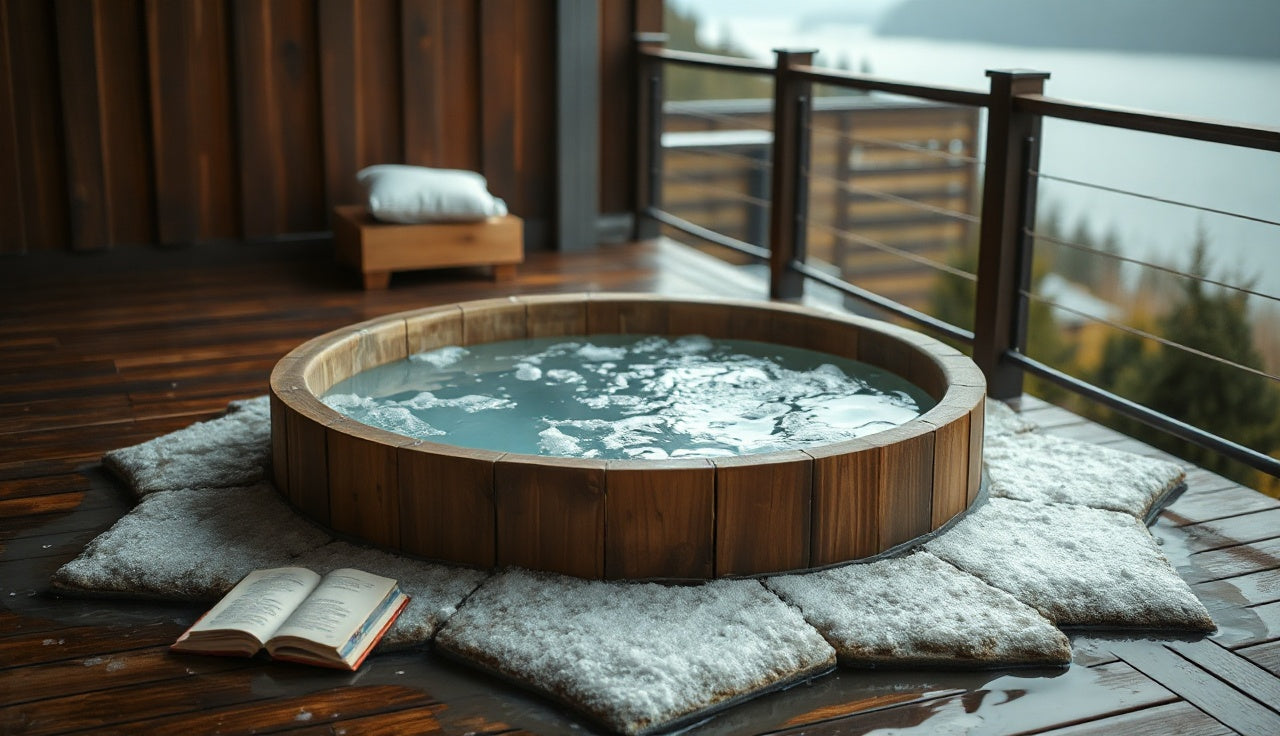
A cold plunge tub is a purpose-built or repurposed vessel that holds water at a steady cold temperature, usually between 45°F and 60°F, so you can get in without hauling ice every time. That's the core distinction. An ice bath is a one-off: you fill a tub with ice water, use it once, and drain it. A cold plunge tub is infrastructure. You fill it once, a chiller keeps the temperature steady, and it's ready whenever you are.
The term covers a lot of ground. On the simple end sits a chest freezer converted with a pump and filter, which costs a few hundred dollars and works surprisingly well. On the premium end sit purpose-built acrylic or polyethylene shells with integrated chillers, ozone sanitation, and digital temperature displays that run $6,000 to $15,000 or more.
Water temperature is what matters physiologically. Research in the International Journal of Sports Physiology and Performance found that water between 50°F and 59°F (10°C to 15°C) produced the most consistent reductions in perceived muscle soreness after exercise [1]. Colder is not automatically better. Going below 50°F raises real safety concerns around cold shock and hypothermia.
You don't need a sauna to use a cold plunge tub. Contrast therapy, alternating heat and cold, has its own appeal, but plenty of people run a cold plunge on its own as a morning reset or post-workout ritual. If you want to add heat later, read up on cold plunge benefits or look at a home sauna as a separate project.
What are the actual benefits of using a cold plunge tub regularly?
The research is real, and it's more modest than the marketing. Here's what the evidence actually supports.
Muscle soreness reduction is the most replicated finding. A 2012 Cochrane systematic review of cold water immersion for muscle soreness found that CWI reduced delayed-onset muscle soreness compared to passive rest, though the reviewers noted the effect sizes were moderate and study quality varied [2]. That review looked at immersion in water at or below 15°C (59°F) for a few minutes, which matches what a properly set tub delivers.
The norepinephrine spike is the other well-documented effect. A study by Søberg et al. in Cell Reports Medicine in 2021 found that cold water immersion caused roughly a 300% increase in norepinephrine [3]. Norepinephrine drives mood, focus, and alertness. People describe an "alive" feeling after a plunge, and the biochemistry lines up.
Heart rate variability and stress resilience are active research areas, but the data is earlier-stage. Nobody should buy a cold plunge tub expecting to treat a medical condition. What you can reasonably expect: faster perceived recovery from hard workouts, a reliable mood lift, and a mental discipline practice that many users find genuinely useful.
For a deeper look at the studies, the cold plunge benefits page breaks down the evidence in more detail.
What types of cold plunge tubs are available and what does each cost?
Five main categories exist, each with different tradeoffs on cost, maintenance, and daily convenience.
| Type | Typical price range | Temperature control | Filtration | Best for |
|---|---|---|---|---|
| Chest freezer conversion | $200 to $500 | Manual or thermostat | DIY pump/filter | Budget-focused, handy owners |
| Inflatable/soft-sided tub | $50 to $400 | Ice only (no chiller) | None or basic | Occasional use, travel |
| Portable cold plunge with chiller | $1,500 to $3,500 | Electric chiller | Basic cartridge | Apartment use, renters |
| Mid-range freestanding tub | $3,500 to $7,000 | Integrated chiller | Ozone or UV | Daily home use, outdoor decks |
| Premium built-in unit | $7,000 to $20,000+ | Precision digital chiller | Full sanitation system | Dedicated wellness rooms, gyms |
The chest freezer conversion is the most popular DIY route. Buy a 7-cubic-foot chest freezer (roughly $200 at most hardware stores), add an Inkbird temperature controller ($30) and a small submersible pump with a filter ($50 to $100), and you have a working cold plunge for under $400. Water stays cold without ice. The downsides are looks, noise, and the reality that you're maintaining a homemade system.
Inflatable tubs with no active cooling need ice, which means ongoing cost and effort. A 100-pound bag of ice from a convenience store costs $5 to $8 and might chill a standard tub for one session. Daily ice baths that way run $150 or more per month in ice alone. That math makes a chilled tub look reasonable fast.
Portable units like the Plunge All-In or Ice Barrel sit in the $1,500 to $3,500 range and are legitimately good if you can't install anything permanent. Real chillers, real filtration, and they work.
For cold plunge tub reviews and curated picks across every price range, SweatDecks has a selection with honest notes on what you actually get at each price point.
The premium end (Renu Therapy, Plunge, Blue Cube, Nordic Wave) competes on finish quality, warranty, and service as much as performance. Whether that's worth $10,000 over a $500 chest freezer conversion is a personal call.
| Inflatable/soft-sided (ice only) | $225 |
| Chest freezer conversion (DIY) | $400 |
| Portable unit with chiller | $2,500 |
| Mid-range freestanding tub | $5,500 |
| Premium built-in unit | $12,000 |
Source: SweatDecks market survey of current retail pricing, 2024
How cold does a cold plunge tub need to be to actually work?
The evidence clusters around 50°F to 59°F (10°C to 15°C) as the effective range for recovery and physiological response [1]. Below 50°F you add risk with diminishing returns for most people. Above 60°F you're in cool-bath territory, which is pleasant but produces a weaker response.
First-timers should start at 60°F and work down to 55°F over a few weeks. Cold shock response, the involuntary gasp and hyperventilation that hits when you enter cold water, is real and can be dangerous. The Cleveland Clinic notes that cold shock is responsible for a significant portion of cold water drownings [4]. Easing in over time lets your body adapt.
If you want the norepinephrine spike that the Søberg et al. research documents, the water needs to be cold enough to feel uncomfortable. That's subjective, but most experienced users land between 50°F and 55°F for daily use.
Time in the water matters more than temperature extremes. Most practitioners use 2 to 10 minutes per session. No strong evidence says 15 minutes beats 5 minutes by enough to justify the extra cold and discomfort.
How long should you stay in a cold plunge tub per session?
Two to ten minutes covers the range in most of the research [1][2]. The Cochrane review found that most protocols used multiple immersions totaling 11 to 15 minutes, but those were post-exercise recovery protocols. For daily wellness use, 3 to 5 minutes at 50 to 55°F is where most experienced users settle.
The safe ceiling depends on water temperature. At 50°F, cooling is fast enough that staying past 10 to 12 minutes starts to risk a meaningful core temperature drop. At 60°F you have more time before your core is affected.
Here's the practical version for most people. Get in. Breathe deliberately through the cold shock response. Stay until you feel genuinely calm and adjusted, usually 2 to 3 minutes. Then get out and let your body rewarm on its own. Shivering afterward is normal and part of the thermogenic response. Skip the hot shower right after if you want the full effect; let your body do the work for 5 to 10 minutes first.
What should you look for when buying a cold plunge tub?
Start with these five things.
Chilling capacity comes first. A unit that holds 55°F in a 70°F garage in July is a different animal from one that only holds 55°F in a 55°F basement. Look for chillers rated to cool water at least 20°F below ambient temperature. Most quality units list their ambient operating range, and you want that to match your actual install location.
Filtration and sanitation matter more than most buyers realize. Water at 50 to 60°F grows bacteria slower than warm water, but biofilm still builds up on the shell and in the pump lines. Ozone, UV, and bromine all work. Units with no filtration need a full drain-and-refill every few days, which wastes water and time.
Shell material affects durability and feel. Rotomolded polyethylene (the same stuff used in kayaks) is tough and nearly indestructible. Acrylic looks premium but chips. Stainless steel photographs beautifully and holds temperature well, but adds real weight and cost.
Size has to fit your body. You want to sit with your shoulders submerged. Most standard units are built for users up to about 6'2" and 250 lbs. If you're taller or heavier, check internal dimensions before buying. Some units that look roomy in marketing photos are cramped in person.
Chiller noise is worth checking if the unit goes indoors or near a bedroom. Some chillers run at 55 to 65 decibels, roughly dishwasher-level. Fine in a garage. Annoying in a wellness room.
For a closer look at what to evaluate, the cold plunge guide walks through these criteria with specific product examples.
Can you use a cold plunge tub outdoors year-round?
Yes, with caveats by climate.
In a mild climate (rarely below 20°F in winter), an outdoor cold plunge tub runs fine year-round. Cold winters actually make the chiller's job easier, since it fights less ambient heat. Plenty of owners in northern states shut the chiller off entirely in winter and let the outside air do the work.
In climates that regularly drop below 20°F, you have to think about pipe freeze protection, insulation, and whether your chiller is rated for outdoor cold. Most residential chillers have a minimum ambient operating temperature around 32°F to 40°F. Below that, refrigerant stops flowing efficiently and the unit can be damaged.
Sun exposure matters a lot. A tub in direct summer sun in a warm climate works the chiller hard and may struggle to hold target temperature. A shade structure, an insulated cover, or shaded placement makes a real difference in efficiency and electricity cost.
Running a chiller outdoors in summer can cost real money. A typical cold plunge chiller draws 500 to 1,000 watts. Running it 8 to 12 hours a day to hold temperature in the heat might add $20 to $50 a month to your electric bill, depending on your rate. In winter you might run it 2 to 3 hours a day and spend almost nothing.
How do you maintain and clean a cold plunge tub?
Maintenance is easy if you stay consistent, and gross if you neglect it for weeks.
Water chemistry is the main thing. Cold water suppresses bacteria compared to a hot tub, but it doesn't stop it. If you run ozone or UV, still keep pH between 7.2 and 7.6 and hold a small amount of bromine or chlorine (1 to 3 ppm is typical) as backup. Test strips are cheap. Checking once or twice a week takes 30 seconds.
Drain frequency depends on your filtration. A well-maintained filtered tub can go 1 to 3 months between full drain-and-refills. An unfiltered chest freezer conversion should be drained every 2 to 4 weeks. When you drain, scrub the interior with a mild bleach solution, rinse well, and refill.
Filter maintenance varies by unit. Cartridge filters need rinsing or replacement every 2 to 6 weeks. Follow your unit's guidance.
One thing people miss: the underside of the cover. Biofilm builds up there. Wipe it down when you do your periodic cleaning.
Keep a short log of when you last drained, what chemicals you added, and your last pH reading. It sounds tedious. It takes two minutes and prevents problems.
Is a cold plunge tub safe? Who should avoid it?
Cold water immersion carries real risks for certain people, and those risks deserve to be taken seriously rather than waved off.
People with cardiovascular conditions, particularly uncontrolled hypertension or arrhythmias, should talk to a physician before plunging. Cold exposure causes an immediate jump in heart rate and blood pressure. The Cleveland Clinic advises that people with heart disease exercise caution with cold water immersion [4]. This isn't a legal disclaimer. It's real physiology.
Raynaud's phenomenon makes cold immersion very uncomfortable and potentially harmful. Peripheral vascular conditions generally fall in the same bucket.
Pregnancy is another reason to check with your doctor. Prolonged cold immersion can lower core temperature, and most OB providers advise avoiding extreme temperature exposures.
For healthy adults without these conditions, the safety profile is good. The cold shock response, the initial gasp and hyperventilation, is the main acute risk. It's why you don't jump in headfirst, and why you get in slowly and breathe deliberately. The British Journal of Sports Medicine published a piece noting that "swimming in cold water is associated with cold shock, incapacitation, and hypothermia" [5], and that adaptation through repeated exposures cuts the severity of those responses substantially. The American College of Sports Medicine describes the same gasp-and-hyperventilate reflex on cold water entry, and notes gradual acclimatization reduces it [9].
Don't plunge alone when you're new to it. Keep someone nearby for the first several sessions until you know how your body responds.
How does a cold plunge tub fit into a contrast therapy routine?
Contrast therapy, alternating hot and cold, has a long history in Scandinavian and Finnish sauna culture. The basic protocol is heat for 10 to 20 minutes, cold for 2 to 5 minutes, repeated 2 to 3 cycles. The cold plunge tub handles the cold end.
If you have a sauna or are thinking about one, the pairing works well in the experiential sense: the swing between hot and cold feels far more intense than either alone. The research on whether contrast therapy beats cold alone is mixed. A 2013 meta-analysis in the Journal of Strength and Conditioning Research found no significant difference between CWI and contrast water therapy on muscle soreness and recovery in most outcomes [6].
Still, most people who try both find the combination more enjoyable and easier to stick with long-term. If the sauna side interests you, sauna benefits is worth reading alongside this.
For home setups, the cold plunge needs to be within a short walk of the heat source. Crossing a yard in 30°F weather after a sauna is part of the ritual for some people and a dealbreaker for others. Plan the physical layout before you buy.
What's the honest difference between cheap and expensive cold plunge tubs?
This is where cold plunge tub reviews fail people. They either romanticize the cheap option or justify the expensive one without being straight about the tradeoffs.
A $400 chest freezer conversion works. The water gets cold, you can plunge every day, and you'll get the same physiological response as someone with a $10,000 unit. The differences are real, but they're mostly convenience, looks, and maintenance effort.
Cheap options demand more DIY work. The pump filter on a chest freezer conversion needs manual cleaning more often, the setup looks like a chest freezer in your garage (because it is), and when something breaks, you're troubleshooting a homemade system. Getting into a chest freezer is also plainly less pleasant than sinking into a well-designed pod with ergonomic seating.
Expensive options hand you a finished product with a real warranty, customer support, and a design meant to be seen in a wellness room or backyard. You're paying for the engineering, the finish, the filtration, and the company standing behind it. A $7,000 unit from a reputable brand comes with a 2 to 3 year warranty on parts and labor. Your chest freezer has a 1-year manufacturer warranty on the compressor.
My honest take: if you're not sure cold plunging will stick, start with a $200 to $400 chest freezer conversion and use it for three months. Love it and can afford an upgrade? Buy a nice unit. Absolutely committed with the budget? The premium units are genuinely better in daily use. But dropping $5,000 before you've plunged once is premature.
SweatDecks carries both entry-level and premium options if you want to compare what you actually get at different price points.
How much electricity does a cold plunge tub use?
Electricity cost depends on the chiller's wattage, how hard it works given ambient temperature, how well the tub is insulated, and your local rate.
A typical residential cold plunge chiller draws 500 to 1,000 watts when the compressor is running, but it cycles on and off rather than running flat out. In a cool climate with good insulation, the compressor might run 30 to 40% of the time. In a hot summer garage, 70 to 80%.
Using the U.S. average residential electricity rate of about $0.16 per kWh (early 2024, per the U.S. Energy Information Administration) [7], a 750-watt chiller running 6 hours per day averages roughly $1.08 per day, or about $33 per month. In a hot climate or with a less efficient unit, double that to be safe.
A chest freezer conversion often runs more efficiently, because chest freezer compressors are built for exactly this kind of thermal load. Many users report their converted freezer adds $15 to $25 a month to the electric bill.
The insulated cover makes a real difference. Leaving a plunge uncovered in a 90°F environment sharply increases run time. A good insulated cover can cut chiller run time by 30 to 50%.
Does using a cold plunge tub after exercise interfere with muscle growth?
This is the most important nuance in cold plunging right now, and it gets buried under the enthusiasm.
Short answer: cold water immersion right after strength training may blunt muscle growth over time. A randomized controlled trial in the Journal of Physiology in 2015 found that CWI after strength training reduced long-term gains in muscle mass and strength compared to active recovery [8]. The proposed mechanism is that cold suppresses the inflammatory signaling that drives muscle adaptation. The effect was meaningful across the 12-week study.
That doesn't make cold plunge tubs bad for people who lift. It means timing matters. Using the plunge 4 to 6 hours after a strength session, rather than immediately after, appears to cut this interference. Using it right after endurance work, where you're not chasing hypertrophy, is fine and likely helps recovery [1].
If your main goal is building muscle and you lift 4 to 5 days a week, daily cold plunging right after your sessions is probably working against you. If your goal is general recovery, mood, and performance across mixed training, the timing tweak is simple and the benefits hold.
Frequently asked questions
Can I use a cold plunge tub without a chiller, just adding ice?
Yes, but it's expensive and slow at scale. A standard tub holds 80 to 100 gallons. Getting it to 55°F from 70°F takes roughly 40 to 60 pounds of ice, and the effect lasts an hour or two before the water warms. For occasional use that's fine. For daily plunging, a chiller pays for itself against ongoing ice cost within 6 to 12 months.
How often should you use a cold plunge tub to see results?
Most research protocols use 3 to 5 sessions per week. Daily use is common among dedicated practitioners and appears safe for healthy adults. No strong evidence says more than once a day adds benefit, and very frequent use right after strength training may blunt muscle adaptation. Consistency over weeks and months matters more than raw session count.
What's the best temperature for a cold plunge tub?
The research-supported range is 50°F to 59°F (10°C to 15°C) for recovery benefits. Beginners should start at 60°F and acclimate downward over 2 to 3 weeks. Most experienced users settle between 50°F and 55°F for daily use. Below 50°F adds risk without proportional benefit for most people.
Can a cold plunge tub be used indoors?
Yes. You need a drain or a way to drain the water periodically, a level surface rated for the weight (a full 80-gallon tub weighs about 700 pounds), and enough ventilation to handle moisture. Many people keep cold plunge tubs in garages, basements, or dedicated wellness rooms. Chiller noise, typically 55 to 65 dB, is worth factoring in for indoor placement near living spaces.
How long does a cold plunge tub last?
The shell of a quality rotomolded polyethylene or acrylic unit can last 10 to 20 years with basic care. The chiller compressor is the component most likely to fail, typically after 5 to 10 years depending on usage and maintenance. Most premium brands offer 2 to 3 year warranties. A well-maintained unit with a replaced chiller can realistically last 15 or more years.
Is a cold plunge tub the same as a stock tank?
A stock tank, a galvanized steel or polyethylene animal watering tank, is a popular DIY cold plunge vessel. It's not the same product but works similarly. Stock tanks cost $150 to $400 and hold temperature well when paired with a chiller. They have no built-in filtration or insulation. They're a legitimate low-cost option with a more involved DIY setup.
Do cold plunge tubs require a special electrical connection?
Most residential cold plunge chillers run on standard 120V household current. Some higher-capacity units, particularly those built for very rapid cooling or large-volume tubs, need a 240V dedicated circuit. Check the specific unit's requirements before buying. A 240V installation adds $200 to $500 in electrician fees if you don't already have the outlet where you need it.
Can children use a cold plunge tub?
This is a judgment call for parents, but general medical guidance is cautious. Children's bodies cool faster than adults, and the cold shock response can be more severe. The American Academy of Pediatrics has no specific cold plunge guideline, but its cold water swimming guidance emphasizes close supervision and avoiding very cold water for young children. Consult your pediatrician.
What's the difference between a cold plunge tub and a cold plunge pool?
Mostly size and installation. A cold plunge tub is a standalone unit, typically holding 80 to 300 gallons, built for single-user immersion. A cold plunge pool is larger, often built-in, and may hold multiple users or full horizontal floating. Pools need more intensive filtration, higher-capacity chillers, and often professional installation. Tubs can be moved; pools generally can't.
Does a cold plunge tub help with sleep?
There's reasonable mechanistic support. Cold exposure raises norepinephrine and triggers a recovery response, and a drop in body temperature in the evening is a natural sleep-onset signal. Some users report better sleep when plunging 1 to 2 hours before bed. Formal randomized trial data on cold plunge and sleep quality is limited. This is an area where anecdote runs ahead of the science.
How do you keep cold plunge tub water clean without chemicals?
Ozone and UV systems can sharply reduce reliance on chemical sanitizers. Ozone dissolved in water is a strong oxidizer that kills bacteria without leaving residue. UV lamps inactivate microorganisms as water passes through. In practice, most manufacturers still recommend a small bromine or chlorine backup even with ozone or UV. A fully chemical-free system requires very frequent water changes.
How much space does a cold plunge tub need?
Standard units range from about 28 inches wide by 60 inches long (chest freezer conversions) to 36 inches by 72 inches for dedicated pods. You need clearance around the unit for access to the chiller and drain, typically 12 to 18 inches on all sides. Many freestanding units fit comfortably in a 6-by-4-foot floor space including the chiller housing.
What's the cheapest way to set up a cold plunge at home?
A 7-cubic-foot chest freezer ($200), an Inkbird ITC-308 temperature controller ($30), and a small submersible pump with a basic filter ($50 to $100) gets you a working cold plunge for under $400. Water stays cold without ice. It's not pretty, but it's cold, it works, and it's what thousands of people use every day. Add a simple cover to keep debris out and improve efficiency.
Sources
- International Journal of Sports Physiology and Performance, Versey et al. 2013: Water temperature of 10–15°C (50–59°F) produces consistent reductions in perceived muscle soreness after exercise; sessions of 2–10 minutes are used in most protocols
- Cochrane Database of Systematic Reviews, Bleakley et al. 2012, 'Cold-water immersion (cryotherapy) for preventing and treating muscle soreness after exercise': Cold water immersion reduced delayed-onset muscle soreness compared to passive rest; effect sizes were moderate and study quality varied
- Cell Reports Medicine, Søberg et al. 2021, 'Altered Brown Fat Thermoregulation and Enhanced Cold-Induced Thermogenesis in Young, Healthy, Winter-Swimming Men': Cold water immersion caused approximately 300% increase in norepinephrine concentration
- Cleveland Clinic, 'Cold Plunge Health Benefits and Safety': People with cardiovascular conditions should exercise caution with cold water immersion; cold shock is responsible for a significant portion of cold water drownings
- British Journal of Sports Medicine, Tipton et al. 2017, 'Cold water immersion: kill or cure?': Swimming in cold water is associated with cold shock, incapacitation, and hypothermia; repeated exposure reduces severity of cold shock response
- Journal of Strength and Conditioning Research, 2013 meta-analysis on contrast water therapy and recovery: No significant difference between cold water immersion and contrast water therapy on muscle soreness and recovery in most outcomes
- U.S. Energy Information Administration, 'Electric Power Monthly', 2024: U.S. average residential electricity rate approximately $0.16 per kWh as of early 2024
- Journal of Physiology, Roberts et al. 2015, 'Post-exercise cold water immersion attenuates acute anabolic signalling and long-term adaptations in muscle to strength training': Cold water immersion after strength training reduced long-term gains in muscle mass and strength compared to active recovery over a 12-week study
- American College of Sports Medicine, Position Stand on Exercise and Cold Environments: Cold shock response involves involuntary gasp and hyperventilation upon cold water entry; gradual acclimatization reduces this response

Share:
How to get a cheap sauna at home: every real option compared
Contrast water therapy: what it is and does it actually work?