
Last updated 2026-07-09
TL;DR
Blue Cube makes acrylic cold plunge tubs sold mostly through dealers, priced roughly $5,000 to $22,000 depending on size and chiller setup. They're built in the USA and use a separate chiller unit. The buyer is someone who wants a clean, permanent installation instead of a stock tank or an inflatable, and who has a good local dealer.
What is the Blue Cube cold plunge?
Blue Cube makes acrylic cold plunge pools, sold through a network of authorized dealers and, in some markets, directly. The category barely existed for consumers five years ago: a dedicated residential cold plunge tub with a paired chilling system, installed indoors or outdoors as a permanent fixture instead of a piece of portable fitness gear.
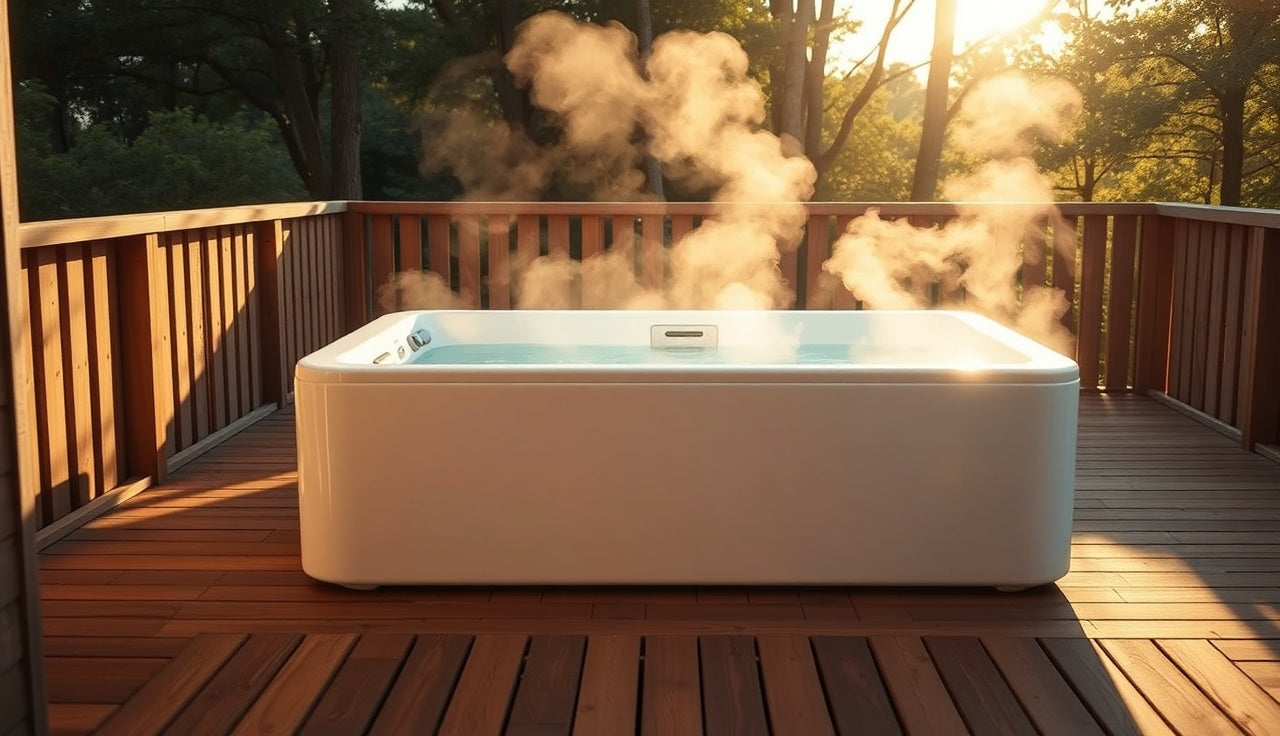
The core design is a rectangular acrylic shell, similar in construction to a high-end hot tub but built for cold. The chiller unit is separate, connected to the tub with insulated plumbing. That separation matters. It keeps the compressor noise away from the soaking area and lets you put the chiller in a utility space, a garage, or along an exterior wall.
Blue Cube sits above the entry-level cold plunge market (stock tanks, fiberglass inserts, soft-sided inflatables) and below the commercial hydrotherapy tanks used in sports medicine clinics. That's not a knock. It's useful positioning to understand before you spend real money.
For context on the broader cold plunge market, dozens of brands now compete here, from chest-freezer conversions under $1,000 to bespoke stainless installations above $30,000. Blue Cube lands in the quality middle, closer to the premium end.
What are the Blue Cube cold plunge models and specs?
Blue Cube offers several tub configurations, and the lineup has changed over time, so the model names at a dealer may differ from the website on any given day. Based on public dealer listings and the Blue Cube website as of mid-2025, the main configurations break down roughly like this:
| Model type | Interior dimensions (approx.) | Capacity | Typical price range |
|---|---|---|---|
| Single-person compact | 48" x 30" x 24" deep | ~65 gal | $5,000 to $8,000 |
| Single-person standard | 60" x 36" x 26" deep | ~90 gal | $8,000 to $13,000 |
| Dual-entry / wide | 72" x 42" x 26" deep | ~120 gal | $13,000 to $18,000 |
| Large / commercial-adjacent | 84"+ configurations | 150+ gal | $18,000 to $22,000+ |
Those prices usually include the acrylic shell and plumbing connections but may or may not include the chiller, installation, or electrical work, depending on the dealer and package. Ask exactly what is and isn't included before you sign anything.
The chillers Blue Cube pairs with its tubs generally come from third-party manufacturers, most commonly units from brands like Coldtub or similarly spec'd commercial chillers. A chiller that holds 39 to 45°F in a 90-gallon tub typically needs around 1 to 1.5 tons of cooling capacity. Above 85°F ambient, you may need to upsize.
Water temperature range is the spec that matters most for actual cold therapy. Most people targeting the protocols in the research are aiming for 50 to 59°F, which any properly sized Blue Cube setup hits easily [1]. Getting to 39°F is possible but takes longer and demands more chiller.
Filtration is included in current configurations, usually a circulation pump, a cartridge or sand filter, and a sanitization system (ozone, UV, or bromine, depending on the package). That matters a lot for a tub you'll use daily without draining between sessions.
How does the Blue Cube cold plunge compare to competitors?
The acrylic cold plunge market is crowded now, and Blue Cube is one of several well-made options rather than a clear category leader. Here are the brands that come up most in the same price and quality range:
Plunge (The Plunge): The Plunge Pro starts around $4,990 and is probably the best-known name in residential cold plunge. It uses a chiller built into the tub cabinet, which makes installation simpler but the unit harder to service. Blue Cube's separate chiller is arguably more serviceable over the long haul. The Plunge also ships direct-to-consumer with straightforward logistics, which Blue Cube usually does not.
Ice Barrel: A very different product. It's a cylindrical barrel that costs $1,199 to $1,699 with no chiller. You fill it with ice or add an aftermarket chiller. Much lower upfront cost, far less convenience.
Renu Therapy: Higher-end residential brand with stainless steel interiors, prices from roughly $7,500 to $20,000+. Competes directly with Blue Cube on quality and positioning.
CryoSpa / HydroWorx: Commercial units, mostly irrelevant for home buyers, but good to know they exist if you're outfitting a small facility.
Blue Cube's edge tends to be build quality (thick acrylic, clean fit and finish), the ability to customize size and color, and the dealer sales model that includes local install support. For someone who wants a tub that reads as a built-in amenity instead of gym equipment, that counts.
The downside of the dealer model: pricing is less transparent, negotiations swing more, and service after the sale rides on your local dealer's quality. If you're in an area without a strong Blue Cube dealer, that's a real problem.
You can also weigh this against the broader cold plunge benefits research to figure out whether the investment at any price point pays off for your goals.
What does cold plunge actually do, and what does the research say?
This deserves an honest telling, because a lot of cold plunge marketing overclaims and the research is thinner than the hype suggests.
What we know with reasonable confidence: cold water immersion causes acute vasoconstriction, drops local tissue temperature, and triggers norepinephrine release. A 2022 study by Søberg et al. in Cell Reports Medicine found participants doing cold water immersion increased dopamine by 250% and norepinephrine by 530% above baseline [2]. That's a real physiological response. What the downstream mood and behavior effects are in regular practice is still being worked out.
For exercise recovery, the evidence is mixed. A 2021 Cochrane systematic review on cold water immersion for muscle soreness found CWI reduced delayed-onset muscle soreness compared to passive rest, but rated the evidence low to moderate quality with many small-sample studies [3]. The exact temperature and duration that works best isn't settled. Most studied protocols use 50 to 59°F water for 10 to 15 minutes, though some use briefer exposures.
Here's the nuance that trips people up. If you plunge right after lifting to speed recovery, there's decent evidence it may blunt muscle-building adaptations. A 2015 study in the Journal of Physiology by Roberts et al. found cold water immersion cut long-term gains in muscle mass and strength versus active recovery over 12 weeks [4]. Nobody has good data on the optimal balance for someone who cares about both recovery and building muscle at once.
For general wellness, heat-stress recovery, mood, and the discipline of a daily cold habit, the evidence is softer but the risk is low for healthy adults. Cold shock response is a real event that can trigger cardiac arrhythmia in susceptible people, which is why the American Heart Association's guidance on cold water exposure and cardiac risk is worth a read before you start [5].
The bottom line: cold plunging has real physiological effects. The strongest evidence is for acute soreness reduction and the norepinephrine response. Long-term use for fat loss, immune function, or longevity is plausible from mechanistic work but not established by long-term randomized trials.
How much does a Blue Cube cold plunge cost to run?
The purchase price is only part of the picture. Running costs matter for a machine whose compressor cycles all day.
A chiller sized for a 90-gallon tub typically draws 800 to 1,500 watts while the compressor runs. Chillers cycle on and off rather than running flat out, but in warm weather the duty cycle climbs. Figure 8 hours of active compressor time per day at 1,200 watts, and the US average residential rate of $0.17 per kWh (early 2025, per the U.S. Energy Information Administration) [6]. That's roughly $0.60 to $1.50 per day, or $18 to $45 per month. In a hot Phoenix garage in August, expect the high end or worse.
Water costs are minor. A 90-gallon tub holds about 90 gallons. With proper filtration and sanitization, you can go 4 to 8 weeks between full changes. The water itself is pennies.
Sanitization costs depend on your system. Bromine tabs for a 90-gallon tub run maybe $10 to $20 per month. An ozone or UV system (often bundled with Blue Cube) cuts or kills that cost but adds mechanical complexity.
Filter maintenance runs maybe $50 to $150 per year in cartridges or media.
Service and repair is the wildcard. Compressors have finite lives. A replacement chiller can cost $1,500 to $4,000. Knowing who services your unit and what the warranty covers matters more than most buyers realize on purchase day.
| Cool climate (4 hrs/day compressor runtime) | $8 |
| Moderate climate (6 hrs/day) | $12 |
| Warm climate (8 hrs/day) | $18 |
| Hot climate (12 hrs/day) | $29 |
| Very hot climate (16 hrs/day) | $39 |
Source: U.S. Energy Information Administration, 2025
Is the Blue Cube cold plunge worth the price?
It depends entirely on what you're comparing it to and what you value.
Against a DIY chest freezer conversion ($400 to $800, documented all over the cold plunge community), Blue Cube costs roughly 10 to 25 times more. You're paying for acrylic looks, real filtration, precise temperature, and the fact that it doesn't look like an appliance in your backyard.
Against a gym membership bought mainly for cold plunge access, the math can close. If gym access runs $100 per month, Blue Cube pays for itself in 5 to 10 years of equivalent access at that rate. People who plunge consistently and want it at home tend to find this genuinely favorable.
Against a Plunge Pro at $4,990 or a Renu Therapy at $7,500 to $9,000, the question is simpler: do you value Blue Cube's build quality, size options, and local dealer support enough to pay the premium? That's subjective. The Plunge Pro has more documented user feedback, mostly because it's been sold direct-to-consumer at scale for longer.
My honest take: Blue Cube is a well-made product for someone who wants a permanent, clean-looking installation and has a reliable local dealer. It's overkill if you're still figuring out whether you'll use a cold plunge regularly. If you're unsure, start cheaper. Cold therapy has real benefits, but the practice delivers them, not the vessel.
SweatDecks carries cold plunge options across price points so you can compare before deciding, and the staff can help you think through sizing and chiller needs for your space.
How do you install a Blue Cube cold plunge at home?
Installation is more involved than most buyers expect, which is one reason the dealer model exists.
Start with structure. A 90-gallon tub full of water weighs roughly 750 pounds, plus 150 to 300 pounds for a standard acrylic shell. That's 900 to 1,050 pounds on a concentrated footprint. Most residential floors handle it, but if you're putting it on a wood-framed second floor or an older structure, get a structural engineer to sign off before you fill it. Concrete slabs and garage floors are generally fine.
Electrical comes next. The chiller needs a dedicated circuit. Most residential chillers in the 1 to 1.5 ton range require a 240V, 20A or 30A dedicated circuit. This is not plug-and-play unless your space already has that circuit. Budget $300 to $800 for electrician work if you don't.
Then plumbing. The tub needs a drain connection (gravity or pump-assisted) and a fill connection. Most buyers fill with a standard garden hose and gravity-drain to a floor drain or an exterior spot. Usually straightforward, but plan it before the tub goes in.
Last, placement. The chiller needs airflow and clearance. A chiller in a sealed closet will overheat. Most manufacturers specify minimum clearances of 12 to 18 inches on the sides and top. The chiller exhausts warm air, which matters in a small enclosed room.
A Blue Cube dealer typically handles delivery (these tubs don't ship via standard freight the way a smaller unit does), plumbing connections, and commissioning the chiller. That's part of what the dealer markup buys, and for a $10,000+ purchase, professional installation is worth it.
Can you use the Blue Cube cold plunge outdoors?
Yes, and outdoor installation is probably the most common setup for Blue Cube buyers with the space.
The acrylic shell is UV-resistant and made for outdoor exposure. The chiller is not made to sit in freezing temperatures. If your winters drop below 32°F, the chiller needs to live in a climate-controlled space, get drained and winterized, or wear proper insulation. Blue Cube dealers in cold-weather markets should walk you through a winterization protocol.
In hot climates, an outdoor chiller works harder. A chiller in full sun during a 95°F Phoenix afternoon will struggle to hold 45°F water efficiently. Shade the chiller and, ideally, shade the tub itself to cut the thermal load.
Drainage outdoors is usually simpler than indoors. Most buyers gravity-drain to a garden or a storm drain connection. Check local codes: some municipalities regulate draining treated water (even lightly chlorinated or brominated) to a storm drain [7].
If you're pairing the plunge with an outdoor sauna, which is the most common setup among serious cold therapy people, an outdoor Blue Cube makes the contrast protocol much easier. The outdoor sauna guide covers placement considerations that apply to outdoor cold plunge decisions too.
What are the best cold plunge protocols to use with a Blue Cube?
Owning a good cold plunge doesn't tell you how to use it. Here's what the research and the practitioner community generally agree on, with caveats.
Temperature: most peer-reviewed protocols use 50 to 59°F (10 to 15°C). Colder isn't automatically better. Going below 50°F adds cold shock risk with limited extra documented benefit for most users [5]. The Søberg 2022 study used 57°F water, which has become a de facto reference point [2].
Duration: 11 minutes per week total, split across sessions, is the protocol from the Søberg study that produced significant norepinephrine effects. That might be three sessions of about 3.5 minutes, or two of about 5 minutes. Plenty of people do longer without trouble, but the research support thins past 10 to 15 minutes.
Timing around exercise: if soreness recovery is the goal, plunging within 30 to 60 minutes after training seems to be the studied window. If you're chasing alertness and mood instead of recovery, morning sessions before exercise are popular anecdotally and make physiological sense given the norepinephrine response, though the timing hasn't been studied as carefully.
Contrast therapy: alternating sauna and cold plunge, backed by traditional use in Scandinavian and Japanese cultures and increasingly by research on cardiovascular and autonomic effects, is where most enthusiasts end up. A standard protocol runs 15 to 20 minutes in the sauna, then 2 to 5 minutes in the cold plunge, repeated 2 to 3 cycles. There's no settled consensus on the ideal ratio, but ending on cold is generally preferred for daytime use to keep you alert.
For a closer look at the evidence, the sauna benefits and cold plunge benefits articles cover the research in more detail.
How does the Blue Cube compare to an ice bath?
An ice bath in the old sense, a tub filled with water and ice, is what athletes used before purpose-built plunges existed. It still works, and for testing cold therapy before spending real money, it's a completely valid start.
Here are the practical differences between an ice bath and a Blue Cube:
Temperature consistency: ice melts. A 39°F ice bath warms to 50°F or above during a 10-minute session. A Blue Cube with a properly sized chiller holds a set temperature through your whole session and is ready at the same temperature every day. For serious practitioners, that consistency is the whole point.
Convenience: filling a tub with ice takes time and money. Bagged ice costs $1 to $3 per pound, and a real ice bath takes 15 to 30 pounds. That's $15 to $90 in ice every single session. A chiller amortizes that fast for regular users.
Hygiene: a drained-and-refilled ice bath has no hygiene worries. A cold plunge with filtration is also fine for daily use, but only if you maintain the filtration system. A neglected cold plunge is a bigger hygiene risk than an ice bath.
For more on the ice bath side, the ice bath guide covers what to know.
My view: if you're plunging more than twice a week and have the space and budget, a purpose-built unit earns its cost over a two to three year horizon. If you plunge occasionally or you're still testing whether you like it, an ice bath is fine.
What should you check before buying a Blue Cube cold plunge?
The purchase has several steps buyers skip, and skipping them causes regret.
Confirm dealer quality first. Blue Cube sells through dealers, and dealer quality varies. Ask: how many Blue Cube installs have they done in your market? Can they give you a reference from a past customer? What does their service process look like if the chiller acts up 18 months in? A good dealer is part of what you're buying at this price.
Get the full installed cost in writing. The tub price is not the whole number. Add dealer markup and delivery, electrical work if you need a new circuit, any plumbing, any concrete or structural work for outdoor placement, and startup supplies (chemicals, test kit). The gap between a quoted tub price and a true installed-and-ready cost can easily hit $1,500 to $3,000.
Understand the warranty. Blue Cube's warranties, like most acrylic tub warranties, tend to cover the shell against structural defects for a longer term (often 5 to 10 years) and the chiller and mechanical parts for much shorter (often 1 to 2 years). The chiller is the priciest part to replace. Know exactly what you're covered for.
Measure your space, including the access path. Acrylic tubs this size don't flex around corners the way a soft-sided product does. Confirm the path from the street or driveway to the final spot clears every doorway, gate, and turn before the delivery truck shows up.
Check local codes. Some jurisdictions treat cold plunge tubs the same as hot tubs or spas under building or electrical codes [7]. That can require a permit for the electrical connection. Your dealer should know the local rules, but verify independently.
SweatDecks also carries a curated selection of cold plunge tubs with transparent pricing, useful as a comparison baseline even if you go with Blue Cube through a local dealer.
Frequently asked questions
Where is the Blue Cube cold plunge made?
Blue Cube manufactures its acrylic shells in the United States. The chillers paired with the tubs generally come from third-party commercial chiller makers, which is standard across the premium cold plunge industry. The acrylic construction and US-based manufacturing are points the brand emphasizes in dealer materials, though you should confirm current manufacturing details directly with a dealer.
What temperature does the Blue Cube cold plunge reach?
Blue Cube tubs with an appropriately sized chiller can reach as low as 39°F, though most users set theirs between 45°F and 55°F. The minimum depends on chiller capacity and ambient air temperature. In hot outdoor conditions, the system may struggle to hold the coldest settings. For the most-studied cold therapy protocols, 50 to 59°F is the target range.
How long does it take for a Blue Cube to chill the water?
From warm tap water (roughly 60 to 70°F), a properly sized chiller takes about 8 to 24 hours to bring a 90-gallon tub down to 50°F, depending on chiller capacity and ambient temperature. Smaller or underpowered chillers take longer. Once at temperature, the chiller holds it by cycling. Most users run the chiller continuously so the tub is always ready.
Do you need a permit to install a Blue Cube cold plunge?
Permit requirements vary by jurisdiction. Many building departments classify cold plunge tubs the same as hot tubs or spas, which can require a permit for the electrical connection (typically a 240V dedicated circuit) and sometimes for the installation itself. Check with your local building department first. Your Blue Cube dealer should know local requirements, but don't rely on their word alone.
Can you use a Blue Cube cold plunge indoors?
Yes. Indoor installation is common, especially in finished basements, garages, or dedicated wellness rooms. Key considerations include structural load capacity (a filled tub can exceed 900 pounds), adequate drainage, a dedicated electrical circuit, and ventilation for the chiller. The chiller exhausts warm air, so it needs airflow clearance and ideally venting to the outside or an adjacent space.
How often do you need to change the water in a Blue Cube cold plunge?
With proper filtration and sanitization, most Blue Cube owners change the water every 4 to 8 weeks. The interval depends on how many people use the tub, how often, and how well the filtration is maintained. Regular water chemistry testing (pH, sanitizer levels) is necessary to keep the water safe between changes. Without filtration, change the water after every use.
Is a cold plunge safe for people with heart conditions?
Cold water immersion triggers an acute cold shock response that includes rapid heart rate changes and vasoconstriction, which can pose risks for people with certain cardiac conditions. The American Heart Association advises caution with cold water exposure for people with known heart disease or arrhythmia risk. Anyone with a cardiac history should consult a physician before plunging regularly. Healthy adults without cardiac risk factors generally tolerate cold immersion well at common temperatures and durations.
How does the Blue Cube cold plunge compare to a Plunge Pro?
The Plunge Pro (around $4,990 direct) uses a chiller built into the cabinet, simpler to install and order but harder to service. Blue Cube uses a separate chiller, which is more serviceable and allows larger tub sizes, but adds install complexity. Blue Cube sells through dealers rather than direct, so pricing is less standardized and depends on your dealer. Blue Cube tends to offer more size options and cleaner fit and finish at its price points.
What electricity costs should I expect with a Blue Cube cold plunge?
Running costs depend on chiller size, ambient temperature, and local rates. At the US average residential rate of roughly $0.17 per kWh (per the EIA, early 2025), a 1.2 kW chiller running 8 hours per day costs about $18 to $45 per month. In hot climates where the chiller works harder, costs go higher. Cold climates cut running costs because the chiller has less thermal load to fight.
Does cold plunging after workouts reduce muscle soreness?
A 2021 Cochrane systematic review found cold water immersion reduced delayed-onset muscle soreness compared to passive rest, though the evidence was rated low to moderate quality due to small samples and variable protocols. The effect appears real but modest. One caveat: a 2015 Journal of Physiology study found that regular post-workout cold immersion may reduce long-term muscle and strength gains versus active recovery, so people focused on hypertrophy should weigh that tradeoff.
Can you pair a Blue Cube cold plunge with a sauna for contrast therapy?
Yes, and this pairing is probably the most common setup among serious buyers. A standard contrast protocol cycles 15 to 20 minutes of sauna heat with 2 to 5 minutes of cold plunge immersion, repeated two to three times, ending on cold for daytime alertness. Blue Cube's footprint and install requirements are similar to a hot tub, so placing it next to or near an outdoor or indoor sauna works well with advance planning.
What is the Blue Cube warranty?
Blue Cube typically warrants the acrylic shell against structural defects for a longer period (commonly 5 to 10 years) and mechanical parts including the chiller for a shorter term (commonly 1 to 2 years). Warranty specifics vary by model year and dealer agreement, so get the terms in writing as part of your purchase documentation. Given that a replacement chiller can cost $1,500 to $4,000, understanding mechanical coverage is important.
Is Blue Cube worth it compared to a DIY cold plunge?
A DIY cold plunge using a chest freezer or stock tank costs $400 to $1,200 and delivers the same physiological cold exposure. Blue Cube costs 5 to 20 times more. What you buy is aesthetics, real filtration, temperature precision, and professional installation with ongoing dealer support. If you've confirmed you'll use cold therapy consistently and want a finished-looking permanent install, Blue Cube makes sense. If you're still testing whether you'll stick with it, start cheaper.
Sources
- National Institutes of Health, PubMed: Machado et al. (2016), Effect of water temperature on cold water immersion performance: Cold water immersion at 50–59°F is the temperature range used in most clinical cold therapy protocols for recovery outcomes
- Cell Reports Medicine: Søberg et al. (2022), Deliberate cold exposure study: Cold water immersion protocols increased dopamine by 250% and norepinephrine by 530% above baseline in human participants
- Cochrane Database of Systematic Reviews: Machado et al. (2021), Cold water immersion for preventing and treating muscle soreness after exercise: Cold water immersion reduced delayed-onset muscle soreness compared to passive rest, though the evidence quality was rated low to moderate
- Journal of Physiology: Roberts et al. (2015), Post-exercise cold water immersion attenuates acute anabolic signalling: Cold water immersion after strength training attenuated long-term gains in muscle mass and strength compared to active recovery over 12 weeks
- American Heart Association: Cold water immersion and cardiac risk guidance: Cold water immersion triggers acute cold shock response including cardiac arrhythmia risk in susceptible individuals; AHA advises caution for those with cardiac conditions
- U.S. Energy Information Administration: Average retail electricity prices by sector: US average residential electricity rate was approximately $0.17 per kWh as of early 2025
- U.S. Environmental Protection Agency: Stormwater discharges and local permitting (NPDES): In some municipalities, draining chemically treated water to storm drains is regulated under local stormwater codes
- National Institutes of Health, PubMed: Bleakley et al. (2012), Cold water immersion cryotherapy for recovery in sport: Duration and temperature protocols for cold water immersion in sports recovery research generally range from 10 to 15 minutes at 50–59°F
- Harvard T.H. Chan School of Public Health: Health effects of sauna and cold exposure: Regular cold water immersion is associated with acute norepinephrine and dopamine increases based on controlled studies
- International Code Council: Residential code provisions for spas and hot tubs (applicable to cold plunge tub permitting): Many jurisdictions classify cold plunge tubs under the same building code provisions as hot tubs and spas, potentially requiring permits for electrical installation

Share:
Daily sauna benefits: what the research actually shows
Endurance cold plunge bundle: what it is, what to buy, and whether it's worth it