Traditional Sauna vs Infrared Sauna: The Complete Comparison
This is the biggest decision in the sauna world. Traditional saunas use a heater and stones to create hot air. Infrared saunas use light panels to heat your body directly. They both make you sweat. They both benefit your health. But the experience, the science, and the practical considerations are different enough that the choice matters. Here's everything you need.
Quick Answers
Is an infrared sauna different from a dry sauna?
Yes. A dry (traditional) sauna heats the air to 150-200F using an electric heater or wood stove and stones, warming your body from the outside in. An infrared sauna uses light panels that heat your body directly, keeping the cabin air at a cooler 120-150F while still producing a steady sweat.
Which is better, infrared or dry sauna?
It depends on your goals. Traditional saunas have decades of research, including Finnish studies linking high heat to cardiovascular and longevity benefits. Infrared saunas offer a gentler experience, deeper tissue penetration, and easier installation, with a growing but shorter research history.
How does infrared compare to an electric heater sauna?
An electric heater sauna heats stones to warm the air around you, reaching 150-200F with heart rates of 100-150 BPM during use. Infrared saunas skip the hot-air step entirely, using light panels that penetrate 1.5-2 inches into tissue while the room stays at 120-150F.
What counts as a non-infrared sauna?
A non-infrared sauna is a traditional sauna, one that uses an electric heater or wood-burning stove to heat stones and the surrounding air, typically reaching 150-200F. You can also add water to the stones for steam (loyly), which infrared saunas cannot produce since they only offer dry heat.
Which sauna type uses less electricity?
Infrared saunas use less electricity. Their panels draw 1.5-2.4 kW versus 4.5-9 kW for traditional heaters, and monthly costs run about $10-25 for infrared compared to $20-50 for traditional, largely because infrared needs a shorter preheat time and lower operating temperature.
Shop infrared saunas at SweatDecks
You can see every model in our infrared sauna lineup before you decide.
- FD-1 Full-Spectrum Infrared Sauna - $4,695
- FD-3 Full Spectrum Infrared Sauna - $6,495
Affirm financing available. Free curbside shipping on orders over $5,000. See all infrared saunas.
How They Heat You
Traditional Saunas
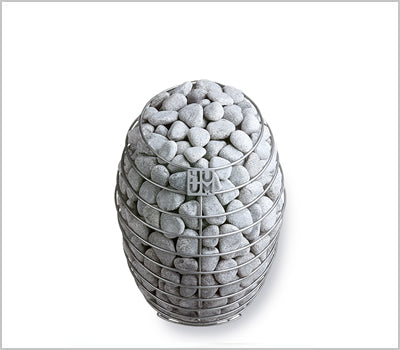
A traditional sauna uses an electric heater (or wood-burning stove) to heat a stack of stones, which then radiates heat into the room. Air temperature reaches 150-200F. When you throw water on the hot stones, you get a burst of steam (loyly) that dramatically increases the perceived heat and humidity. The hot air heats your body from the outside in through convection and radiation.
Infrared Saunas
Infrared saunas use carbon or ceramic panels that emit infrared light. These waves pass through the air (barely heating it) and penetrate directly into your skin and tissue. The cabin temperature stays at 120-150F - noticeably cooler than traditional. Your body heats from the inside out as the infrared waves are absorbed by your tissue.
The Experience
Traditional saunas feel like a traditional sauna. Hot air fills the room. Breathing feels warm. You can feel the heat pressing on your skin from every direction. Throwing water on stones creates an intense steam wave that rushes over you. It's visceral, dramatic, and for many people, deeply satisfying. Stepping out into cool air between rounds is the Finnish sauna ritual that's been refined over centuries.
Infrared saunas feel gentler. The air is warm but not oppressive. Breathing is easy and comfortable. You sweat steadily but without the intense "wall of heat" feeling. Sessions tend to be longer (30-45 minutes vs 15-20 minutes for traditional) because the lower air temperature is more tolerable. It's relaxing in a quieter, more mellow way.
People who love the intensity and ritual of heat tend to prefer traditional. People who want to relax in warmth without the extreme heat often prefer infrared.
Health Benefits
Traditional sauna research
The majority of sauna research - including the famous Finnish studies showing reduced cardiovascular disease, stroke, and all-cause mortality - used traditional saunas at 175-195F. The higher temperatures create a stronger cardiovascular stress response: heart rates of 100-150 BPM, significant vasodilation, robust heat shock protein production, and substantial growth hormone release.
Infrared sauna research
Infrared research is growing but has a shorter history. Studies show benefits for chronic pain, blood pressure reduction, improved cardiovascular function, and muscle recovery. The lower temperatures produce a milder cardiovascular response but with the added benefit of deeper tissue penetration (infrared waves reach 1.5-2 inches into tissue, versus surface heating from hot air).
The overlap
Both types deliver: improved circulation, reduced muscle soreness, better sleep, stress reduction, mood improvement, and sweating-related skin benefits. The question isn't whether infrared works - it does. The question is whether the more intense traditional heat produces stronger long-term health outcomes. The Finnish data suggests yes, but infrared-specific long-term studies are still catching up.
Practical Comparison
| Category | Traditional Sauna | Infrared Sauna |
|---|---|---|
| Air Temperature | 150-200F | 120-150F |
| Heat Mechanism | Hot air + stone radiation | Direct infrared light penetration |
| Humidity | Adjustable (dry or wet with water on stones) | Dry only |
| Preheat Time | 30-50 minutes | 10-20 minutes |
| Session Length | 15-20 minutes (often multiple rounds) | 30-45 minutes |
| Energy Use | 4.5-9 kW heater | 1.5-2.4 kW panels |
| Electrical Requirement | 240V dedicated circuit (most models) | 120V standard outlet (many models) |
| Price Range | $3,000-$12,000 | $1,500-$6,000 |
| Research Depth | Extensive (decades) | Growing (newer) |
Installation and Energy
Infrared saunas win on practicality. Many plug into a standard 120V outlet, heat up in 10-20 minutes, and draw modest electricity. They're easy to place in a bedroom, closet, or basement with minimal installation.
Traditional saunas need a 240V circuit for most electric heaters, longer preheat times, and draw significantly more power. They're a bigger installation project, especially indoors where ventilation is needed.
Monthly energy costs: infrared runs $10-25/month for regular use. Traditional runs $20-50/month.
The Verdict
Go traditional if you:
- Want the most intense heat experience and loyly (steam)
- Are optimizing for the strongest cardiovascular and longevity benefits
- Enjoy the ritual of high heat, water on stones, and cooling-off rounds
- Are building an outdoor sauna (barrel, cabin, cube)
- Want the experience that centuries of Finnish sauna culture is built on
Go infrared if you:
- Prefer a gentler, more comfortable heat
- Want easy plug-and-play installation
- Have limited space (apartment, closet, small room)
- Want lower energy costs and faster preheat
- Are focused on deep tissue therapy and chronic pain relief
Browse Both at SweatDecks
We carry traditional saunas with electric heaters in our outdoor sauna and indoor sauna collections, plus a range of infrared saunas for every space and budget. Not sure which is right for you? Browse the full collection or reach out for personalized guidance. Free shipping over $5,000, HSA/FSA eligible through TrueMed.
Try Our Free Tools
Browse our expert-tested cold plunge collection.