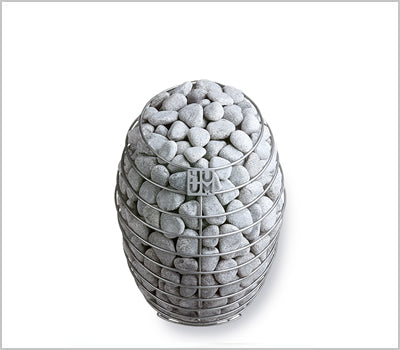
Short answer: choose a sauna blanket when your priority is compact, lower-cost, personal heat exposure that stores between uses. Choose a traditional sauna when you want a heated room, upright seating, sauna stones and löyly, shared use, and a more durable built environment. Both can make you hot and sweaty, but current research does not establish that a blanket produces the same long-term outcomes as sauna bathing.
Quick answers
Can a sauna blanket replace a traditional sauna?
It can provide compact personal heat exposure, but it does not recreate a hot room, sauna stones, humidity from löyly, upright seating, or a shared sauna experience. Whether it replaces one depends on which of those features you value.
Does a sauna blanket make you sweat?
Yes. A small 2026 conference study found pronounced heat strain and sweating during one 60-minute blanket session in eight healthy young adults. That shows a blanket can deliver substantial heat, but it does not establish long-term health outcomes or equivalence to sauna bathing.
Do sauna studies prove that blankets have the same benefits?
No. A major dry-sauna systematic review explicitly excluded partial-body heating because its mechanisms may differ from whole-body sauna exposure. Blanket-specific long-term clinical evidence remains limited.
Is a sauna blanket safer because the air is cooler?
Not necessarily. The blanket applies heat close to much of the body and can create meaningful heat strain. Follow the exact manual, start conservatively, stop for pain or discomfort, and do not use a blanket when a listed contraindication applies.
Which is easier to maintain?
A blanket takes little space but its inner surface and towel insert need cleaning and complete drying after sweaty use. A sauna needs more room-level cleaning and equipment care, but it is easier to enter and exit and its serviceable components may be replaceable.
Sauna vs sauna blanket at a glance
| Factor | Traditional sauna | Infrared sauna blanket |
|---|---|---|
| Heat environment | Heated room with hot air, surfaces, heater, and stones | Close-contact heated enclosure around most of the body |
| Position | Seated or reclining, depending on bench size | Usually lying flat with the head outside |
| Humidity | Temporary humidity from water on approved stones | No sauna stones or löyly |
| Users | One or more, based on safe bench capacity | One person per session |
| Space | Dedicated room or cabin | Floor or bed space during use, storage space afterward |
| Evidence | Larger but still imperfect body of Finnish and infrared sauna research | Early acute-response research, little long-term outcome evidence |
| Exit | Stand and leave through a door | Unzip and rise from a lying position |
How the heat experience differs
Traditional sauna
A traditional sauna heater warms the room, benches, stones, and bathers. Air temperature is not uniform. It is normally warmer near the ceiling and cooler near the floor. Water poured on approved hot stones creates a short burst of humidity called löyly. Bathers can sit at different bench heights, step out to cool down, and share the room when its rated capacity allows.
Infrared sauna blanket
A blanket places electric heating material close to the body inside an insulated wrap. The head usually remains outside. Product controls regulate a device setting, but the number on the controller is not directly comparable with room-air temperature in a sauna. Heat transfer, contact, clothing, towel layers, body position, and the local environment all affect the experience.
An infrared cabin is also not the same product as a blanket. A cabin is a room-scale enclosure with panels around a seated user. Research on an infrared cabin should not be presented as blanket-specific evidence without direct validation.
What the evidence actually shows
A 2018 systematic review of dry-sauna studies included Finnish-style and infrared sauna interventions, but it explicitly excluded partial-body heating because the mechanisms might not be the same as whole-body heating. The review found promising signals across varied outcomes, while noting that most studies were small and only a minority of randomized trials had low overall risk of bias.
Blanket-specific research is much thinner. A 2026 conference abstract on an infrared sauna blanket studied eight healthy young adults during one 60-minute session. Compared with the control condition, blanket exposure raised sublingual temperature and heart rate and produced pronounced thermal strain. That is useful evidence that a blanket can be a serious heat exposure. It does not show weight loss, detoxification, recovery, sleep improvement, disease treatment, or long-term cardiovascular benefit.
Sweating is not proof of detox or fat loss
Sweat is primarily a cooling response. A lower number on the scale immediately after a hot session mainly reflects fluid loss and returns with rehydration. Heating the body also raises heart rate and energy use, but that is not evidence that a blanket produces meaningful or sustained fat loss.
Marketing claims about calories, detoxification, inflammation, immune function, pain, and sleep should be evaluated claim by claim. A manufacturer statement, customer review, or study of a different heat device does not prove a blanket treats a condition. Sweat volume alone does not establish removal of clinically meaningful amounts of harmful substances.
Safety deserves more attention, not less
The compact format can make a blanket look gentler than a hot room, but the 2026 acute study shows that it can create substantial heat strain. Unlike a sauna, the user is lying inside a close-fitting device and may need to unzip it before standing. People with limited mobility should consider how quickly they could exit without help.
The CurrentBody blanket manual is one model-specific example. It instructs users to start at a lower setting, keep the device away from water, use a heat-resistant surface, stop for pain or discomfort, and avoid use under several listed conditions. It also says not to use the device with an implanted medical device and directs people with medication use, cardiovascular conditions, chronic conditions, or circulation problems to seek medical permission.
Those instructions do not automatically apply to every brand. Read the exact manual before purchase and follow its contraindications, time, temperature, surface, voltage, cleaning, cooling, and storage rules. Stop immediately if you feel faint, confused, nauseated, unusually weak, short of breath, burned, numb, or unwell. Do not combine intense heat with alcohol or other circumstances that impair judgment or temperature regulation.
Space and convenience
A blanket wins on storage footprint. It can work for a renter or a home without a dedicated sauna area, provided there is a suitable flat, heat-resistant setup and enough room to use, cool, clean, and dry it safely. It still needs more open floor or bed area than its folded dimensions suggest.
A traditional sauna needs permanent floor area, safe clearances, ventilation, and electrical service or a compliant wood-stove system. Outdoor installations also need a foundation, weather protection, drainage, access, and any required permits. In exchange, the sauna remains ready for repeated use and does not need to be folded and stored after every session.
Cleaning and durability
A blanket collects sweat close to its interior surface. Use the approved towel or clothing setup, wipe it as directed, leave it open until fully dry, and never fold it while hot. Inspect the cord, controller, seams, liner, and heating area for damage. A sealed heating assembly generally is not user-serviceable.
A sauna needs bench, floor, and heater care plus drying between uses. Heater elements, controls, rocks, lamps, and some room components may be replaceable, although their service life and warranty vary. An outdoor structure also needs roof, exterior finish, foundation, and drainage maintenance.
Compare total value over time
Do not compare only the initial prices. For a blanket, consider warranty length, return terms, expected serviceability, replacement cost, towel inserts, cleaning, storage, and whether one person at a time is acceptable. For a sauna, include delivery, foundation, electrical work, assembly, heater, controls, rocks, ventilation, roof or weather package, maintenance, and energy.
A blanket can be the rational choice even if it has a shorter life because it solves a real space or budget constraint. A sauna can offer better long-term value when multiple people use it frequently and the room, heater, and controls can be maintained instead of replacing the entire product.
Choose a sauna blanket if
- You want personal heat exposure without a permanent room.
- You are comfortable lying down and can exit the device easily.
- You accept careful cleaning, complete drying, and storage after use.
- The exact manual, contraindications, electrical requirements, and warranty fit your situation.
- You understand that blanket-specific long-term clinical evidence is limited.
Choose a traditional sauna if
- You want hot-room air, benches, stones, löyly, and cooling breaks.
- You want to sit upright, change bench height, or share sessions.
- You have appropriate space, electrical capacity, foundation, and installation support.
- You value replaceable equipment and a permanent bathing environment.
- You prefer the format represented by the larger body of sauna research.
Browse traditional saunas, compare options with the sauna size calculator, and review the sauna installation guide before planning a permanent room.
Sources
- Hussain J, Cohen M. Clinical Effects of Regular Dry Sauna Bathing: A Systematic Review. 2018.
- Nicolet J, Enslow B, Barbier R, Hein L, Hoekstra S. The Acute Physiological and Perceptual Responses to an Infrared Sauna Blanket. Conference abstract, 2026.
- CurrentBody Wellness. Infrared Sauna Blanket user guide and manual.
Browse our expert-tested cold plunge collection.