Setting Up Your Outdoor Sauna for Winter: The Full Rundown
If you're about to get your first outdoor sauna and winter is coming, you're in for a treat. There is nothing - and I mean nothing - quite like stepping into a blazing hot sauna when it's cold and dark outside. It's one of those experiences that makes you wonder how you ever survived winter without it.
Quick Answers
Can an outdoor sauna handle freezing temperatures?
Yes. Outdoor saunas built from heat-treated Canadian hemlock are designed for all-season use, including freezing temperatures, since the heat treatment resists moisture, warping, and cracking through extreme swings. Harvia and Huum heaters are also engineered for Nordic winter conditions, so they handle cold starts in below-freezing weather without issues.
What is the best foundation for an outdoor sauna in winter?
A compacted gravel pad, 4-6 inches deep, is the best choice for winter. Gravel drains well and won't crack or heave from freeze-thaw cycles the way concrete can. Make the pad 2-3 feet wider than the sauna on all sides and grade it slightly for drainage.
How long does it take to heat an outdoor sauna in winter?
Expect 45-60 minutes to reach full operating temperature in winter, compared with 30-40 minutes in summer. The exact time depends on outside temperature, wind, and heater power rating. Timer-equipped heaters can be set to preheat before you're ready to use the sauna.
Where should I place an outdoor sauna for winter use?
Place it as close to your house as clearances allow, ideally a 30-second walk or less, so the cold-weather trip is short. Position it on the leeward side of the house or behind a windbreak like a fence or hedge, and choose a spot with good drainage to prevent ice buildup.
Do I need to winterize a cold plunge paired with a sauna?
Yes, if it has a chiller unit or plumbing exposed to freezing temperatures. Unheated outdoor water will drop well below comfortable plunge temperatures in winter, so you may need to adjust timing and duration, and make sure filtration components are protected from freezing.
But setting up an outdoor sauna for winter use does require a little planning. You want to make sure your placement is right, your foundation can handle the conditions, and your heater is ready for cold-weather performance. Get these things right, and you'll be enjoying effortless sauna sessions all winter long.
Shop outdoor saunas at SweatDecks
Affirm financing available. Free curbside shipping on orders over $5,000. See all outdoor saunas.
Choosing the Right Location for Winter Use
Proximity to Your House
In summer, it doesn't matter if your sauna is at the far end of the yard. In winter, that 50-yard walk in a towel at 20 degrees feels a lot longer. Place your sauna as close to your house as practically possible while still maintaining proper clearances. If you can make the walk 30 seconds or less, you'll use the sauna far more often during cold months.
Wind Protection
Wind is the enemy of outdoor saunas in winter. It robs heat every time you open the door and makes the walk to and from the house miserable. If possible, position your sauna on the leeward side of your house or behind a natural windbreak like a fence, hedge, or outbuilding.
Clear Pathways
Think about snow removal. You need a clear, safe path from your door to the sauna all winter. A short, straight path is easier to shovel than a winding one. Some people lay pavers or rubber mats for traction. Others use outdoor boot trays near the sauna entrance.
Drainage
Winter means snow, ice, and freeze-thaw cycles. Make sure your sauna location has good drainage so water doesn't pool around the base and freeze. A slight grade away from the sauna on all sides prevents ice buildup.
Foundation Prep for Cold Weather
Your sauna's foundation needs to handle the ground conditions that come with winter:
Gravel Pad
A 4-6 inch compacted gravel pad is the most popular choice for barrel saunas. Gravel drains beautifully and doesn't crack or heave from freeze-thaw cycles like concrete can. Make the pad 2-3 feet wider than the sauna on all sides.
Concrete Slab
If you go with concrete, make sure it's poured with proper reinforcement and a slight slope for drainage. In cold climates, the slab should sit on a gravel base that extends below the frost line to prevent heaving.
Timber Cradles
Barrel saunas typically sit on timber cradle supports. Make sure these are level and firmly seated on your foundation. Check them before winter hits - frost heave can shift things that seemed perfectly level in summer.
Heater Preparation
Your heater works harder in winter, and that's exactly what quality heaters are built for.
Electric Heaters (Harvia and Huum)
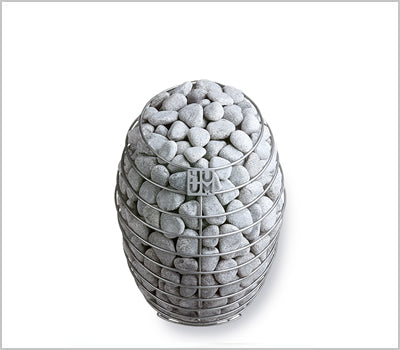
The Harvia and Huum heaters we include with our saunas are designed for Nordic climates. They handle cold starts in below-freezing conditions without issues. A few things to keep in mind:
- Preheat time increases: Budget 45-60 minutes to reach target temperature in winter (vs. 30-40 minutes in summer)
- Check the electrical connection: Make sure your outdoor wiring is rated for cold weather and all connections are secure
- Sauna stones: Inspect and restack your stones before the season. Cracked or crumbling stones should be replaced for optimal heat distribution
Wood-Burning Heaters
If you're running a wood-burning setup, winter is when it really shines. Stock up on dry, seasoned hardwood before the season starts. Check your chimney or stovepipe for any obstructions or damage. And keep a covered wood storage area near the sauna so you're not hauling firewood through the snow.
Winterizing the Sauna Structure
Our barrel saunas are built from FSC-certified heat-treated Canadian hemlock, which is specifically chosen for its ability to withstand extreme temperature changes and moisture. The heat treatment process removes the organic compounds that attract water, mold, and insects - making it ideal for year-round outdoor use in any climate.
That said, a few seasonal checks go a long way:
- Inspect the exterior: Look for any gaps in the stave joints. Wood naturally expands and contracts with temperature changes - this is normal and the barrel design accommodates it
- Check the door seal: A tight-fitting door matters more in winter. Replace weather stripping if it's worn
- Clear the roof: Barrel roofs shed snow well, but after heavy storms, brush off any accumulation
- Ventilation: Keep vents in their normal position. The heater needs oxygen, and fresh air exchange prevents a stale interior
- Post-session moisture: Crack the door for 15-20 minutes after your session to let moisture escape, then close it to keep out snow and animals
Cold Plunge Considerations for Winter
If you're pairing your sauna with a cold plunge for contrast therapy, winter adds a couple of considerations. Unheated outdoor water will naturally drop well below comfortable cold plunge temperatures, so you may need to adjust your timing and duration. Also ensure your cold plunge's plumbing and filtration system are protected from freezing if it has a chiller unit.
Your Winter Sauna Setup Checklist
- Confirm placement - close to house, wind-protected, clear path
- Level and prep your foundation (gravel pad recommended)
- Assemble the sauna and verify all joints and door seals
- Set up electrical connection for the heater (have an electrician verify if needed)
- Do a test heat-up before the cold really sets in
- Stock up on accessories - buckets, ladles, thermometer, towels
- Establish your snow removal plan for the walkway
Ready to get set up? Browse the full SweatDecks collection to find the right outdoor sauna for your space. With Affirm financing at 0% APR and HSA/FSA eligibility through TrueMed, you can be sauna-ready before the first snow falls.
Frequently Asked Questions
"Browse our expert-tested cold plunge collection.