How to Make Your Sauna Hotter: 9 Practical Tips
Your sauna should be hot. That's kind of the whole point. But if you're finding that your sauna isn't reaching the temperatures you want, or it takes forever to heat up, or it just doesn't feel intense enough, there are real solutions. Some are free, some cost a bit, and some involve hardware changes.
Here are the most effective ways to get more heat out of your sauna, starting with the simplest.

Shop all saunas at SweatDecks
- FD-1 Full-Spectrum Infrared Sauna - $4,695
- FD-3 Full Spectrum Infrared Sauna - $6,495
Affirm financing available. Free curbside shipping on orders over $5,000. See all all saunas.
1. Check Your Ventilation Setup
This is the most common reason saunas don't get hot enough, and it's the most overlooked. Proper ventilation is essential for sauna function, but too much ventilation bleeds heat out of the room faster than your heater can replace it.
Check your intake vent (usually near the floor by the heater) and exhaust vent (usually higher up on the opposite wall). If the exhaust vent is too large or permanently open, you're losing heat constantly. Many saunas have adjustable vents - try partially closing the exhaust vent during your session to retain more heat. Open it fully only when you're done to dry out the sauna.
Don't seal the room completely though. Some airflow is necessary for fresh oxygen and proper convection. The goal is balance, not total sealing.

2. Sit Higher
Heat rises. The temperature difference between the floor level and the upper bench in a sauna can be 30-50F or more. If you're sitting on a lower bench and finding it mild, moving to the top bench will give you a dramatically hotter experience without changing anything about the sauna itself.
This is the simplest, zero-cost way to make your sauna feel hotter. Most traditional saunas are designed with this in mind - the upper bench is where the real heat lives.
3. Pour Water on the Rocks
If you have a traditional heater with rocks, pouring water on them creates steam (loyly) that makes the air feel significantly hotter. Humid air transfers heat to your skin much more efficiently than dry air. The actual air temperature might stay roughly the same, but the perceived heat intensity increases dramatically.
A half-ladle of water on hot rocks can make a 170F sauna feel like 200F. This is the traditional Finnish approach to intensifying the heat, and it works beautifully. Just make sure your rocks are properly heated before throwing water - if they're not hot enough, you'll get lukewarm mist instead of proper steam.
4. Improve Insulation
If your sauna is losing heat through the walls, ceiling, or door, no amount of heater power will compensate. This is especially common with outdoor saunas in cold climates and older indoor installations.
Check for gaps around the door frame, poorly sealed joints, and thin or missing insulation in the walls and ceiling. The ceiling is the most critical area because heat rises and collects there. Adding or upgrading insulation behind the interior panels can make a substantial difference in peak temperature and heat-up time.
For outdoor saunas, make sure the floor is insulated too. Cold ground beneath the sauna acts as a constant heat sink. Our outdoor saunas come properly insulated, but older or budget models may have insufficient insulation.
5. Fix or Replace the Door Seal
A surprising amount of heat escapes around the door. Sauna doors should have a proper seal that creates a snug closure. Over time, these seals compress, crack, and lose their effectiveness. Replacing a worn door gasket is cheap and can make a noticeable difference in how hot your sauna gets and stays.
Also check that the door closes fully and latches securely. Even a small gap lets hot air pour out continuously. Glass doors, while attractive, tend to lose more heat than solid wood doors because glass is a poorer insulator.
6. Preheat Longer
Many people don't give their sauna enough time to fully heat up. The air might reach target temperature quickly, but the walls, benches, ceiling, and floor need more time to absorb heat and reach thermal equilibrium. When these surfaces are cold, they absorb heat from your body and the air, making the sauna feel cooler than the thermometer suggests.
Most saunas need 30-60 minutes of preheating for the entire room to be properly saturated with heat. If you've been stepping in after 15-20 minutes and wondering why it doesn't feel hot enough, try waiting longer. The difference between a sauna preheated for 20 minutes versus 45 minutes is substantial.
7. Upgrade Your Heater
If you've tried everything else and your sauna still isn't hot enough, the heater may be undersized for the room. Sauna heaters are rated by the volume of space they can heat, and if your room is at the upper end (or beyond) of your heater's range, it will struggle to reach and maintain high temperatures.
General sizing guidelines: you need roughly 1kW of heater power per 50 cubic feet of sauna space. A 6x6x7 foot sauna (252 cubic feet) needs at least a 5kW heater, and a 6kW or larger unit will perform better. If you have an outdoor sauna in a cold climate, size up by 1-2kW to compensate for heat loss through the exterior walls.
Upgrading to a more powerful heater is one of the most impactful changes you can make if you're serious about higher temperatures.
8. Replace Your Sauna Rocks
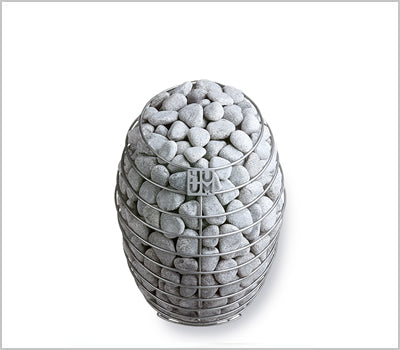
Old, crumbling sauna rocks don't hold heat as well as fresh ones. They also restrict airflow through the heater, which reduces heating efficiency. If your rocks are visibly degraded - crumbling, heavily cracked, or noticeably smaller than when they were new - replacing them can improve both heating performance and steam quality.
When replacing rocks, also make sure they're arranged properly. Stack them loosely so air can flow between them. Packing rocks too tightly prevents proper air circulation through the heater and reduces its efficiency.
9. Reduce the Room Size
This is a more involved solution, but if your sauna room is larger than necessary for the number of people using it, the heater has more space to heat. Lower the ceiling (the most impactful change, since heat collects at the top) or add a partition to reduce the room's volume. Some people install a false ceiling a few inches lower to concentrate heat in the space where they actually sit.
Even placing a thick towel or blanket over unused upper bench sections can slightly reduce the thermal mass the heater needs to heat.
What Temperature Should You Aim For?
Traditional Finnish saunas typically operate between 150-195F (65-90C). Most experienced sauna users prefer the 170-185F range. Going above 200F is possible but uncommon for home use and not necessary for the health benefits.
If your sauna is reaching 160-170F and you want it hotter, the tips above should get you there. If it's struggling to reach 140F, you likely have a significant insulation or heater sizing problem that needs addressing.
Ready for a sauna that heats up right? Browse our outdoor sauna collection for properly insulated, correctly sized units that hit the temperatures serious sauna users want.
Frequently Asked Questions
Why is my sauna not getting hot enough?
The most common reasons are poor insulation, excessive ventilation, an undersized heater, or insufficient preheating time. Check for air leaks around the door, ensure your ventilation isn't bleeding too much heat, and give your sauna at least 30-45 minutes to preheat fully before entering.
Does pouring water on sauna rocks make it hotter?
Yes, in terms of perceived heat. Steam dramatically increases the humidity, and humid air transfers heat to your skin much more efficiently than dry air. The actual air temperature may stay similar, but the heat sensation on your body intensifies significantly. This is the traditional Finnish method of controlling sauna intensity.
How long should a sauna take to heat up?
Most home saunas need 30-60 minutes to fully preheat. The air may reach target temperature in 20-30 minutes, but the walls, ceiling, benches, and floor need additional time to absorb heat. A fully preheated sauna feels noticeably hotter and more consistent than one where only the air has reached temperature.
What size heater do I need for my sauna?
The general rule is 1kW per 50 cubic feet of sauna space. Calculate your room's volume (length x width x height) and divide by 50 to find the minimum heater size in kilowatts. For outdoor saunas in cold climates, add 1-2kW to compensate for greater heat loss through exterior walls.
How often should you replace sauna rocks?
Replace sauna rocks every 1-3 years depending on usage frequency. Signs they need replacement include visible crumbling, significant cracking, and reduced steam quality when water is poured on them. Old rocks also restrict airflow through the heater, reducing its heating efficiency.
Try Our Free Tools
Browse our expert-tested cold plunge collection.