How to Choose Sauna Rocks: A Complete Guide to Sauna Stones
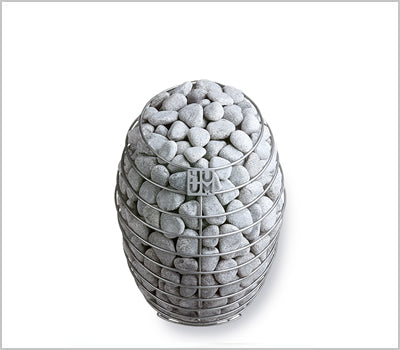
Sauna stones do more than just sit in the heater looking rugged. They're the thermal battery of your sauna - absorbing heat from the elements, storing it, and releasing it as gentle radiant warmth. When you pour water over them, they flash it into steam (loyly) that fills the room with that authentic sauna humidity. The quality of your stones directly affects how your sauna heats, how good the steam feels, and how safe the experience is.
Not every rock you find in a riverbed or at a garden center belongs in a sauna. Some shatter. Some off-gas. Some just don't hold heat well. Here's how to pick the right ones.
Shop sauna stones at SweatDecks
- SOAPSTONE CUP - $25
- Traditional Sauna Stones - $59
Affirm financing available. Free curbside shipping on orders over $5,000. See all sauna stones.
What Makes a Good Sauna Stone
A sauna stone needs to handle extreme conditions: repeated heating to 500-700F, rapid cooling from water pours, and hundreds (or thousands) of heat cycles over its lifetime. The ideal sauna stone has these properties:
- High thermal mass. Dense, heavy stones absorb more heat and release it slowly, maintaining consistent sauna temperatures.
- Thermal shock resistance. The stone must handle cold water hitting a hot surface without cracking or exploding. This is the most important safety factor.
- Non-porous. Porous stones absorb water, which can cause them to fracture violently when heated as trapped water turns to steam inside the rock.
- Chemically inert. The stone shouldn't release harmful gases or unpleasant smells when heated.
- Appropriate hardness. Hard enough to resist crumbling but not so hard that thermal stress causes sudden fracturing.
Best Stone Types for Saunas
| Stone Type | Heat Retention | Durability | Steam Quality | Cost |
|---|---|---|---|---|
| Olivine diabase | Excellent | Excellent | Soft, pleasant steam | $$ |
| Peridotite | Excellent | Excellent | Very smooth steam | $$$ |
| Vulcanite (basalt) | Very good | Very good | Good, slightly rough | $$ |
| Granite | Good | Good | Decent | $ |
| Ceramic sauna balls | Good | Very good | Quick, sharp steam | $$ |
Olivine Diabase
The gold standard for sauna stones. This is a dense igneous rock with high iron and magnesium content. It handles thermal shock beautifully, holds heat for a long time, and produces soft, pleasant steam. It's the most commonly recommended stone by Finnish sauna heater manufacturers like Harvia and Huum. Dark gray-green color, very heavy.
Peridotite
Another excellent igneous rock, slightly denser than diabase. Prized for producing exceptionally smooth steam. It's one of the longest-lasting sauna stones - some users report getting 3-5 years from a set with regular use. More expensive and sometimes harder to source.
Vulcanite (Dark Basalt)
A volcanic rock that performs well in saunas. Good heat retention and thermal shock resistance. Widely available and moderately priced. Some varieties are slightly more porous than diabase, so inspect individual stones for visible pores.
Granite
Readily available and affordable. Good heat retention and reasonable durability. Not all granite is equal in a sauna - avoid granite with large quartz crystals, which can shatter with thermal shock. Solid, fine-grained granite works best. It doesn't last as long as diabase or peridotite but is a budget-friendly option.
Ceramic Sauna Balls
Not natural stone, but engineered ceramic spheres designed for sauna use. They're uniform in size and shape, stack neatly, and allow excellent airflow between them. Steam production is quick and somewhat sharper than natural stone. Some people use a mix - ceramic balls in the lower layers for airflow and natural stones on top for aesthetics and steam quality.
Stones to Avoid
- Sandstone. Porous, crumbles easily, poor heat retention. Falls apart after a few heating cycles.
- Limestone/marble. Can release calcium compounds when heated. Poor thermal shock resistance. Cracks and crumbles.
- Slate. Layers separate when heated, flaking into sharp pieces. Dangerous in a heater.
- River rocks (unknown type). Random river rocks are risky because you don't know their composition. Some contain trapped moisture or air pockets that can cause explosive fracturing when heated. If you use river rocks, choose only dense, non-porous specimens and test them carefully.
- Any rock with visible cracks, layers, or pores. These are failure points. In a sauna heater, a cracked rock becomes two smaller rocks, and the fragments can fall into the heating elements.
- Rocks containing sulfur or metalite. These off-gas unpleasant (and potentially harmful) fumes when heated. If a rock smells like rotten eggs when wet and hot, replace it immediately.
What Size Stones Should You Use?
Stone size depends on your heater type:
| Heater Type | Recommended Stone Size | Notes |
|---|---|---|
| Wall-mounted electric (small) | 2-4 inches diameter | Smaller stones for compact heaters. Need to fit between close-spaced elements. |
| Floor-standing electric (medium) | 3-5 inches diameter | Mix of sizes for good airflow and heat retention. |
| Large electric or pillar heater | 4-6 inches diameter | Larger stones on the bottom, medium on top. |
| Wood-burning stove | 4-8 inches diameter | Larger stones retain heat longer between fire cycles. |
Always check your heater manufacturer's recommendations for stone size. Most manuals specify a range.
How to Stack Sauna Stones
Stacking technique matters more than most people realize. Done wrong, you get poor heating, uneven steam, or element damage.
- Start with the largest stones on the bottom. Place them around and between the heating elements. The largest stones go where they can make direct contact with the elements.
- Leave air gaps. Don't pack stones tight against each other. Air needs to circulate between the stones and around the heating elements. Think of it like building a loose rock wall, not filling a bucket.
- Never force stones. If a stone doesn't fit naturally, use a smaller one. Jamming a stone between elements can bend or damage them.
- Layer medium stones on top. These create the surface you'll pour water on. They should sit naturally without wobbling.
- Don't overfill. Stones should not extend above the top of the heater guard. Overfilling restricts airflow and can cause the heater to overheat.
- Don't underfill. The elements should be fully covered by stones. Exposed elements waste heat (radiating into air instead of heating stone mass) and can overheat.
How Much Stone Do You Need?
Your heater's manual lists the recommended stone weight. Typical ranges:
- Small wall heater (3-6kW): 20-45 lbs of stones
- Medium floor heater (6-9kW): 45-100 lbs of stones
- Large heater (9-15kW): 100-200 lbs of stones
- Pillar/tower heater: 150-250 lbs of stones
When to Replace Sauna Stones
Sauna stones don't last forever. Thermal cycling gradually breaks them down. Replace them when:
- Stones are visibly cracked or split
- Stones are crumbling - you find stone dust and small fragments in the heater
- Stones have shrunk noticeably (they do lose mass over time)
- The heater takes noticeably longer to reach temperature
- Steam quality has declined - it feels less pleasant or smells different
- You see white calcium deposits on the stone surfaces (common with hard water)
Typical Replacement Schedule
- Heavy use (daily): Replace every 6-12 months
- Regular use (3-5 times/week): Replace every 1-2 years
- Light use (1-2 times/week): Replace every 2-3 years
- Inspection: Remove and inspect stones every 6 months regardless of use frequency. Remove crumbled fragments, restack, and replace any damaged stones.
Where to Buy Sauna Stones
- Sauna retailers. The best source. Stones sold by sauna retailers are specifically selected and tested for sauna use.
- Heater manufacturers. Harvia, Huum, and other manufacturers sell stones matched to their heaters.
- Landscape supply stores. Some carry suitable stone types (look for dense igneous rocks). Always verify the stone type before using.
- Avoid: Random decorative rocks, garden center "river rock," and anything you're not sure about. The stakes are too high - an exploding rock in a hot sauna is a serious safety hazard.
Browse our sauna accessories for quality sauna stones and replacement sets. For heater selection help, see our heater buying guide. If your heater isn't performing right, check our heater troubleshooting guide.
Browse our expert-tested cold plunge collection.