How to Break In a New Sauna: The First-Use Guide
Your new sauna is assembled, the heater is connected, and you're ready to fire it up. Not so fast. Just like a new cast iron pan needs seasoning, a new sauna needs a break-in period. Skipping this step won't ruin your sauna, but doing it right sets you up for a better experience from day one.
Quick Answers
Why does a new sauna smell strange when first heated?
The smell comes from off-gassing, which is normal. New wood, residual manufacturing oils, and protective coatings on heater elements release volatile organic compounds when heated for the first time. It fades over the first few heat cycles and isn't something you want to breathe deeply, which is why ventilation should stay wide open during break-in.
How long does it take to break in a new sauna?
Most saunas need about three days of heat cycles. Day one is a 1-hour warm-up at 150-160°F with no one inside, day two runs 170-180°F for 1-2 hours with a brief 5-10 minute test sit, and day three reaches full operating temperature for a normal 15-20 minute session. Thicker wood or complex builds may need 4-5 cycles.
Can I sit in my sauna on the first day?
No, the first heat cycle is for the sauna, not for you. Run it for about an hour at medium temperature with ventilation fully open and let it off-gas without anyone inside. You can sit briefly, 5-10 minutes, starting on day two once the smell has lessened.
Do sauna stones need a break-in too?
Yes. Heat the stones gradually during the first session without adding any water, letting them heat and cool once with no thermal shock. On the second heating, add small, half-ladle amounts of water. Minor popping or cracking sounds are normal as the stones settle; a badly cracked stone should be removed and replaced.
Are small cracks or gaps in a new sauna normal?
Yes, small gaps between panels of 1-2 mm are normal and often close as the wood swells with heat exposure. Minor cracking in wood or stones during the first few uses is also typical as materials settle. Larger gaps, however, suggest a fit issue that's worth addressing.
Here's exactly how to break in your new sauna the right way.

Shop all saunas at SweatDecks
- FD-1 Full-Spectrum Infrared Sauna - $4,695
- FD-3 Full Spectrum Infrared Sauna - $6,495
Affirm financing available. Free curbside shipping on orders over $5,000. See all all saunas.
Why a Break-In Period Matters
Off-Gassing
New wood, new heating elements, and new construction materials can release volatile organic compounds (VOCs) when heated for the first time. This is normal. The wood, any residual manufacturing oils, and even the heater elements need to burn off these compounds before you sit in the enclosed space breathing deeply.
You'll likely notice a strong "new sauna" smell during the first few heat-ups. This is the off-gassing happening. It's not harmful in a ventilated space, but you don't want to be breathing it in during a 20-minute session.
Wood Curing
New sauna wood needs to acclimate to heat cycles. During the first several heatings, the wood expands and contracts, seams settle, and the grain adjusts to the extreme environment. This is when small cracks or gaps might appear - they're normal and usually close up as the wood finds its equilibrium.
Heater Conditioning
New sauna heaters often have a protective coating on the heating elements that needs to burn off. This can produce a slight metallic or chemical smell during the first few uses. It's normal and temporary.

The Break-In Process: Step by Step
Day 1: First Heat Cycle
- Open all ventilation - Make sure your intake and exhaust vents are fully open. If you have a window or extra door, open those too.
- Set the temperature to medium - About 150-160°F, not full blast. You're warming the wood gradually, not trying to reach operating temperature.
- Run the heater for 1 hour - Let it reach temperature and hold there.
- Don't sit inside - This first run is for the sauna, not for you. Let it off-gas with the ventilation wide open.
- Turn off and let it cool completely - Leave the door open and let everything cool back to room temperature.
Day 2: Second Heat Cycle
- Increase temperature to 170-180°F - Getting closer to normal operating range.
- Run for 1-2 hours - Again with ventilation open.
- You can sit inside briefly - 5-10 minutes just to get a feel for the space, but don't treat it as a full session.
- Note any smells - The off-gassing smell should be noticeably lighter than the first day. If it's still very strong, do another heat cycle before your first real session.
- Cool down completely again.
Day 3: Third Heat Cycle
- Full temperature - Set to your planned operating temperature (typically 170-195°F).
- Run for 1-2 hours - Ventilation still open but can be partially closed now.
- Take your first real session - If the smell has largely dissipated, you're good to go. Do a normal 15-20 minute session.
- Assess the experience - How does the air feel? Is the temperature even? Any remaining off-gassing smell? Adjust as needed.
Optional Day 4+
If your sauna still has a noticeable chemical or manufacturing smell after three break-in sessions, continue with additional heat cycles. Some saunas - particularly those with thicker wood or more complex construction - may need 4-5 cycles before the off-gassing is complete.
Breaking In Sauna Stones
If you have a traditional sauna with stones, they need their own break-in:
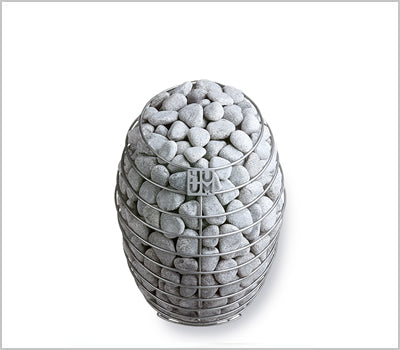
- First heating - Heat the stones gradually. Don't throw water on them during the first session. Let them heat up and cool down once without water exposure.
- Second heating - Now you can start adding small amounts of water. Use half-ladle amounts. The stones need to get used to the thermal shock of water contact.
- Listen for cracking - Some minor popping or cracking sounds during the first few uses are normal as the stones settle. If a stone cracks badly, remove and replace it.
Inspecting During Break-In
Use the break-in period to check for issues while they're easy to fix:
- Gaps between panels - Small gaps (1-2 mm) are normal and may close as the wood swells with heat. Larger gaps suggest a fit issue worth addressing.
- Door seal - Does the door close properly at temperature? Wood expands when hot, which can affect door fit. Adjust hinges if needed.
- Temperature distribution - Is it significantly hotter in one area? This might indicate a ventilation problem or heater placement issue.
- Bench stability - Sit on every bench section. Any wobbling or creaking should be addressed by tightening hardware.
- Electrical - Check for any unusual buzzing, flickering lights, or tripped breakers during the first few heat cycles.
What to Expect in the First Month
Even after the initial break-in, your sauna continues to change during the first few weeks of regular use:
- Wood color changes - Cedar darkens, hemlock may develop warm tones, and all woods develop a patina from heat exposure. This is normal and desirable.
- Tightening and settling - Screws and hardware may need a light tightening after the wood has gone through several heat cycles. Check after 2-3 weeks.
- Aroma development - Cedar and other aromatic woods develop their characteristic scent more fully after repeated heating. The smell in week four is better than week one.
- Heat-up time improves - As the wood and stones absorb heat repeatedly, the sauna may reach temperature slightly faster than it did brand new.
Indoor vs. Outdoor Break-In
The break-in process is the same for both indoor and outdoor saunas, but outdoor units benefit from one extra step: during the off-gassing runs, you can leave the door wide open to maximize airflow. With indoor saunas, make sure the room the sauna is in has adequate ventilation to handle the fumes that vent out.
Common Break-In Mistakes
- Cranking to max temperature immediately - Gradually increasing temperature over multiple sessions is gentler on the wood and heater.
- Having your first full session on day one - The off-gassing during the first heat-up isn't something you want to breathe deeply for 20 minutes.
- Closing all ventilation during break-in - You want maximum airflow to carry off-gassing fumes out of the sauna.
- Panicking about small cracks - Minor cracking and checking in new wood is normal. The wood is adjusting to extreme conditions. Give it time.
- Skipping stone break-in - Throwing a full ladle of water on brand-new, fully heated stones is more likely to crack them. Start gently.
The Bottom Line
Breaking in a new sauna takes 2-3 days and a little patience. Run 2-3 heat cycles with full ventilation before your first real session, gradually increasing the temperature each time. Let the wood off-gas, the heater elements condition, and the stones acclimate. Check for gaps, door fit, and bench stability during this period. It's a small investment of time that ensures your sauna performs well and smells great from session one onward.
Try Our Free Tools
Browse our expert-tested cold plunge collection.