
Last updated 2026-07-10
TL;DR
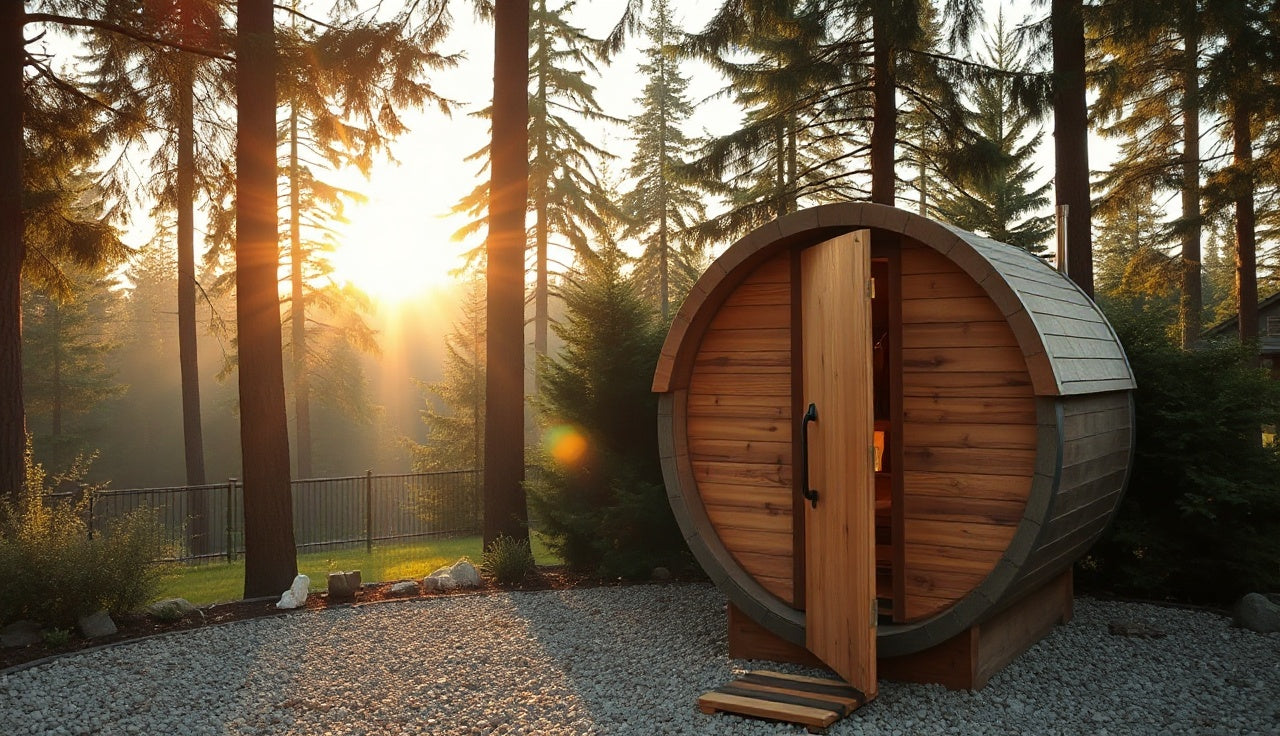
Nootka Saunas builds hand crafted barrel saunas in British Columbia, mostly from clear western red cedar and thermally modified wood. Units run 6 to 8 feet in diameter and cost $5,000 to $12,000 USD depending on size and heater. Build quality sits a clear step above big-box barrels, but expect an 8 to 16 week lead time.
What is Nootka Saunas and where are their barrel saunas made?
Nootka Saunas is a Canadian maker based in British Columbia that builds barrel saunas and outdoor sauna structures by hand. The name comes from Nootka Sound, an inlet on the west coast of Vancouver Island, and that tells you the ethos: Pacific Northwest woodwork, old-growth timber habits, wet coastal weather.
Every barrel is put together in BC and ships to customers across Canada and the United States. The production run is small on purpose. This is not a factory pushing out thousands of units a year. Workers cut, plane, and stave-fit each barrel one at a time, which is exactly why lead times stretch into months instead of weeks.
The wood is the thing that matters most. Western red cedar (Thuja plicata) is native to the BC coast and is one of the best sauna woods anywhere. It resists rot on its own, carries few resins that could off-gas under heat, holds its shape through repeated wet-dry cycles, and smells pleasant instead of sharp [1][10]. Nootka also offers thermally modified wood on some models, which is ordinary timber (often spruce or aspen) heat-treated to around 200 degrees C in a low-oxygen kiln to drive out sugars and improve decay resistance without any chemical preservatives [2].
Want to know why barrel saunas work so well outdoors? It's the geometry. The curved walls have no corners for cold air to pool, and the round cross-section moves heated air in a natural convection loop that warms the space faster than a rectangular box of the same volume. Nootka keeps its internal diameters fairly tight, which concentrates the heat near the benches.
How does a Nootka barrel sauna compare to other barrel sauna brands?
The barrel sauna market has gotten crowded. You can buy one at Costco, from a dozen Canadian and Finnish importers, or from a custom shop down the road. Nootka sits in the upper-middle tier: better than mass-market units, cheaper than fully bespoke Finnish imports like Kirami or Tylo-outfitted custom builds.
| Brand / Category | Typical Price Range (USD) | Wood | Origin | Lead Time |
|---|---|---|---|---|
| Nootka Saunas (barrel) | $5,000 to $12,000 | Cedar, thermo-modified | BC, Canada | 8 to 16 weeks |
| Costco / big-box barrel | $2,500 to $5,500 | Hemlock, spruce | Varies (often China) | In-stock or 2 to 4 weeks |
| Almost Heaven / ALEKO | $3,000 to $7,000 | Cedar, hemlock | China-made | 2 to 6 weeks |
| Finnish import (Kirami, etc.) | $8,000 to $20,000+ | Nordic spruce, cedar | Finland | 12 to 24 weeks |
| Fully custom local builder | $10,000 to $30,000+ | Customer's choice | Local | 3 to 6 months |
The honest comparison point is stave quality and stave width. Cheaper barrels tend to use narrower staves milled from lower-grade wood with more knots and sapwood. Sapwood is the outer, lighter-colored ring of a log. It lacks the oils and tannins of heartwood, so it weathers faster and can crack or leak at the hoops over time. Nootka specs clear heartwood cedar on its flagship line. That is a real spec, not a marketing line.
Hoop tension is the other differentiator. Barrel saunas are held together by steel bands called hoops. Cheaper units use galvanized steel that rusts at the weld points in wet climates. Nootka runs stainless hardware on current models, which matters a lot if you get rain, snow, or salt air.
For a wider look at outdoor sauna options, including non-barrel styles, read up on the full category before you lock in on a barrel specifically.
What sizes does Nootka offer and how many people fit inside?
Nootka's barrel saunas come in several diameter and length combinations. The exact lineup shifts year to year as they adjust production, so confirm current offerings with them directly. The general range has been:
- 6-foot diameter barrels, 6 to 7 feet long (interior): 2 to 4 people comfortable
- 7-foot diameter barrels, 7 to 8 feet long: 4 to 6 people
- 8-foot diameter barrels, up to 10 feet long: 6 to 8 people, sometimes with a small change room section
For most backyard buyers, the 6-foot diameter unit is the smart pick. Four adults fit without crowding. Heat-up time is shorter. The footprint drops onto a standard deck or patio without drama. Go larger only if you host groups often or want a dedicated wellness space.
Here is something Nootka does that cheaper barrel makers usually skip: a built-in change room partition on larger barrels. That's an interior section behind a partial wall, giving you a dry spot to undress and stash towels without stepping outside between rounds. It adds maybe 18 to 24 inches of barrel length and earns its keep in cold climates.
Ceiling height inside a barrel is not the same as a rectangular room. At the center peak of a 6-foot diameter barrel, you get roughly 5.5 to 5.8 feet of headroom at the ridge, so most adults can sit but not stand fully upright on the benches. The bench-to-ceiling clearance is what drives the heat you feel: upper benches in a 6-foot barrel sit close to the apex, so temperatures there run 10 to 20 degrees F hotter than the lower bench. That gradient is exactly what you want for dialing intensity up or down.
| Nootka Saunas (cedar, hand crafted) | $8,500 |
| Finnish import (Kirami, etc.) | $14,000 |
| Almost Heaven / ALEKO | $5,000 |
| Costco / big-box barrel | $4,000 |
| Fully custom local builder | $20,000 |
Source: SweatDecks market research, manufacturer pricing (2025)
What heater options come with Nootka barrel saunas?
Nootka offers both wood-burning and electric heater setups. This is one of the biggest decisions you'll make, and it drives installation cost, running cost, and the whole character of the sauna.
Wood-burning stoves (usually a Harvia or similar Finnish-made unit) are the traditional choice for barrels. You get the ritual of building a fire, the smell of burning birch or cedar, and full independence from the grid. The stove heats the space in roughly 45 to 75 minutes depending on outside temperature and wood quality. The sauna itself rarely needs a permit, but a wood-burning appliance inside a structure may require a building permit or a clearance sign-off from your local fire authority, and that varies by municipality [3]. You also need a steady supply of dry firewood and some patience for ash.
Electric heaters are the convenient route. A standard 6-foot Nootka barrel usually pairs with a 6 to 9 kW heater. That needs a 240V circuit, which means an electrician visit and maybe a sub-panel upgrade. Heat-up time drops to 25 to 45 minutes. You can set a timer from inside the house. The heat runs slightly drier and easier to control. Wood-burning gives a softer, more variable heat that many longtime sauna users prefer, but electric is genuinely good.
The research on sauna benefits is largely heater-agnostic. The effects in the literature come from heat exposure itself, not the heat source. What the studies do point to: a steady temperature between 80 and 100 degrees C (176 to 212 degrees F) is where most cardiovascular and recovery-related effects show up [4].
Nootka doesn't offer infrared in its barrel line, and that's the right call. Infrared runs much cooler (around 50 to 60 degrees C, or 122 to 140 degrees F) and changes how you sweat and how the room feels. If infrared is what you want, a barrel is the wrong shape for it anyway.
How much does a Nootka hand crafted barrel sauna actually cost?
The base unit price is only part of the total. Here is the honest accounting.
Nootka barrel saunas run about $5,000 to $12,000 USD for the sauna itself, depending on diameter, length, wood species, and heater. Thermally modified models tend to land on the higher end. Wood-burning stove models sometimes cost less on the stove but even out once you add accessories.
On top of the sauna price, budget for these:
- Delivery and freight: barrel saunas are large and heavy (a 6-foot unit weighs 800 to 1,200 lbs assembled). Freight from BC to a US address usually runs $400 to $900 depending on distance and access. Nootka ships on a pallet by LTL freight, so you need a forklift or a loading dock at the delivery point, or you line up local labor.
- Foundation: a level gravel bed, concrete piers, or a treated lumber platform. Budget $200 to $800 DIY, more if you hire it out.
- Electrical rough-in (electric heater): $300 to $1,500 depending on distance from your panel and whether you need a panel upgrade.
- Accessories: birch whisks (veniks), ladles, buckets, thermometers, backrests. Figure $100 to $300 to kit it out right.
Total installed cost for a mid-size Nootka barrel with an electric heater on a simple gravel pad lands around $7,000 to $14,000. That is real money. A home sauna built into a spare room can run $3,000 to $8,000 on its own, but the barrel price includes the structure, so it isn't as steep as it looks side by side.
Is western red cedar actually better for a sauna than other woods?
Yes, in most practical ways, and the reasons run deeper than tradition.
Western red cedar carries natural oils (thujaplicins and thujic acid) that give it real decay resistance. The USDA Forest Service Wood Handbook rates western red cedar heartwood as resistant to decay, meaning it fights off rot even without treatment [1]. In a sauna, where wood gets soaked in sweat and steam hundreds of times a year, that resistance drives the barrel's 15 to 25 year lifespan.
Cedar also has low density and low specific heat capacity next to heavier hardwoods, so it soaks up less heat from the air before the room gets warm. A cedar-lined sauna heats faster, and the wood itself doesn't get painfully hot to touch the way a metal bench or dense hardwood would.
The one real downside is cost. Clear heartwood cedar is expensive, and the supply of old-growth-quality clear cedar has tightened over the past 20 years as old-growth logging restrictions expanded in BC [5]. That's part of why thermally modified wood is catching on. You get comparable rot resistance from second-growth or plantation spruce at a lower raw material cost.
Nordic spruce, what Finnish makers have used for centuries, is also excellent and gives a more neutral sauna smell. Hemlock, common in mid-range saunas, is fine structurally but less rot-resistant and more likely to check (crack at the surface) through repeated heat cycles.
Put a Nootka cedar barrel next to a hemlock barrel at half the price, and the cedar will almost certainly outlast it outdoors by a wide margin, especially through freeze-thaw cycles.
What do you need to install a Nootka barrel sauna at home?
Installation is simpler than most people expect. A few things are non-negotiable.
Start with the foundation. A barrel sauna sits on two horizontal cradle rails, which sit on your prepared surface. That surface must be level (within about 1/4 inch over the length of the barrel) and must drain water away from the unit. Good options: a compacted gravel pad (4 to 6 inches of 3/4-inch crushed stone), concrete piers or a poured slab, or a pressure-treated deck rated for outdoor use. Do not set it on grass or bare dirt. The bottom of the barrel will rot.
Next, clearances. Wood-burning models need minimum clearances from combustibles: typically 36 inches from the stovepipe to any overhead structure and 18 inches from the stove body to the walls. Nootka's stoves are built into the barrel design, but the exit flue still has to clear your eaves or pergola. Check your local fire code. In many US jurisdictions, International Residential Code (IRC) Section R1001 governs solid-fuel burning appliances, though a detached outdoor structure with a listed appliance may be handled differently by your local AHJ (authority having jurisdiction) [3].
Third, delivery access. The barrel arrives on a pallet. You need a way to move it from the truck to its final spot. Flat backyard, easy side-gate access, and a dolly? A few adults can manage it. Up a flight of stairs or around a tight corner, you may need a crane or boom truck.
Electric model owners need a 240V, 40 to 50 amp dedicated circuit run to the barrel. Most residential panels have room, but a panel near capacity may need an upgrade. Get an electrician quote before you finalize the heater choice.
The outdoor sauna setup process is worth reading in full before you order.
How long does a Nootka barrel sauna last and what maintenance does it need?
A well-kept clear cedar barrel sauna should last 15 to 25 years outdoors in most North American climates. That range has real spread. A barrel in coastal BC under year-round rain needs more active upkeep than one in a dry high-desert climate.
The main enemies are moisture at the hoop seams, UV wear on the wood surface, and condensation-driven rot at the cradle contact points where water can pool. Nootka's stainless hardware slows the rust problem, but it doesn't kill every moisture risk.
Here is a maintenance schedule that actually works:
- Every spring: inspect the steel hoops and tighten any that loosened over winter. Wood shrinks in dry cold, so the staves contract and the hoops need snugging down. It takes 20 minutes with a rubber mallet, and it's the single best thing you can do to stop leaks at the stave joints.
- Every 1 to 2 years: treat the exterior surfaces. Use a product rated for cedar, not a film-forming finish like polyurethane, which peels. Penetrating oils (teak oil, linseed oil, or a cedar-specific outdoor treatment) are the right choice.
- The interior gets nothing. Saunas are never sealed inside because you don't want any finish off-gassing at high heat. The interior wood turns silver-gray to dark brown over years of use, which is normal.
- Drain and dry: after every session, leave the door ajar so the interior dries out. Trapped moisture is what breeds interior mold and early rot.
The stove has its own upkeep: clean the chimney every year on wood-burning units, and inspect the heating elements every few years on electric units. Harvia, which makes many of the heaters Nootka sources, publishes maintenance guidelines on its site [6].
How does sauna heat actually affect your body, and what does the research say?
This section earns its place because plenty of sauna marketing makes claims the research doesn't fully back, and you deserve straight talk on what we actually know.
Here is what the research supports. Repeated sauna sessions at 80 to 100 degrees C improve certain cardiovascular markers and track with lower all-cause mortality in observational data. The most-cited study is the Kuopio Ischemic Heart Disease Risk Factor Study from Finland, which followed over 2,300 middle-aged men for a median of about 20 years. Men who used a sauna 4 to 7 times per week had a 40% lower risk of all-cause mortality than once-weekly users [4]. The authors flagged this as an association from observational data, not a randomized trial.
A 2018 review in Mayo Clinic Proceedings laid out the mechanistic case: sauna exposure raises core temperature, pushes heart rate to levels similar to moderate aerobic exercise, and triggers heat-shock protein production [7]. Those mechanisms are real. Whether they map cleanly onto the mortality numbers from Finnish sauna culture (with its specific session lengths, cooling habits, and lifestyle context) is harder to pin down.
For recovery, the evidence is modest but consistent. Heat exposure after exercise can cut delayed-onset muscle soreness (DOMS) and may support parasympathetic recovery. A 2020 review in the Journal of Science and Medicine in Sport found hot water immersion, a comparable heat modality, reduced DOMS by roughly 15 to 20% compared with passive recovery [8].
The honest bottom line: regular sauna use links to real health benefits in the literature, the mechanisms make physiological sense, and the risks for healthy adults are low. That's a fair reason to buy one. Nobody should buy a sauna expecting it to treat a medical condition.
Many owners pair a barrel sauna with a cold plunge for contrast therapy. The cold plunge benefits sit in a separate and interesting body of evidence worth reviewing.
Is a Nootka barrel sauna worth the price compared to cheaper alternatives?
My honest take: yes, if you'll use it regularly for more than 5 years, and no if you're not sure the habit will stick.
The math is simple. A $2,800 hemlock barrel from a big-box retailer that lasts 7 to 10 years before the staves start gapping and the hoops rust out costs about the same per year as a $9,000 Nootka cedar barrel that lasts 20 years. Per sauna session over its life, the Nootka is actually cheaper. It also holds resale value: a clean Nootka barrel in good shape sells used for a meaningful fraction of its original price. A worn-out hemlock barrel goes in a dumpster.
The caveat is that the big-box barrel might be fine for you. Dry climate, seasonal use instead of year-round, and enough DIY skill to re-seal stave gaps and swap hoops yourself? A cheaper barrel can last 12 to 15 years with care. The gap narrows.
Where Nootka clearly earns its premium: the joinery, the hoop hardware, and the fit of the staves. Those details govern how the barrel breathes through temperature and humidity swings. Poorly fit staves gap in summer heat and let water in during winter rain. You won't spot the difference in photos. You'll feel it over years of ownership.
SweatDecks has pulled together a selection of home sauna options if you want to weigh barrel styles against room-built builds before deciding.
Researching the budget end? The Costco sauna breakdown is a useful reference for what you actually get at a lower price.
What questions should you ask Nootka before ordering?
Buying straight from a small manufacturer is different from buying at a retailer. The information you get up front decides whether delivery and installation go smoothly.
Ask these before you commit:
1. What is the current lead time from deposit to ship date? This moves with their production queue, so don't assume the number a review quoted 8 months ago.
2. What is the freight carrier and delivery method? LTL freight to a residential address usually means curbside delivery with a liftgate. If you don't have flat access from the street to the install spot, clarify who moves it from the truck to the site.
3. What is included in the base price? Stove, chimney components, door hardware, interior benches, bucket and ladle set, and floor grating are sometimes included and sometimes sold separately. Know exactly what lands on the pallet.
4. What is the warranty and what does it cover? Structural defects, normal weathering, and heater components are often treated differently. Get the warranty terms in writing before you pay a deposit.
5. Do you offer assembly, or can I get it knocked down? Some customers receive a barrel in knock-down form (pre-cut staves and hardware) and assemble on-site to cut shipping cube. Ask whether that's available and whether the instructions are detailed enough for a competent DIYer.
6. What permit, if any, do you recommend buyers pull? A good maker knows which jurisdictions have tripped up their customers and can point you in the right direction, even without giving legal advice.
A sauna is a long-term investment. The 30 minutes you spend on these questions before ordering saves weeks of grief afterward.
Frequently asked questions
How long does it take to heat up a Nootka barrel sauna?
With an electric heater in the 6 to 9 kW range, a 6-foot Nootka barrel reaches 80 to 90 degrees C in about 25 to 45 minutes depending on outside air temperature. Wood-burning stoves take 45 to 75 minutes to hit the same temperature. Both assume a cold start. In cold winters, add 10 to 15 minutes to those estimates.
Can a Nootka barrel sauna stay outside year-round in cold climates?
Yes. Western red cedar handles freeze-thaw cycles well, and the barrel shape sheds snow load better than a flat-roofed structure. The main winter task is tightening the steel hoops in spring after the wood contracts through the cold months. Snow load on the curved surface is rarely a structural worry, but keep the door latched in high winds.
Does a Nootka barrel sauna require a building permit?
It depends on your jurisdiction. Most US and Canadian municipalities require a permit for any accessory structure above a certain size (commonly 120 or 200 square feet, depending on local code) and a separate permit for electrical work. Wood-burning appliances can trigger extra fire-code review. Contact your local building department before you order. Nootka can sometimes supply documentation that helps the permit process.
What is thermally modified wood and is it better than cedar for a barrel sauna?
Thermally modified wood is ordinary timber (often spruce or aspen) heat-treated to around 200 degrees C in a low-oxygen kiln to drive out sugars and improve decay resistance, with no chemical preservatives. It performs on par with cedar heartwood for rot resistance and is often more dimensionally stable. Raw material costs less than premium clear cedar, but finished products price similarly. Neither is definitively better; both are excellent choices.
How many people fit in a Nootka barrel sauna?
The 6-foot diameter barrels seat 2 to 4 adults comfortably on opposing benches. The 7-foot models fit 4 to 6. The largest 8-foot barrels handle 6 to 8, though comfort drops off above 6. For most households, the 6-foot diameter is the right size. Going larger adds cost, freight weight, and heat-up time without much payoff for everyday solo or couple use.
What wood is the interior of a Nootka sauna made from?
The interior and exterior of Nootka's flagship barrel saunas are both western red cedar heartwood. The interior is unfinished and untreated. You never apply stain, sealant, or oil to sauna interiors because those finishes off-gas at high temperatures. The wood darkens over time from heat and moisture cycling, which is normal and expected.
Can I use a Nootka barrel sauna with a cold plunge for contrast therapy?
Yes, and many buyers set a cold plunge or ice bath next to the barrel for exactly this. A typical contrast protocol is 10 to 20 minutes in the sauna, then 2 to 5 minutes in cold water, repeated 2 to 3 times. Preliminary evidence suggests alternating heat and cold may amplify some recovery benefits over either alone, though the research is still early. See our guide on cold plunge benefits for the current evidence.
What is the difference between a wood-burning and electric Nootka sauna?
Wood-burning models use a stove (often Finnish-made, like a Harvia) fed with firewood. Heat-up takes 45 to 75 minutes, no electrical connection needed, and the heat is more traditional with a softer steam. Electric models heat in 25 to 45 minutes, need a 240V circuit, run on a timer, and give a drier heat. Wood-burning is more ritualistic; electric is more convenient. Both deliver a genuine sauna experience.
How do I maintain the steel hoops on a Nootka barrel sauna?
Inspect the hoops every spring. Wood shrinks in cold, dry conditions, so after winter the staves carry more play and the hoops may feel loose. Use a rubber mallet to tap the hoop tensioners (wedges or threaded hardware depending on the model) until the hoops sit snug against the staves with no rattling. Stainless steel hoops don't rust, but check annually for mechanical damage or bent sections.
Is a barrel sauna better than a traditional rectangular sauna for outdoor use?
For outdoor use, a barrel has real advantages: the curved wall is self-supporting without interior framing, it sheds rain and snow naturally, and the round cross-section drives better natural convection for even heat. A rectangular outdoor sauna gives more headroom and easier bench layouts. If standing fully inside matters to you, rectangular wins. If you want a freestanding outdoor unit with minimal foundation work, the barrel fits better.
What is the shipping process for a Nootka barrel sauna to the US?
Nootka ships via LTL freight on a pallet from British Columbia. The barrel may arrive pre-assembled or in knock-down form depending on the model. Delivery is usually curbside with a liftgate, and you are responsible for moving it from the truck to the install spot. Freight to most US destinations runs $400 to $900. Customs clearance for Canadian manufactured wood goods into the US is generally straightforward under CUSMA/USMCA, and your freight broker handles the paperwork [9].
How does the Nootka barrel sauna compare to a portable sauna?
A portable sauna is a fabric or canvas enclosure for one person that packs away and costs $100 to $600. It's not a real comparison. Nootka barrels are permanent outdoor structures that produce a full traditional sauna environment, seat multiple people, and run a proper stove. If space and budget genuinely limit you to portable, the portable sauna guide covers that category. If you can fit a barrel, the experience gap is large.
What foundation does a Nootka barrel sauna sit on?
The barrel rests on two parallel cradle rails, which need a level, well-drained surface beneath them. Options include a compacted gravel pad (4 to 6 inches of crushed stone is ideal), concrete piers, a poured slab, or a pressure-treated lumber deck. Avoid setting cradle rails directly on soil or grass; the base of the rails wicks moisture and rots early. Leveling within 1/4 inch over the length of the barrel is enough.
How does sauna use affect cardiovascular health according to research?
The most-cited evidence comes from the Kuopio Ischemic Heart Disease Risk Factor Study, which followed over 2,300 Finnish men for a median of about 20 years and found that sauna use 4 to 7 times per week was linked to a 40% lower risk of all-cause mortality versus once weekly. This is observational, not a clinical trial, so causation isn't established. A 2018 Mayo Clinic Proceedings review noted plausible mechanisms including heat-induced cardiac output increases and heat-shock protein production.
Sources
- USDA Forest Service, Forest Products Laboratory, Wood Handbook: Wood as an Engineering Material (Chapter 14, Biodeterioration of Wood): Western red cedar heartwood is rated as resistant to decay by the USDA Forest Service
- USDA Forest Service, Forest Products Laboratory, research on thermal modification of wood: Thermally modified wood is heat-treated at approximately 200 degrees C in a low-oxygen environment to improve decay resistance without chemical preservatives
- International Code Council, International Residential Code (IRC) Section R1001, Masonry Fireplaces: IRC Section R1001 governs solid-fuel burning appliances in residential construction, relevant to wood-burning sauna stove permits
- JAMA Internal Medicine, Laukkanen et al., Association Between Sauna Bathing and Fatal Cardiovascular and All-Cause Mortality Events (2015): The Kuopio Ischemic Heart Disease Risk Factor Study found men who used sauna 4 to 7 times per week had a 40% lower risk of all-cause mortality compared to once-weekly users
- Government of British Columbia, Ministry of Forests, old growth forest management: Old-growth logging restrictions in British Columbia have tightened the supply of clear heartwood western red cedar over the past 20 years
- Harvia Plc, product and maintenance guides: Harvia publishes maintenance guidelines for its sauna stoves and heaters, including annual chimney cleaning recommendations for wood-burning units
- Mayo Clinic Proceedings, Laukkanen et al., Cardiovascular and Other Health Benefits of Sauna Bathing (2018): Sauna exposure raises core temperature, increases heart rate to levels similar to moderate exercise, and triggers heat-shock protein production
- Journal of Science and Medicine in Sport, review of water immersion recovery for athletes: Hot water immersion reduced delayed-onset muscle soreness by approximately 15 to 20% compared to passive recovery in review findings
- Canada Border Services Agency, CUSMA/USMCA tariff and trade information: Canadian manufactured wood goods exported to the United States qualify for preferential tariff treatment under CUSMA/USMCA
- Natural Resources Canada, tree species and wood products information: Western red cedar (Thuja plicata) is native to the BC coast and carries natural oils that provide decay resistance

Share:
Contrast water therapy: what it is and does it actually work?
Contrast water therapy: what it is and does it actually work?