
Last updated 2026-07-10
TL;DR
Most research-supported contrast therapy protocols use a 3:1 hot-to-cold ratio: about 3 minutes of heat for every 1 minute of cold. A typical session runs 3 to 4 cycles totaling 20 to 30 minutes. Ratios from 2:1 to 5:1 show up in the literature depending on your goal. Recovery and circulation benefits appear most consistently at 3:1 or 4:1 in controlled trials.
What is the correct hot-to-cold ratio for contrast therapy?
A 3:1 ratio is the most-studied starting point. That means three minutes of heat for every one minute of cold, repeated across several cycles in a single session.
A 2012 systematic review in the Journal of Athletic Training analyzed 28 contrast therapy studies and found that ratios between 3:1 and 4:1 were the most common in protocols showing measurable reductions in delayed-onset muscle soreness (DOMS) and perceived fatigue [1]. No single ratio came out universally best, which is the honest read: the literature is messy. But 3:1 keeps surfacing because it gives your cardiovascular system enough time to answer each thermal shift without pushing either extreme past the point of diminishing returns.
Newer to cold exposure? Start at 3:1. Experienced cold-plungers sometimes run 4:1 or even 5:1 on the heat side, spending longer in the sauna before the dip. Going shorter on heat, say 2:1, can work for quick recovery when you are pressed for time, but the vasodilation response is less complete.
The ratio matters less than you might think if your temperatures are wrong. Heat should be 38 to 42 C (100 to 108 F) for a warm bath or hydrotherapy pool, or a proper sauna at 80 to 100 C (176 to 212 F) dry air. Cold should be 10 to 15 C (50 to 59 F). Step outside those ranges and the physiological stimulus fades fast.
How long should each hot and cold phase last?
In most athletic recovery studies, the heat phase runs 3 to 5 minutes and the cold phase runs 1 to 2 minutes per cycle [1][2]. The single most-tested protocol is three minutes hot, one minute cold, repeated three to four times.
Here is a simple reference table:
| Goal | Heat phase | Cold phase | Ratio | Cycles | Total time |
|---|---|---|---|---|---|
| General recovery | 3 min | 1 min | 3:1 | 3-4 | 12-16 min |
| Athletic DOMS reduction | 4 min | 1 min | 4:1 | 3-4 | 15-20 min |
| Circulation/cardiovascular | 3 min | 1 min | 3:1 | 4-5 | 16-20 min |
| Full sauna + cold plunge session | 10-15 min | 2-3 min | ~5:1 | 2-3 | 30-55 min |
| Beginner / first session | 3 min | 30-60 sec | 4:1-6:1 | 2-3 | 7-12 min |
The "full sauna + cold plunge" row reflects how most home users actually practice this, running a real sauna round instead of a hydrotherapy-pool-length dip. The effect is still a contrast stimulus, but the timings do not map directly onto the clinical protocols above. That does not make it wrong. It means the ratio research rests on shorter, more controlled cycles.
End on cold. Multiple studies and most practitioner consensus favor finishing the last cycle with cold rather than heat, especially when the goal is acute recovery rather than relaxation [2]. If you want to end warm and relaxed, finishing on heat is fine, but do not expect the same acute anti-inflammatory effect.
What temperature ranges should you use for contrast therapy?
Temperature is where a lot of home setups fall short. Lukewarm showers and mildly cool pools do not build a real contrast stimulus.
On the heat side, a dry Finnish-style sauna at 80 to 100 C (176 to 212 F) air temperature is the standard for home use. Your core temperature rises 0.5 to 1.0 C during a typical 10 to 15 minute round [3]. With a hot tub or hydrotherapy pool, aim for 38 to 42 C (100 to 108 F) water, which is warmer than it sounds and heats tissue more efficiently than air because water conducts heat so well.
On the cold side, 10 to 15 C (50 to 59 F) is the range cited most often in peer-reviewed work [1][2]. Water at this temperature drives meaningful vasoconstriction and activates cold-shock proteins without the cardiac risk that colder extremes carry for unacclimatized users [12]. An ice bath at 0 to 5 C is genuinely colder than most published protocols, and it may not be better for everyone even when it feels more intense. A properly maintained cold plunge or ice bath held at 10 to 15 C hits the evidence-based sweet spot.
Nobody has perfectly clean data on whether 8 C beats 12 C for recovery. The closest comparison, a 2021 trial in the European Journal of Sport Science, found no statistically significant difference between 8 C and 14 C cold water immersion on muscle soreness, though the 14 C group stuck with it slightly better [4]. That tracks with common sense. A temperature you can tolerate long enough to finish your protocol beats an extreme one that forces you out in 30 seconds.
How many cycles should you do per session?
Three to four cycles is the most common prescription in the research, and it works for most people [1]. Two cycles produce a measurable effect. Five or more in a single session show diminishing returns and raise fatigue in some studies.
Your own response matters more than an exact number. Three cycles at 3:1 (12 minutes of alternating) is a productive session. Four cycles starts to feel like real work and suits athletes in heavy training blocks. More than five in one sitting is usually overkill for recovery, though some Scandinavian sauna traditions run longer sessions with multiple rounds for the ritual and relaxation, not strict physiological gain.
If you are new, start with two cycles. Your cardiovascular system is not used to repeated thermal shifts, and two cycles is enough to feel the effect and read how your body responds over the next 24 hours.
Does contrast therapy actually work for recovery and soreness?
The evidence says yes, with realistic caveats. A 2016 meta-analysis in PLOS ONE reviewed 99 randomized trials comparing cold water immersion, contrast water therapy, warm water immersion, compression, and active recovery. Contrast water therapy beat passive rest for reducing muscle soreness and fatigue at 24 and 48 hours post-exercise [5]. The effect sizes were moderate, not enormous.
For DOMS specifically, that meta-analysis found contrast therapy cut soreness ratings by roughly 1.5 points on a 10-point scale versus passive rest at 24 hours [5]. That is meaningful to an athlete training again the next day, and modest enough that you should not expect a miracle.
Blood lactate clearance is another common claim. A 2006 study in the International Journal of Sports Medicine found contrast water therapy cleared blood lactate faster than passive rest after repeated sprint exercise [6]. The mechanism is the alternating vasodilation and vasoconstriction, which essentially pumps blood through the muscle.
Psychological recovery counts too. Perceived readiness and mood scores improve with contrast therapy across studies, even when objective soreness markers barely move. Whether that is placebo or a real effect of thermal stimulation on the autonomic nervous system is still open. The practical point holds: athletes feel better and perform better in the next session, which is what you care about.
| Contrast water therapy | 1.5 |
| Cold water immersion only | 1.2 |
| Warm water immersion only | 0.7 |
| Compression | 0.6 |
| Active recovery | 0.4 |
Source: PLOS ONE, Bieuzen et al. meta-analysis of 99 RCTs, 2016
What is the best sequence: sauna first or cold plunge first?
Heat first, always. The whole mechanism depends on creating vasodilation through heat, then triggering vasoconstriction through cold. Start with cold and you get constriction with nowhere meaningful to go afterward. The pumping effect disappears.
The sequence for each cycle is: 1. Heat exposure (sauna, hot tub, or hot shower) for the prescribed time. 2. Transition quickly, within 30 to 60 seconds, to cold. 3. Cold immersion or cold shower for the prescribed time. 4. Optional 1 to 2 minute rest before the next cycle, or go straight back to heat.
Transition speed matters more than people realize. A 2009 study in the Journal of Science and Medicine in Sport found that delays over 2 minutes between heat and cold blunted the vascular response significantly [7]. Get into the cold promptly.
For home setups, placing your home sauna and cold plunge within easy walking distance of each other is more than convenient, it is physiologically relevant. A 45-second walk between a backyard sauna and a plunge tank is fine. A two-minute walk in cold air that has you shivering before you hit the water starts to smear the stimulus.
Is contrast therapy safe, and are there any risks?
For healthy adults, contrast therapy at the parameters here is very safe. The risks scale with cardiovascular health, how extreme your temperatures are, and how well you read your own response.
Start with the cardiovascular stress. Each heat-to-cold transition swings heart rate and blood pressure fast. The American Heart Association notes that hot tub use raises heart rate to 120 to 150 bpm in some people, comparable to moderate exercise [8]. Anyone with known cardiovascular disease, uncontrolled hypertension, or who is pregnant should talk to a physician before starting.
Vasoconstriction in people with Raynaud's disease or peripheral vascular disease can cause problems. Cold exposure is generally contraindicated for those groups.
Hypothermia risk is low at 10 to 15 C water with 1 to 2 minute exposures, but it is real at lower temperatures or if you are already cold and tired. Never do contrast therapy alone somewhere you cannot easily exit the cold.
Then there is overdoing it. More is not always better. Some evidence suggests heavy cold exposure right after strength training can blunt muscle protein synthesis and long-term hypertrophy [9]. If muscle growth is your main goal, cap contrast therapy at 2 to 3 times per week on non-lifting days, or wait at least 4 to 6 hours after a strength session.
Last, hydration. A sauna round costs real fluid: 0.5 to 1.0 liters of sweat per 15 minutes [3]. Drink 16 to 24 oz of water before a session and keep water within reach throughout.
Can contrast therapy blunt muscle gains from strength training?
This is a real concern, and it is worth taking seriously if hypertrophy is your main goal.
A 2015 study in the Journal of Physiology by Roberts and colleagues followed strength-trained men over 12 weeks. Those who added cold water immersion (10 C, 10 minutes) after every strength session gained significantly less muscle mass and strength than those who did active recovery [9]. The proposed mechanism: cold exposure suppresses the inflammatory signaling that kicks off muscle protein synthesis after training.
"Cold water immersion attenuated long-term gains in muscle mass and strength," the study's authors stated directly [9]. That is a meaningful finding.
The takeaway is not to avoid contrast therapy if you lift. It is to time it. Most sports scientists now suggest waiting at least 4 to 6 hours after strength training before cold immersion. On endurance days or pure recovery days, the tradeoff swings in your favor.
If you are mostly an endurance athlete, or you use contrast therapy to recover from team sport or HIIT, the blunting concern is largely beside the point. The evidence on endurance adaptation is far more neutral, and the recovery benefits tend to win out.
How does a home sauna and cold plunge setup compare to clinical hydrotherapy?
Clinical hydrotherapy pools run at precise temperatures with short, controlled immersion cycles because they are built around the research protocols. Most home setups differ in ways that matter.
Saunas run much hotter (80 to 100 C air) than a clinical warm water pool (38 to 42 C water), so the heat stimulus is more intense but shorter per round. You will not sit in a 100 C sauna for 5 minutes the way you might sit in a 40 C pool for 5 minutes. A 10 to 15 minute sauna round delivers a core temperature rise comparable to a longer pool soak.
The cold side usually sits closer to the clinical standard. A cold plunge held at 10 to 15 C matches the most common research temperature exactly.
For home users, do not obsess over copying a clinical protocol to the second. The adaptations you want (vasomotor response, less soreness, better perceived recovery) show up across a range of time and temperature combinations as long as the contrast is genuine and you finish multiple cycles. A realistic home protocol of 10 to 15 minutes sauna, then 2 to 3 minutes cold plunge, repeated 2 to 3 times, gets you the benefits.
Setting up a home system? SweatDecks carries sauna and cold plunge options picked for home contrast therapy.
How often should you do contrast therapy each week?
Two to four times per week covers most goals. Daily contrast therapy runs deep in many sauna cultures and is not inherently harmful for healthy adults, but the recovery-specific benefits plateau faster than that, and the muscle-gain concern above grows with daily cold exposure.
For general wellness and circulation, three times per week is a sensible maintenance rhythm.
For athletes in heavy training, daily or every-other-day during competition periods is common. Finnish national athletic programs and many Scandinavian sports federations have used near-daily sauna and cold exposure for decades with no documented harm in healthy athletes.
For beginners, twice a week for the first month, then adjust based on how your body responds. Watch sleep quality, energy, and mood. Those are your best subjective signals. Some people thrive on more. Others notice irritability or poor sleep with daily cold exposure, probably from excess sympathetic nervous system activation.
Learn more about the evidence for heat in our sauna benefits guide and for cold in our cold plunge benefits guide.
What equipment do you need for contrast therapy at home?
At minimum: a heat source and a cold source, each with enough capacity to immerse your body.
For heat, a traditional dry sauna (Finnish style) is the most effective and versatile choice. An outdoor sauna or dedicated room is ideal if you have the space. A portable sauna works for tighter budgets, though heat capacity and the overall experience are more limited. A steam room or hot tub covers the heat side if you already own one. Read our sauna vs steam room comparison if you are choosing between those two.
For cold, a dedicated cold plunge tank or chest freezer conversion holds temperature reliably. A cold shower works for a beginner protocol but is genuinely weaker: you cannot immerse your whole body, and the stimulus is less consistent. An inflatable ice bath is a fair middle ground.
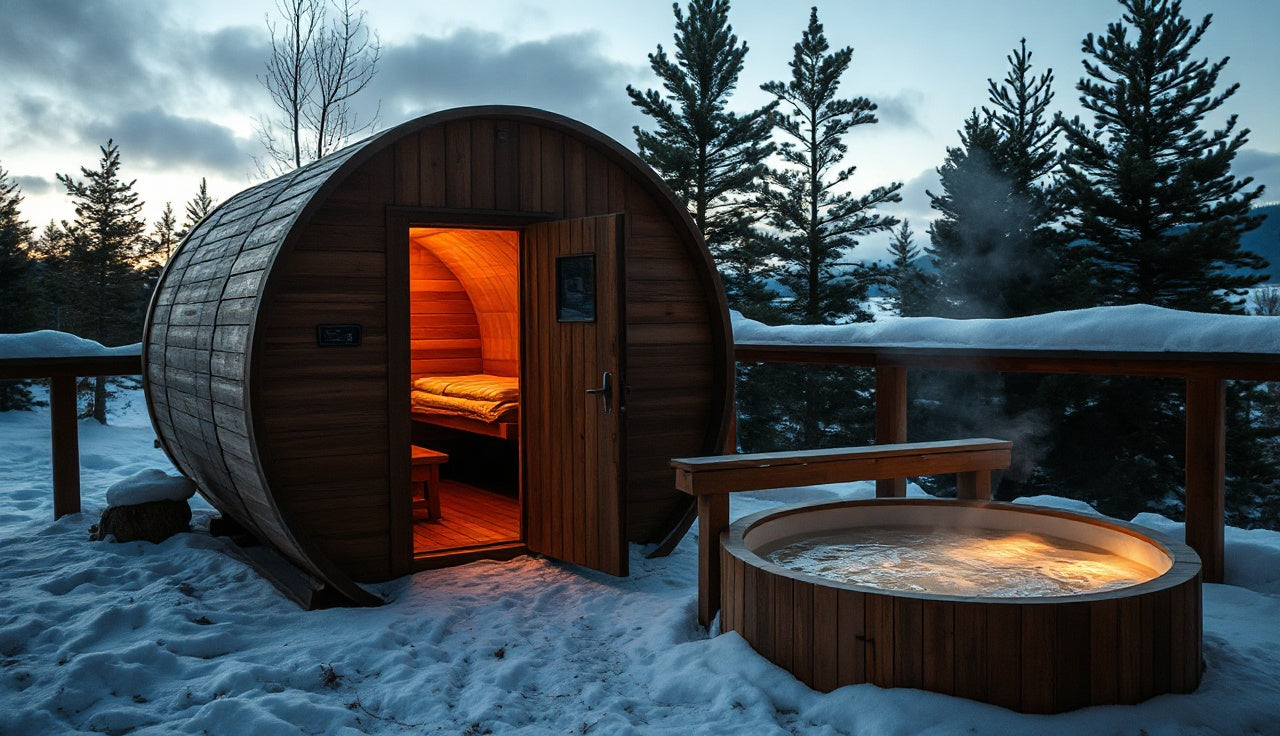
The most practical home setup for consistent contrast therapy is a sauna (barrel, cabin, or pod) sited near an outdoor cold plunge tank or a chest freezer conversion. Proximity matters for the transition-time reasons above. Budget for a quality thermometer in both units so you know your real temperatures instead of guessing.
For equipment built for this kind of setup, SweatDecks has a full selection at sweatdecks.com.
Are there special protocols for specific goals like sleep, inflammation, or performance?
Yes, and the timing differences matter.
For sleep quality, end on heat, not cold. Warm exposure before bed promotes the core temperature drop that triggers sleep onset. A 2019 review in Sleep Medicine Reviews found that passive body heating (a hot bath or shower) 1 to 2 hours before bed cut sleep onset latency by an average of 10 minutes and improved sleep efficiency [10]. Evening session? Finish on heat and do it at least 90 minutes before bed.
For acute inflammation and minor muscle injuries (not acute trauma), end on cold. Cold immersion is the right final phase when you want vasoconstriction and reduced swelling as the last effect of the session.
For pre-competition performance, the evidence is genuinely mixed. Some athletes use a brief contrast session (two cycles, shorter cold) as part of a warm-up. The muscle-temperature bump from the heat phase may help. But cold immersion too close to competition can temporarily cut force production. If you are testing pre-competition contrast therapy, do it in training first, never on race day.
For cardiovascular health, the Finnish research groups have tracked sauna users for decades. A 2018 cohort study in BMC Medicine following 1,621 middle-aged Finnish men found frequent sauna use (4 to 7 times per week) was associated with significantly lower cardiovascular mortality than once-per-week use [11]. The contrast add-on has not been studied at that epidemiological scale, but regular sauna use alone shows a strong cardiovascular signal.
Frequently asked questions
What is the ideal hot-to-cold ratio for contrast therapy?
The most-studied ratio is 3:1, meaning 3 minutes of heat for every 1 minute of cold. Ratios from 2:1 to 5:1 appear across the literature. For acute recovery after exercise, 3:1 to 4:1 with 3 to 4 cycles totaling 12 to 20 minutes is where the bulk of positive evidence sits. Beginners should start at a lower cycle count and keep cold exposure under 90 seconds until acclimatized.
How long should a full contrast therapy session last?
A practical home session runs 20 to 40 minutes total, depending on cycle count and how long your sauna rounds are. Clinical research protocols are often shorter, around 12 to 16 minutes of actual alternating time. A full Finnish-style sauna session with two or three cold plunge breaks commonly runs 45 to 75 minutes once you include rest periods. Both produce contrast benefits as long as temperatures and transitions stay consistent.
Should you end contrast therapy on hot or cold?
End on cold if recovery and reducing inflammation is the goal. End on heat if relaxation and sleep prep is the goal. The common recommendation for post-training recovery is to finish on cold, because the vasoconstriction effect is the intended final state. For evening sessions aimed at sleep, finishing warm with a gradual cool-down has better support in the sleep literature.
What temperature should the cold plunge be for contrast therapy?
10 to 15 C (50 to 59 F) is the range used most in peer-reviewed contrast therapy studies. Water in this range drives meaningful vasoconstriction and cold adaptation without the cardiac risk of colder extremes. Temperatures below 10 C get used by experienced cold-exposure practitioners, but they are not necessary for recovery benefits and reduce session compliance for most people.
Can contrast therapy help with DOMS (delayed onset muscle soreness)?
Yes. A 2016 meta-analysis of 99 randomized trials in PLOS ONE found contrast water therapy significantly outperformed passive rest for reducing muscle soreness at 24 and 48 hours post-exercise. The effect is real but moderate: roughly 1.5 points of improvement on a 10-point soreness scale. It helps most for athletes training frequently who need functional recovery between sessions.
Will contrast therapy reduce muscle gains from weightlifting?
Cold water immersion right after strength training may reduce long-term muscle hypertrophy. A 2015 Journal of Physiology study found 12-week strength gains were significantly lower in subjects who cold-immersed after every session compared to active recovery. If muscle growth is your main goal, wait at least 4 to 6 hours after strength training before cold exposure, or skip it on lifting days.
How many cycles of hot and cold should you do in one session?
Three to four cycles is the most common prescription in the evidence base and works for most people. Two cycles produce a measurable effect and suit beginners or short sessions. Five or more in one session show diminishing returns for acute recovery and may increase fatigue. Start with two cycles if you are new, then build based on how you feel the next day.
Is contrast therapy safe for people with heart conditions?
Not without medical clearance. Hot sauna use can raise heart rate to 120 to 150 bpm, and the rapid temperature swings of contrast therapy add cardiovascular stress on top. People with known coronary artery disease, heart failure, uncontrolled hypertension, or recent cardiac events should consult a cardiologist first. Healthy adults without cardiovascular risk factors tolerate the protocol well.
How often should you do contrast therapy each week?
Two to four times per week is a reasonable range for most goals. Athletes in heavy training blocks sometimes use it daily during competition seasons with no documented harm. Beginners should start twice a week and check sleep, energy, and mood before increasing. Daily cold exposure can overactivate the sympathetic nervous system in some people, causing irritability or disrupted sleep. Listen to your own response.
Can you do contrast therapy with just a shower, or do you need a sauna and cold plunge?
A hot-to-cold shower creates a contrast stimulus, but it is genuinely weaker than full-body immersion. You cannot build whole-body thermal load from a shower the way you can from a sauna or hot tub, and the cold stimulus is less consistent. It works as a beginner or travel option. For the recovery benefits the research documents, full immersion in both phases is the better choice.
Does contrast therapy improve cardiovascular health long-term?
Regular sauna use, one component of contrast therapy, has strong epidemiological support for cardiovascular benefit. A Finnish cohort study in BMC Medicine in 2018 found men who used saunas 4 to 7 times per week had significantly lower cardiovascular mortality than once-per-week users. The contrast add-on specifically has not been studied at that scale, but the circulatory mechanism is plausible.
What is the difference between contrast water therapy and contrast therapy with a sauna?
Contrast water therapy (CWT) in research usually means alternating between a warm water pool (38 to 42 C) and a cold pool (10 to 15 C). Sauna-based contrast therapy uses a much hotter dry air environment (80 to 100 C) for the heat phase, then cold immersion. The goal is the same, but the heat stimulus is more intense in the sauna version. Most home protocols use sauna-based contrast, which differs in timing from the shorter clinical CWT protocols.
Is it better to do contrast therapy before or after training?
After training is the standard for recovery. Pre-training use can help warm-up, but cold immersion too close to exercise may temporarily cut force production. Some athletes run a brief sauna-only session before training to warm up, then add the full contrast protocol afterward. If you are testing a pre-workout contrast session, dial in the timing and protocol in training before ever using it before a competition.
How long should you wait between a strength training session and cold immersion?
At least 4 to 6 hours is the common sports science recommendation to avoid blunting muscle protein synthesis. The 2015 Roberts study that found hypertrophy suppression used cold immersion immediately post-training. Whether a longer delay fully preserves the anabolic response is not settled, but the practical guidance is to separate them as much as your schedule allows, or skip cold immersion on heavy lifting days.
Sources
- Journal of Athletic Training, Cochrane-based systematic review of contrast water therapy protocols (2012): Ratios between 3:1 and 4:1 were the most common in protocols showing reductions in DOMS and perceived fatigue; review analyzed 28 contrast therapy studies
- Journal of Strength and Conditioning Research, contrast water therapy review: 3-5 minute heat and 1-2 minute cold per cycle, ending on cold for recovery, is the most frequently tested protocol structure
- Finnish Institute of Occupational Health, sauna health effects reference: Core temperature rises 0.5-1.0 C during a typical sauna round; sweat losses of 0.5-1.0 liters per 15 minutes of sauna use are documented
- European Journal of Sport Science, cold water immersion temperature comparison study (2021): No statistically significant difference in muscle soreness outcomes between 8 C and 14 C cold water immersion; 14 C group showed slightly better compliance
- PLOS ONE, Bieuzen et al. meta-analysis of 99 randomized trials on recovery modalities (2016): Contrast water therapy significantly more effective than passive rest for reducing muscle soreness and fatigue at 24 and 48 hours post-exercise; soreness reduced by approximately 1.5 points on a 10-point scale
- International Journal of Sports Medicine, contrast water therapy and blood lactate clearance (2006): Contrast water therapy reduced blood lactate faster than passive rest after repeated sprint exercise
- Journal of Science and Medicine in Sport, vascular response timing study (2009): Delays of more than 2 minutes between heat and cold exposure significantly blunted the vascular response in contrast therapy
- American Heart Association, hot tub and heart health guidance: Hot tub use raises heart rate to 120-150 bpm in some individuals, comparable to moderate exercise
- Journal of Physiology, Roberts et al., cold water immersion and muscle hypertrophy RCT (2015): Cold water immersion (10 C, 10 min) after every strength session over 12 weeks significantly attenuated muscle mass and strength gains; study stated: 'Cold water immersion attenuated long-term gains in muscle mass and strength'
- Sleep Medicine Reviews, Haghayegh et al., passive body heating and sleep quality review (2019): Passive body heating 1-2 hours before bed reduced sleep onset latency by an average of 10 minutes and improved sleep efficiency
- BMC Medicine, Laukkanen et al., Finnish sauna cohort cardiovascular mortality study (2018): Frequent sauna use (4-7 times per week) associated with significantly lower cardiovascular mortality compared to once-per-week use in a cohort of 1,621 middle-aged Finnish men
- National Institutes of Health, PubMed Central, cold shock protein and cold water immersion research: Cold water at 10-15 C causes meaningful vasoconstriction and activates cold-shock proteins without high cardiac risk for unacclimatized users

Share:
How long to stay in a cold plunge for inflammation
How long to stay in a cold plunge for inflammation